Modern vs. Contemporary Architecture: What’s the Real Difference?
The difference between modern and contemporary architecture is simple at its core: modern architecture is a specific historical style from the early to mid-20th century, while contemporary architecture is whatever is being designed right now. Modern is a finished chapter. Contemporary is the page still being written. Once you hold that distinction, the visual differences — lines, roofs, materials — start to make sense instead of feeling like a list to memorize.
That one distinction also explains why the words get misused so often. In everyday speech, “modern” often just means “new.” In architecture, it means something much more specific. Listings, sellers, and even design articles blur the two, so a house built last year may be called modern when it is actually contemporary, and a genuine mid-century modern house may be called contemporary just because it looks current. This guide gives you a side-by-side comparison, the details that give a house away, and a decision framework for real houses — whether you are buying, renovating, or building.
The One Difference That Explains the Rest
Modern architecture was a movement with ideas and heroes. It emerged in the early 20th century, roughly from the 1920s through the 1960s, as architects rejected the ornament and historical copying of earlier styles. Its guiding idea is often summed up as “form follows function”: a building’s shape should follow its purpose, not decorate it. Steel, concrete, and glass made that idea buildable, and architects such as Le Corbusier and Mies van der Rohe gave it famous forms.
Contemporary architecture has no such founding movement. It is defined by time, not by a manifesto. Anything designed in the present, responding to present materials, technology, and lifestyles, can be contemporary — including designs that borrow from modernism, from traditional styles, or from entirely new ideas like parametric curves shaped by computer modeling. That is why contemporary houses look so varied, and why a contemporary house from 2005 can look dated in 2026: the present moved on.
A useful shorthand: if you can date a style to a period, it is probably modern. If you can only date it to “now,” it is contemporary. That test will carry you through most of the confusion.
Side by Side: Modern vs. Contemporary
| Feature | Modern architecture | Contemporary architecture |
|---|---|---|
| Time | Early to mid-20th century, roughly 1920s–1960s | Late 20th century to the present, always evolving |
| Guiding idea | Form follows function; honesty of structure | Experimentation, context, and present-day living |
| Lines and shapes | Clean, straight, crisp; rectangular volumes | Straight or curved; asymmetrical; sweeping lines common |
| Roofs | Usually flat, or low-pitched | Varied: flat, gabled, curved, or mixed |
| Materials | Mainly steel, glass, concrete, stucco | Any material: recycled, bio-based, high-tech, mixed |
| Windows | Broad horizontal bands, often ribbon glass | Large glass, but varied in size, shape, and placement |
| Ornament | Minimal to none, by principle | Minimal or expressive, depending on the design |
| Sustainability | Rarely a primary concern at the time | Often a central driver: energy, materials, carbon |
| Technology | Industrial-age innovation: steel frames, curtain walls | Digital fabrication, smart systems, advanced modeling |
| Floor plans | Open, but often hierarchically zoned | Open and flexible, often reconfigurable |
Read the table as tendencies, not as laws. Individual houses break individual rows. A modern house can have a pitched roof. A contemporary house can be a strict white rectangle. The pattern across rows is what identifies a house, not any single row.
Where the Two Overlap
It helps to know what the two styles share, because the overlap is where most people get stuck.
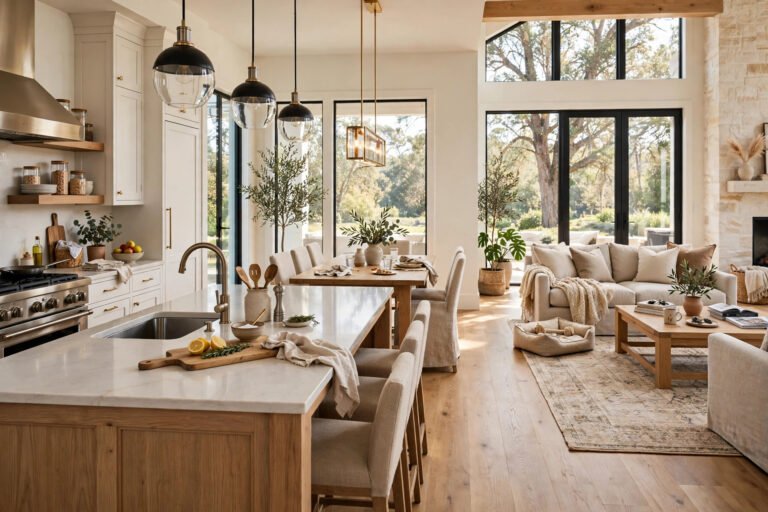
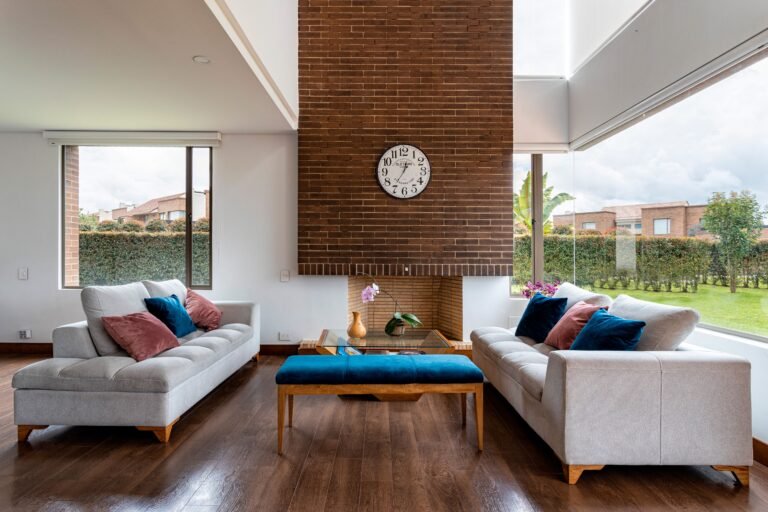
Both value simplicity over ornament. Both favor open floor plans and a connection between indoors and outdoors. Both use large glass to bring in light. A contemporary architect who admires modernism may deliberately design a house that looks modern — and that house is still contemporary, because it was designed now, even if it honors an older movement.
Think of it as inheritance. Contemporary architecture inherited modernism’s clean lines and open plans, then added new concerns: sustainability, digital tools, flexible living, and regional character. A family resemblance does not make two people the same person, and a shared love of clean lines does not make two styles the same style.
This overlap also means you should not panic if a house mixes traits. Most real houses do. The question is rarely “which box does this house fit in perfectly?” It is usually “which direction does this house lean, and does that direction suit me?”
Five Details That Give a House Away
When you stand in front of a house or scroll through photos, check these five details in order. They are the fastest visual tells.
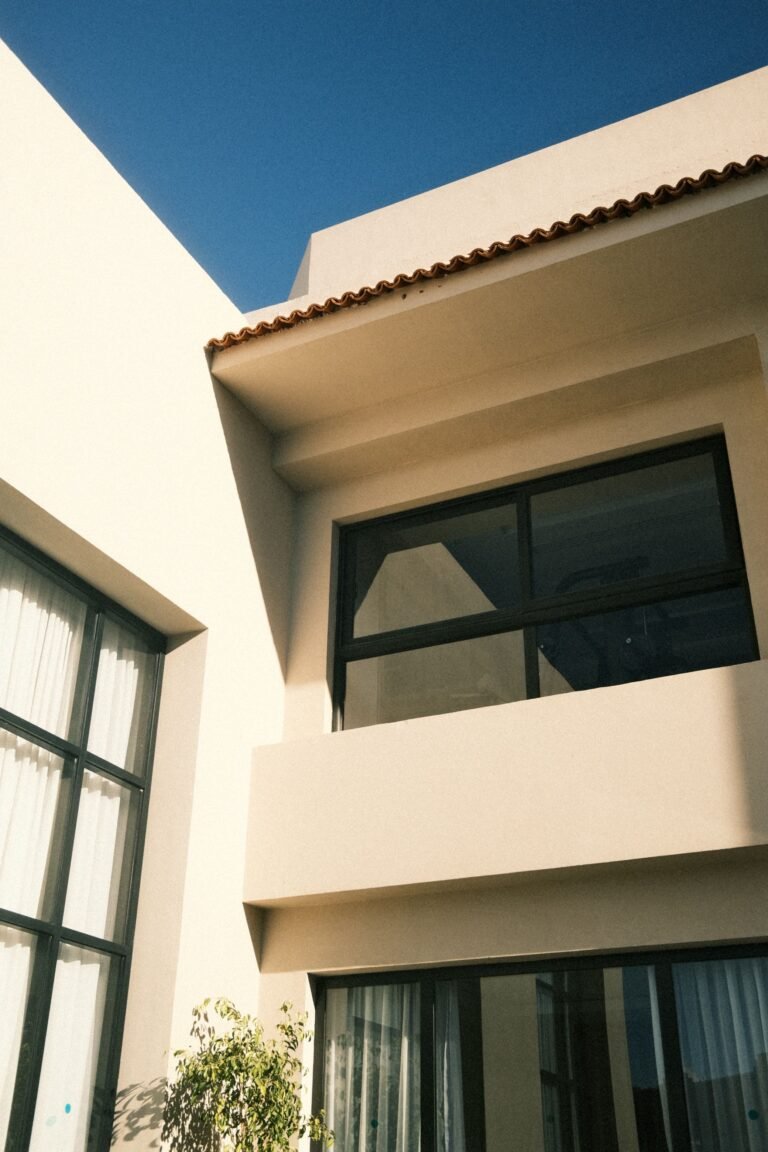
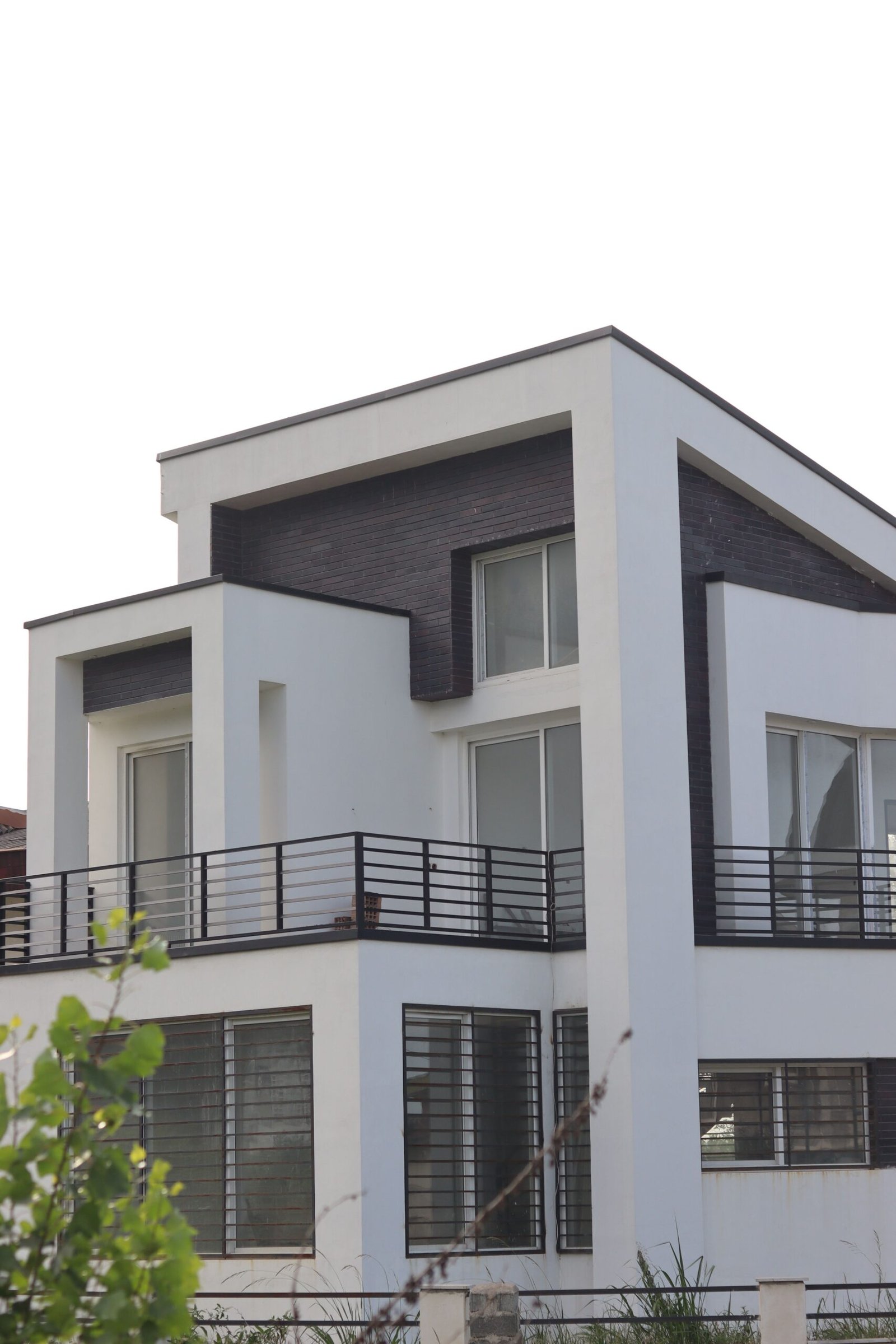
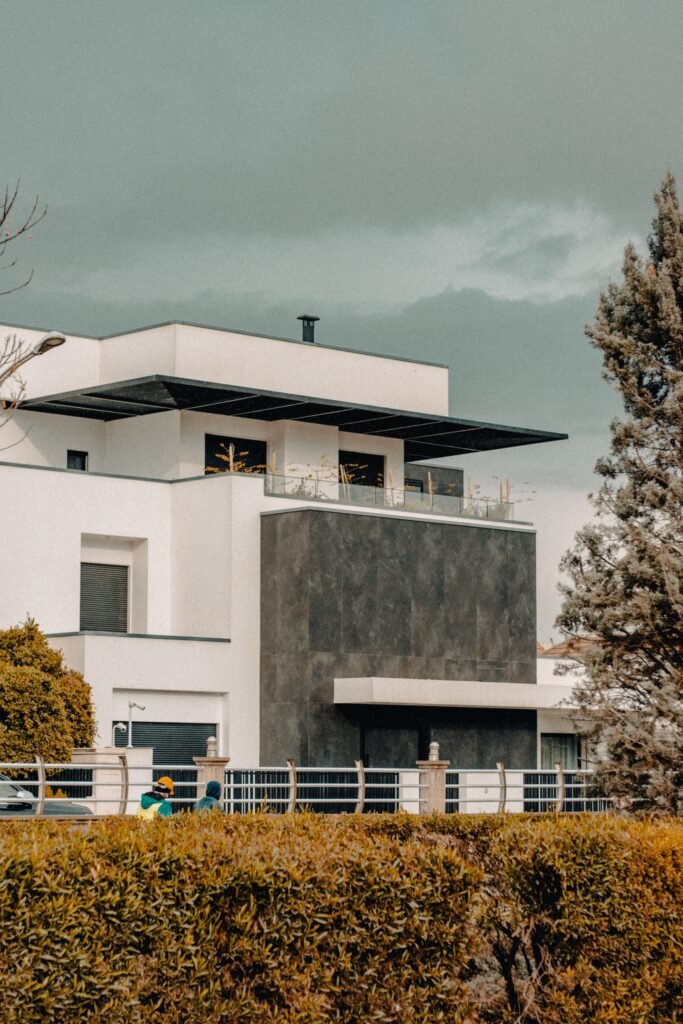
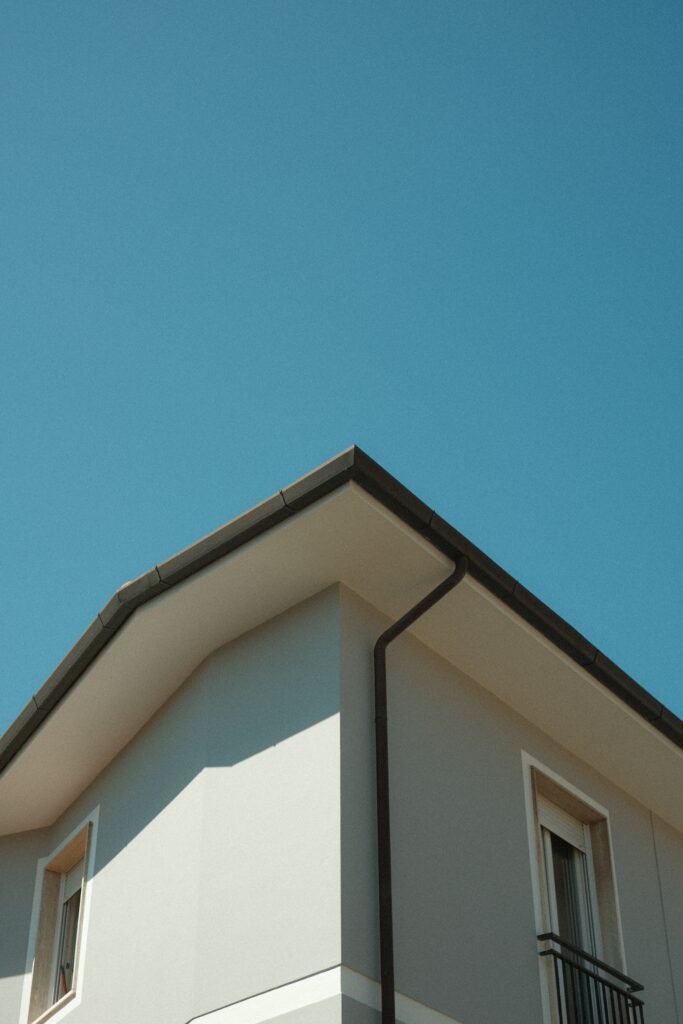
First, look at the roofline. A flat roof with a crisp edge leans modern. A roof that changes pitch, curves, or combines flat and gabled sections leans contemporary. Roof shape alone is not proof, but it is a strong first clue.
Second, look at the lines. Are they relentlessly straight and rectangular, with a grid-like discipline? That is modern thinking. Do lines sweep, curve, or break symmetry on purpose? That is contemporary thinking. Asymmetry — a front door off-center, windows of different sizes grouped freely — is one of the most reliable contemporary signals.
Third, look at the window rhythm. Modern houses often use a continuous horizontal band of glass, like a ribbon wrapping the facade. Contemporary houses use glass more freely: a huge corner window here, a tall narrow slot there, a glass wall opening to a terrace. The glass serves the view and the room, not a grid.
Fourth, count the materials. A modern facade often sticks to one or two materials, honestly expressed — white stucco, exposed concrete, steel, glass. A contemporary facade often mixes three or more: wood, stone, metal, glass, plaster, each chosen for texture or contrast.
Fifth, look for technology and sustainability clues. Solar panels, green roofs, smart shading, and visible energy-conscious details point contemporary, because those concerns became central after the modern period. Their absence proves nothing — many contemporary houses hide their technology — but their presence is a meaningful clue.
Three Houses, Three Decisions
Comparison tables are useful, but decisions happen with real houses. Here are three labeled scenarios that show how the distinction changes what you actually do.
Scenario 1: You own a genuine mid-century modern house
Your house has flat roofs, ribbon windows, and original details. The best move is usually preservation with careful updating: repair rather than replace original features, upgrade insulation and systems discreetly, and keep additions sympathetic to the original geometry. A contemporary-style addition — say, a curved glass wing — can work, but it should read as a respectful new chapter, not a replacement of the original story. Before structural or exterior changes, consult a licensed architect familiar with period homes, and check whether your area has preservation rules.
Scenario 2: Your house is dated, but not historically modern
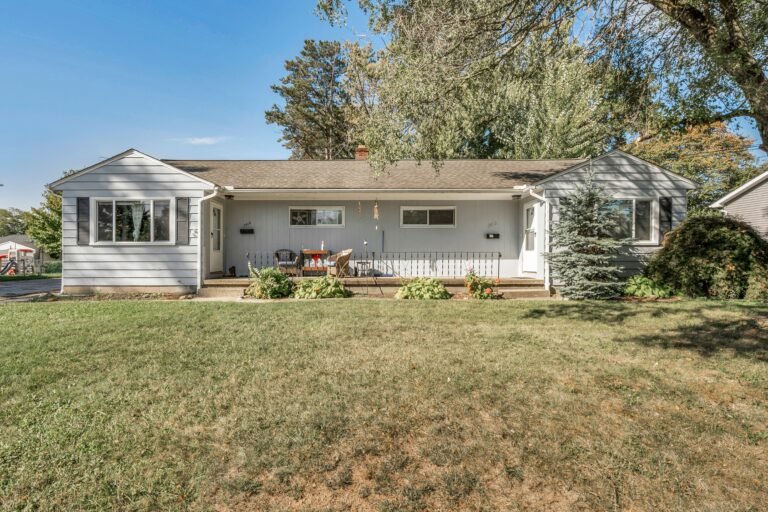
Your house was built in the 1980s or 1990s with features that now feel tired: small windows, closed-off rooms, dated finishes. This is the most common renovation case, and it is where contemporary thinking helps most. You are not preserving a movement; you are updating for present life. Opening a kitchen to the living area, enlarging windows to the garden, and simplifying finishes are contemporary moves — not because they copy a style, but because they serve how people live now. The risk here is overdoing it: removing every wall or chasing every current detail can leave a house feeling generic. Keep one or two original features that give the house character.
Scenario 3: You are building new
A new build can honestly be either modern-inspired or contemporary, and the choice should follow your priorities, not a label. A modern-inspired design gives you discipline, simplicity, and a proven visual language — but it may limit you on energy features and flexible rooms if followed strictly. A contemporary design gives you freedom: mixed materials, curved forms, smart systems, sustainability targets. That freedom needs a strong architect, because without a guiding idea, a contemporary house can become a collection of features rather than a coherent design. Ask your architect what idea holds the design together. If they cannot answer in one sentence, the design may not be ready.
Which Direction Fits You?
Answer these questions honestly, and a direction usually emerges.
Do you love period character and are you willing to maintain original details? Lean modern preservation. Do you want the latest energy performance and smart systems, even if the look changes again in twenty years? Lean contemporary. Is your budget tight and your timeline short? A disciplined modern-inspired design with standard materials may be more predictable than a custom contemporary design. Do you need rooms that change use — a guest room that becomes an office, a living area that hosts both quiet evenings and large gatherings? Contemporary flexibility serves that life well. Does your climate demand specific responses, like deep shade, storm resistance, or heavy insulation? Let climate, not style loyalty, decide the details — both styles can be adapted, but contemporary design is usually more willing to bend.
There is no universally better style. A well-built modern house beats a poorly built contemporary one, and vice versa. Judge the specific house: its light, its layout, its construction quality, and its running costs. Style labels are a starting point for conversation, not a verdict.
Reading a Listing Like a Detective
Listings are where the two words do the most damage, because a wrong label can shape what you expect from a house before you visit it. Read listings with a translator’s eye.
When a listing says “modern,” check the build year first. A house built in 1958 with flat roofs and original details is plausibly modern. A house built in 2024 described as modern is almost certainly using the everyday meaning of “new,” and its actual style may be contemporary, transitional, or something else entirely. The build year is the fastest fact-check you have.
When a listing says “contemporary,” look for evidence in the photos rather than the adjective. Is there a large glass wall opening to a terrace? Are materials mixed — wood against stone, metal against plaster? Do rooms flow into each other? If the photos show small windows, closed-off rooms, and a single uniform material, the word contemporary is doing marketing work, not descriptive work.
Also watch for the two words used together, as in “modern contemporary.” That phrase usually means the seller wants the freshness of both words without committing to either. Treat it as a signal to look harder at the house itself: its roofline, its windows, its materials, and its rooms. The house will tell you more than the headline.
One more habit helps: save three photos of houses you genuinely like, then run the five details from the earlier section over each one. You will often find that your taste leans clearly one way — toward modern discipline or contemporary freedom — even if you could not have named the preference before. That self-knowledge is worth more than any label, because it guides every later choice, from paint color to renovation scope.
Mixing the Two Without a Mess
Many of the most interesting houses mix modern and contemporary ideas, and mixing is fine if it follows two rules.
First, keep one governing idea. If the house is basically modern — flat roof, straight lines, honest materials — let contemporary elements be guests, not invaders: a contemporary kitchen inside, a sustainable roof system hidden from view, a glass addition that respects the original grid. If the house is basically contemporary, let any modern reference be a deliberate quotation, like a ribbon window on one facade, not a competing language on every wall.
Second, repeat materials and proportions. Mixing works when the same wood, the same window frame color, or the same ceiling height appears in both old and new parts. It fails when every addition introduces a new material, a new color, and a new window size. Restraint is what makes a mix read as intentional rather than accidental.
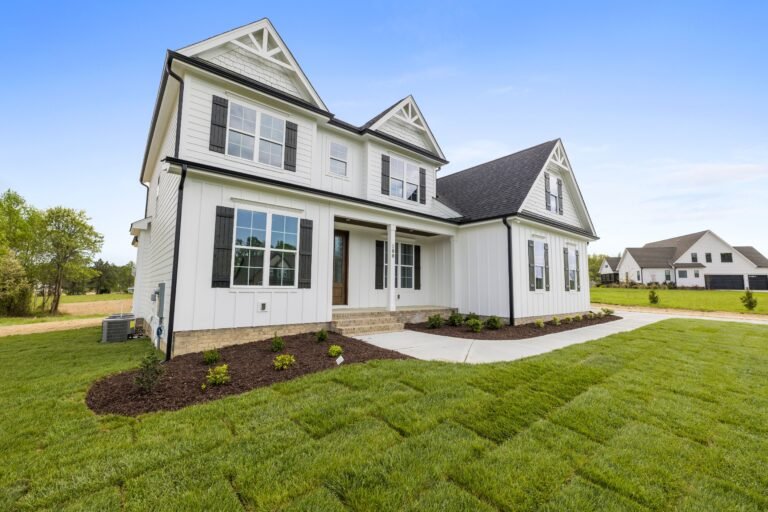
At their most literal, contemporary is the architecture being produced now, while modern recalls the early- and mid-20th-century ideals of the machine age.
Frequently Asked Questions
Can a brand-new house be modern architecture?
Strictly, a new house can be modern in style — often called modern-inspired or modernist — but it cannot be a product of the original modern movement, which belongs to the early to mid-20th century. In everyday language people call new, minimal houses modern, and that usage is common, but architecturally the distinction matters.
Can a modern house have contemporary features?
Yes, and most renovated modern houses do. New insulation, smart systems, sustainable materials, and even contemporary additions can be added to a modern house. The house remains modern in origin and character, with contemporary updates — a combination, not a contradiction.
Which style costs more to build?
There is no reliable general answer, because cost depends on size, materials, site, and construction quality far more than on style label. Custom contemporary shapes and large glass walls can raise costs, but so can faithful modern detailing and period materials. Get project-specific quotes from licensed builders rather than trusting style-based price claims.
Which style is better for resale?
Neither style guarantees a better sale outcome. Condition, location, layout, and energy performance matter more than the label, and buyer taste varies by market. A well-maintained house in either style, with flexible rooms and good light, generally appeals more broadly than a neglected house in a fashionable style.
How should I describe a house that mixes both?
Describe what you see, not just a label: for example, “a mid-century modern house with a contemporary addition,” or “a contemporary house with modern-inspired lines.” Specific descriptions help buyers, architects, and contractors understand the house far better than a single disputed word.
The next time someone calls a house modern or contemporary, ask yourself one question: are they dating it, or describing it? If they are dating it to the early-to-mid-20th-century movement, modern is the right word. If they are describing what is being designed right now, contemporary is the right word. Everything else — roofs, lines, materials, glass — is evidence for that one judgment. Explore more ideas in the Architecture & Exterior section.
Disclaimer
This article is general design information, not professional architectural advice. Homes, climates, and building regulations vary. For renovation, structural, or new-build decisions, consult a licensed architect or qualified builder.