Modern House Exterior: How to Plan a Clean, Warm, and Practical Facade
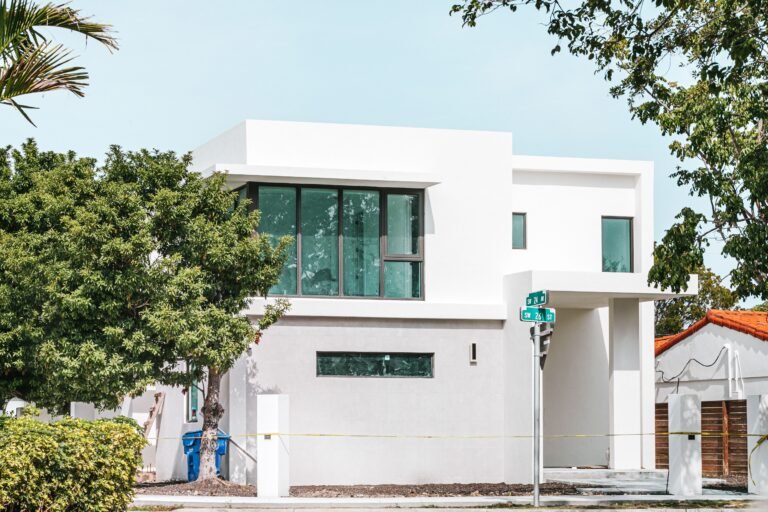
A modern house exterior is the outside of a home designed around clean lines, simple geometric shapes, large windows, and a small number of honest materials. It usually has a flat or low-pitched roof, a restrained color palette, and a clear connection between indoor rooms and outdoor space. That is the whole idea in one sentence, but a photo alone does not tell you whether the look will work on your lot.
The look works when five decisions work together: form, roof, glass, materials, and the entrance with its landscape. If one of those decisions fights the others, the house can look sharp in a photo and feel cold, hot, leaky, or hard to maintain in real life. This guide walks through each decision in order, so you can judge a design or plan an update with more confidence. For more exterior ideas in this style family, browse Architecture & Exterior.
What a Modern House Exterior Actually Means
The word “modern” causes confusion, so let us clear it up first. In design talk, modern often means a specific approach: simple forms, little decoration, and materials shown as they are. Wood looks like wood. Concrete looks like concrete. Nothing pretends to be something else.
Contemporary is a looser word. It means “of today,” so a contemporary home can borrow modern ideas and mix them with newer trends. Traditional homes, by contrast, rely on familiar decoration: detailed trim, divided windows, pitched roofs, and symmetrical fronts.
A modern house exterior does not have to be white, boxy, or expensive. It can be warm. It can sit on a small lot. What matters is restraint. Each part has a job, and nothing is added just to fill space.
Five Signatures to Look For
When you stand on the street and ask, “Is this modern?” check these five signs.
Simple geometric form
Modern homes often read as one or two clear volumes: a long rectangle, a box set back from another box, or an L-shape that wraps a patio. One part may project forward while another sits back. That shift creates depth without added decoration.
Flat or low-pitched roof
Many modern homes use flat or low-pitched roofs. The roofline stays quiet, so the walls, windows, and materials do the talking. Deep overhangs often shade the walls and protect the entrance.
Large, well-placed glass
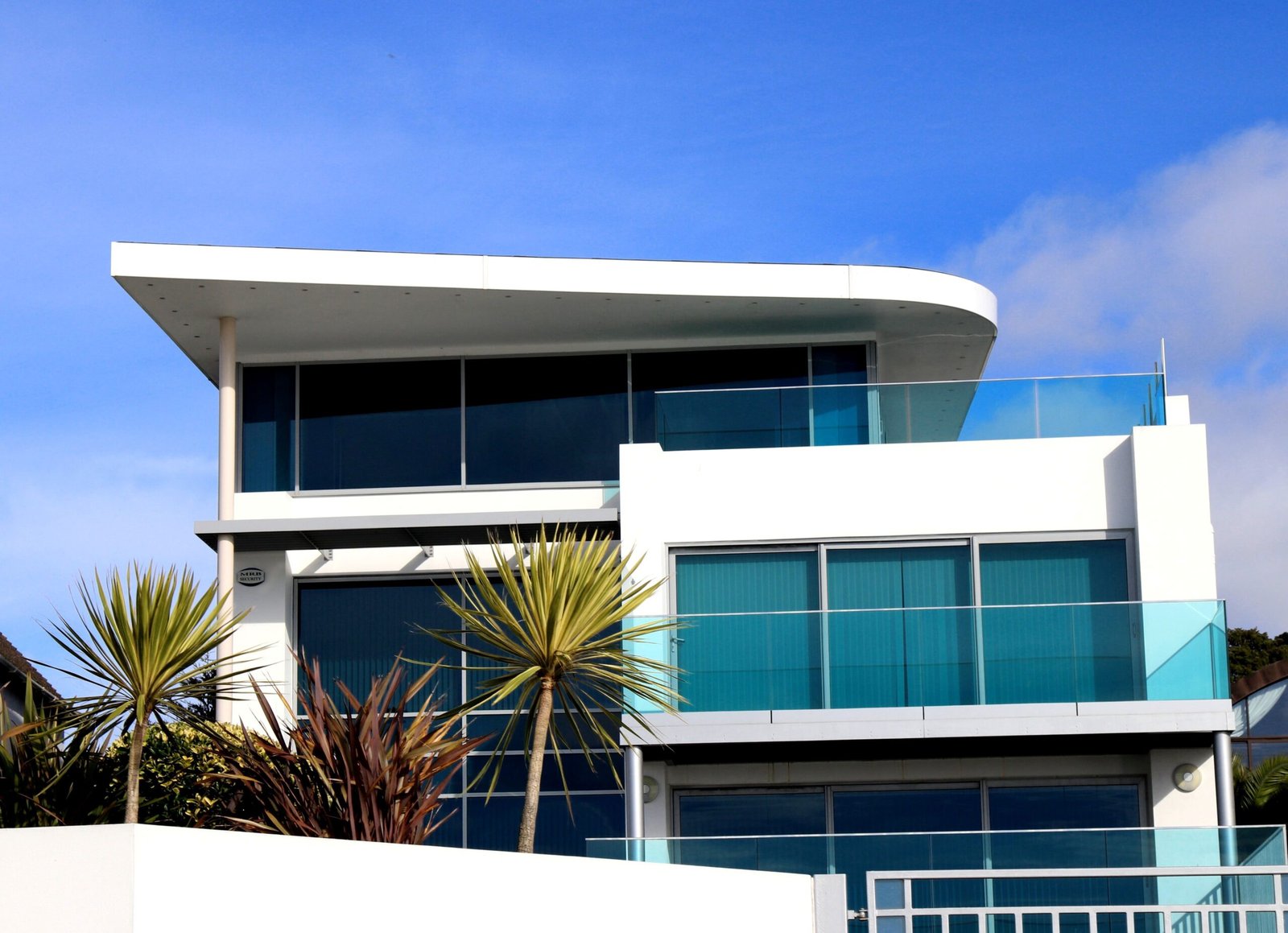
Big windows and sliding glass doors bring in daylight and connect rooms to gardens, patios, and views. Placement matters more than size. A wall of glass facing a private garden feels very different from the same glass facing a busy street.
Mixed but restrained materials
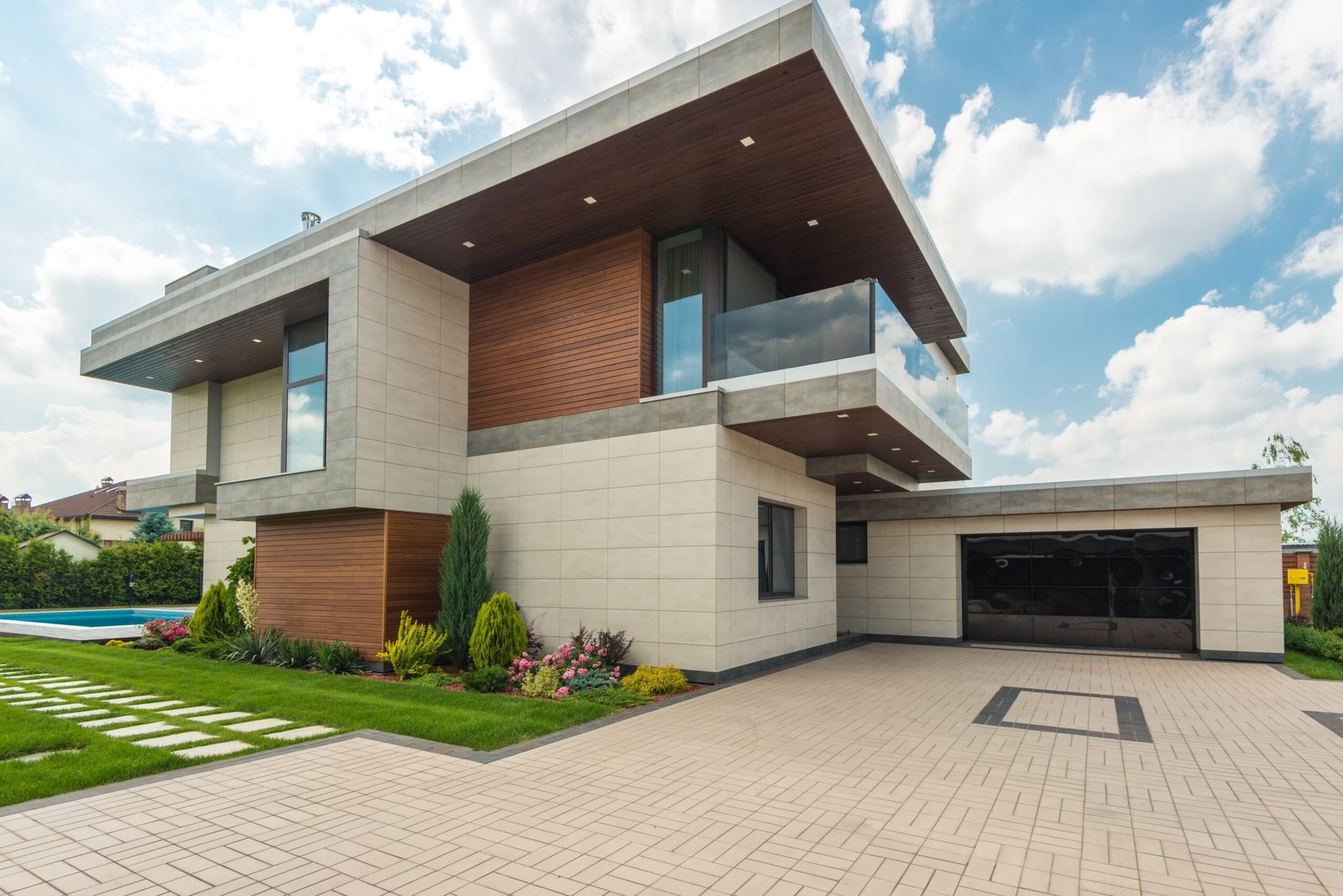
Designers often combine two or three materials, such as smooth stucco with warm wood, or stone with dark metal. The contrast adds interest. Too many materials, on the other hand, make the facade look busy and unsettled. A useful overview of these traits appears in a guide to contemporary house exteriors, which lists clean lines, geometric forms, large windows, mixed materials, and neutral colors as common features.
Quiet entrance and outdoor connection
The entrance is usually simple and easy to find: a clear path, a sheltered door, and no fussy porch decoration. Patios, courtyards, and terraces often feel like outdoor rooms, not leftovers.
The 2–3 Material Rule
Here is a rule you can use on any modern facade: pick two or three exterior materials, and let one of them lead. The lead material covers most of the house. The second adds warmth or texture. The third, if you use one, should be an accent only, such as a door surround, a feature wall, or a garage frame.
How to pair warm and cool materials
Modern exteriors often feel cold when every material is cool: gray stucco, dark metal, and large glass, with nothing warm to soften them. Wood is the usual fix. It does not have to cover the whole house. A wood entrance, a wood screen, or wood soffits can warm a cool palette.
Stone grounds a house. It works well at the base of walls or on a single feature wall. Concrete feels calm and solid, but it can look heavy without wood or planting nearby. Metal adds a crisp edge, especially for window frames, railings, and roof details.
Material pairings at a glance
| Pairing | Feel | Watch out for |
|---|---|---|
| White stucco + natural wood | Bright, warm, clean | Wood needs regular care in sun and rain |
| Warm gray siding + stone | Calm, grounded, natural | Stone can dominate if used on too many walls |
| Charcoal panels + wood accents | Bold, dramatic, modern | Dark colors show dust and absorb heat in hot climates |
| Brick + dark metal + glass | Textured, sturdy, urban | Brick color sets the palette, so test paint and trim against it |
| Concrete + glass + wood | Minimal, sculptural, calm | Concrete repairs and detailing need skilled work |
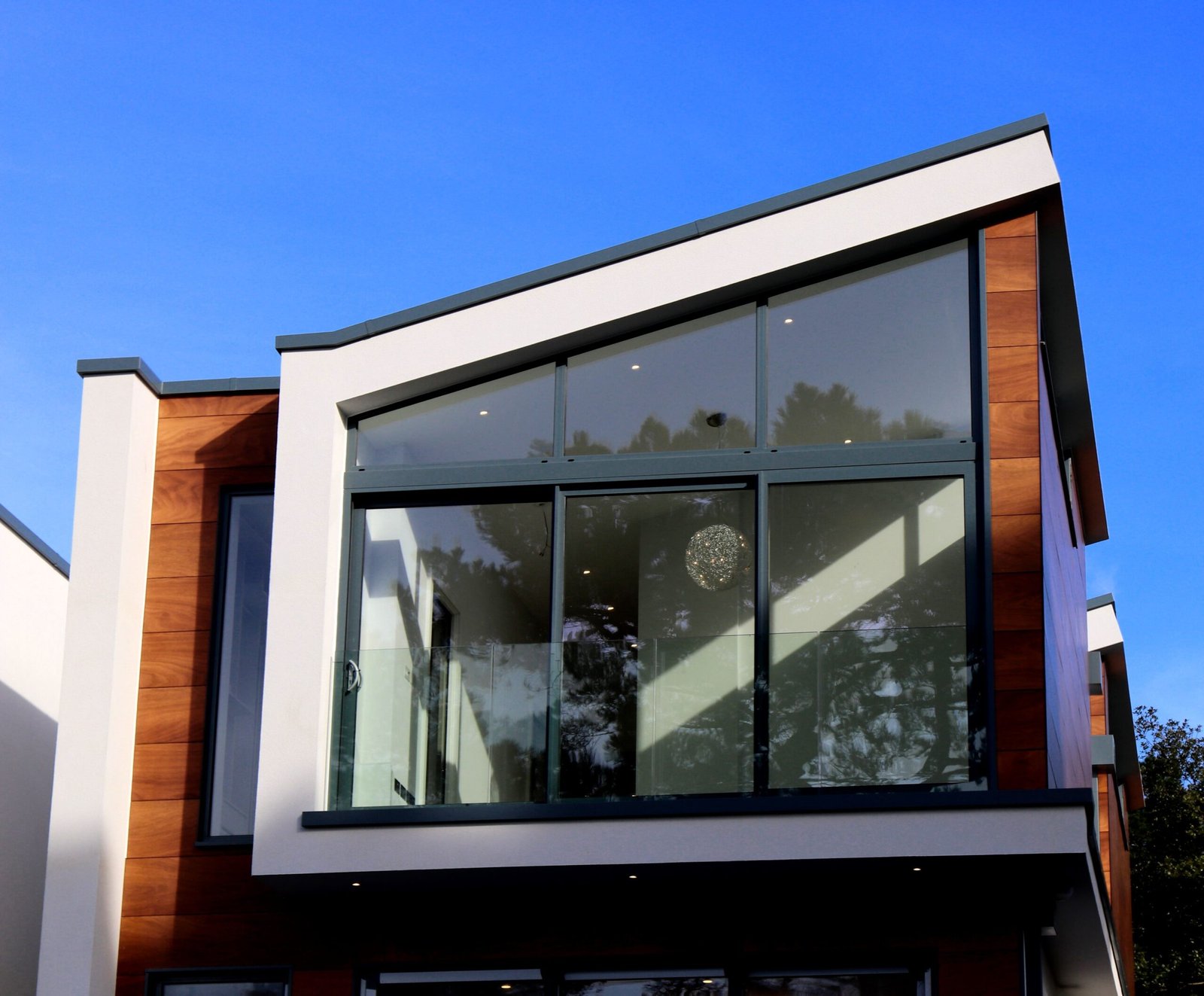
Ask a supplier or contractor how each material ages in your climate before you commit. A material that looks perfect in a dry climate may stain, warp, or fade faster in humidity, salt air, or freeze-thaw cycles.
Roofs That Keep the Look Simple
The roof shapes the whole silhouette, so choose it early, not last.
Flat roofs and drainage
A flat roof is rarely perfectly flat. It has a slight slope so water can drain. That drainage plan, plus waterproofing and insulation, is what separates a good flat roof from a troublesome one. If you are considering a flat roof, hire a licensed roofing professional to review drainage, flashing, and the local code before work starts. Do not try to redesign roof drainage yourself.
Low-pitched and shed roofs
Low-pitched and shed roofs give a modern home its long, horizontal lines. A single shed slope can also direct rain to one side, which helps with gutters and outdoor space. Overhangs protect walls and shade windows, but very deep overhangs need proper structural support.
When a simple gable fits better
A simple gable roof can still look modern if the rest of the house stays clean: plain walls, large windows, restrained materials, and little trim. In snowy or very rainy areas, a gable may shed water and snow more simply than a flat roof. The style does not require you to force a flat roof onto a climate that fights it.
Large Glass Without Heat, Glare, or Lost Privacy
Large glass is the most copied modern feature, and the most likely to cause regret. It deserves a careful plan.
Orientation and shading first
Start with direction, not glass size. South-facing glass can bring welcome winter sun in cold climates, but it can overheat a room in a hot climate unless it is shaded. West-facing glass is hard to control because the sun sits low in the afternoon. East-facing glass gives bright morning light. North-facing glass gives soft, even light with little direct heat.
Overhangs, pergolas, trees, and exterior shades can cut heat before it reaches the glass. Interior blinds help with glare, but they act after heat has already entered the room. Shade outside the glass usually works harder than shade inside.
Glass ratings in plain English
Two ratings matter most for beginners. The solar heat gain coefficient, or SHGC, measures how much of the sun’s heat passes through the window. Lower SHGC means less solar heat. The U-factor measures how easily heat moves through the whole window, frame included. Lower U-factor means better insulation.
In a hot climate, low SHGC usually matters most. In a cold climate, a low U-factor and some useful winter sun matter more. Low-e coatings, which are thin layers that reflect heat while letting light through, can help in both cases. The U.S. Department of Energy’s guidance on energy-efficient windows explains orientation, shading, SHGC, and U-factor in the same plain terms, and it is worth reading before you order large window units.
Privacy moves that keep the look
You do not need curtains on every window to gain privacy. Try these moves instead: place the largest glass toward a private garden or courtyard; use high clerestory windows for light in street-facing rooms; add a wood screen or planting that blocks views without blocking light; and use frosted or textured glass only where it makes sense, such as a bathroom or a side window near a neighbor. Test the view at night too. A glass wall that feels private by day can feel exposed when indoor lights are on.
Entrance, Lighting, and Landscaping
A modern facade is a composition, and the entrance, lighting, and planting finish it.
A clear, sheltered entrance
A visitor should find the front door without guessing. Use a clear path, a change in material underfoot, and a roof or overhang that shelters the door. A simple door in a strong color or warm wood can act as the focal point. Keep house numbers large enough to read from the street.
Lighting that shows form at night
Modern lighting is usually warm, low, and placed with purpose. Wall lights beside the door, recessed lights under an overhang, and low path lights can show the shape of the house after dark. Avoid bright floodlights that wash out the whole facade. They hide the form you worked hard to create.
Planting that frames, not hides
Clean planting beds, grasses, shrubs, and one or two small trees usually suit a modern home better than fussy flower borders. Plants should frame the house and soften hard edges, not cover the entrance or the best windows. Leave room for plants to grow. A shrub planted too close to a wall will need constant cutting and can trap moisture against the siding.
Try the Worked Facade Check on Your Own Home
This is a labeled example, not a real house. Imagine a two-story home with white stucco walls, a wood entrance surround, and a charcoal metal roof. It has a large glass wall facing a back garden, smaller windows facing the street, and a covered patio.
Walk through five checks, and score each one as strong, fair, or weak:
- Form: Do the volumes read as one or two clear shapes? Here, yes. The upper box sits back slightly, which gives the front depth.
- Glass: Is the largest glass private and shaded? Here, yes at the back, but the street side needs a check at night for privacy.
- Materials: Are there three or fewer materials? Here, yes: stucco, wood, and metal. The wood keeps the white and charcoal from feeling cold.
- Entrance: Can a visitor find the door in seconds? Here, yes, because the wood surround and the covered path point to it.
- Landscape: Does planting frame the house without hiding it? Here, fair. The front bed needs one small tree moved away from the glass wall so it does not block light as it grows.
The point is not a perfect score. The point is to find the one weak check and fix that first, before you add new features. Most disappointing facades fail on one decision, not all five.
Mistakes That Make a Modern Exterior Feel Wrong
- Adding a fourth or fifth material “for interest” until the facade looks patched together.
- Copying a glass wall onto a street-facing room without a privacy or shading plan.
- Choosing a flat roof without a drainage and waterproofing plan from a licensed professional.
- Painting every surface the same cold gray, with no wood, stone, or planting for warmth.
- Placing bright, cool-white floodlights that flatten the house at night.
- Planting trees or shrubs so close to walls that they trap moisture and block windows.
If you are planning structural changes, roof work, or new large openings, talk to a licensed architect, structural engineer, or roofing professional before you start. The design ideas in this guide are general information, not a substitute for advice about your specific house.
Frequently Asked Questions
What defines a modern house exterior?
Clean lines, simple geometric forms, a flat or low-pitched roof, large windows, restrained materials, and little decoration define it. The style values proportion and material honesty over ornament.
Can I make an older home look modern?
Often, yes, in part. Simplifying trim, updating the entrance, repainting in a restrained palette, and improving lighting and planting can move an older home toward a modern feel. Changing the roofline or adding very large windows is a bigger structural job and needs professional review first.
Are flat roofs a problem?
Not by themselves. A well-designed flat roof with proper slope, drainage, waterproofing, and insulation can work well. Problems usually come from poor drainage or detailing, so professional design and maintenance matter more than the roof shape alone.
Do large windows always waste energy?
No. Glass performance depends on orientation, shading, coatings, and the whole window unit, not size alone. A shaded, well-specified large window can perform better than a small, poorly specified one. Still, glass is usually the weakest insulator in a wall, so placement and ratings deserve attention.
How many exterior materials should I use?
Two or three is a good guide. One leads, one adds warmth or texture, and a third, if used, stays as an accent. Fewer materials usually look calmer and age more gracefully than a facade that tries to show everything at once.
A modern house exterior is not a single product you buy. It is a set of choices that either support each other or fight each other. Start with form, protect the roof and glass decisions with professional advice where structure is involved, keep materials to two or three, and let the entrance and landscape finish the composition. If you want to explore the ideas behind this guide, the Luxury Homes Idea homepage and the About Luxury Homes Idea page explain what this site aims to help readers do. And if you have a question about a topic you would like covered, you can reach the team through Contact Luxury Homes Idea.
Disclaimer This article is general design information, not advice for a specific home. Houses, climates, budgets, and local rules vary. For roof, structural, or large window changes, consult a qualified licensed professional before work begins.