White House With Black Trim: How to Get the Contrast Right
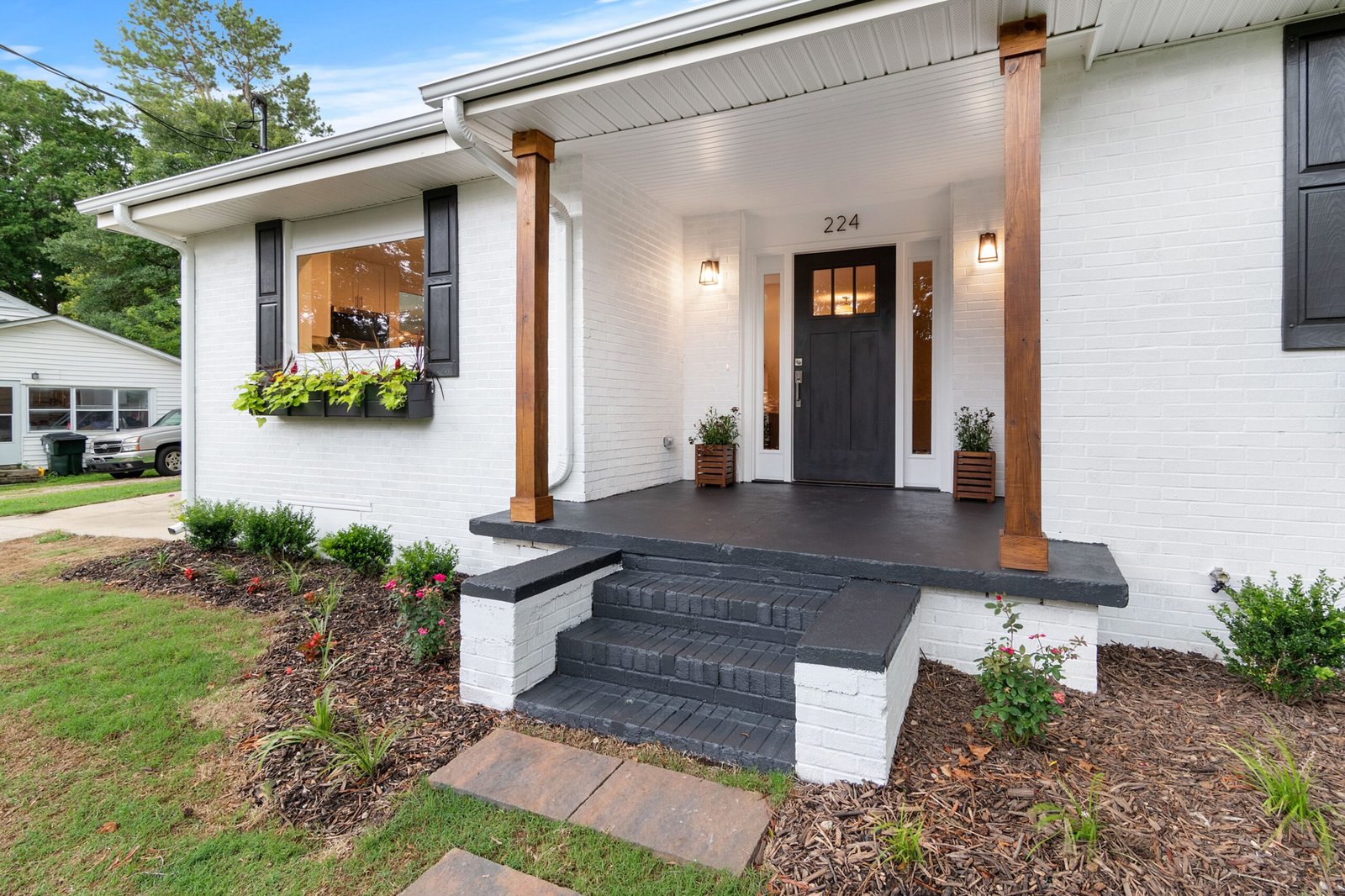
A white house with black trim works when white does the quiet work and black does the framing. White reflects light, makes the house look larger and cleaner, and gives the eye a calm field. Black outlines windows, doors, rooflines, and corners, so the architecture reads clearly from the street. The combination fails when black is used everywhere, when the white has the wrong undertone, or when trim lines are broken and uneven. Get the balance right, and the look feels crisp without feeling harsh.
This is not a style that belongs to only one house type. It suits modern, farmhouse, traditional, and Spanish-style homes, because the principle is the same in each case: light field, dark frame, and one or two warm materials to keep the contrast from feeling cold.
Why the Contrast Works, and When It Does Not
High contrast makes edges visible. That is why black trim around a white house makes windows look larger and rooflines look sharper, even from a distance. It also photographs well, which is part of why the look is so popular in listings and design photos.
Contrast also exposes mistakes. A wavy trim line, a patch of peeling paint, or a window that is slightly out of square shows more in black on white than in two close tones. If your trim is in poor condition, fixing it matters more than choosing a black shade. The contrast will highlight the repair, good or bad.
The look also struggles in two settings. On a house with very little trim — flat walls, few windows, no porch detail — black trim can feel like thin lines floating on a blank field. On a house with a great deal of ornate trim, black on every molding can feel busy and heavy. In both cases, the fix is selectivity: choose the lines that define the house, and leave the rest quiet.
Start With the White, Not the Black
Most people choose black first. Start with white instead, because white covers most of the house and its undertone sets the mood. White paint is rarely pure white. It carries warm undertones of yellow or pink, cool undertones of blue or gray, or a near-neutral balance.
A warm white feels soft in morning light and can look creamy in the afternoon. A cool white feels crisp in bright sun and can look gray or blue in shade. A near-neutral white stays steadier across the day, which is why it is often a safe choice for a first attempt at this scheme.
Test white the way you will live with it. Paint large sample boards, at least two feet square, and move them around the house: front wall in sun, front wall in shade, side wall, and near the roof or stone. Look at them in morning, midday, and evening light, and next to your roof, driveway, and any stone or brick that will stay. A color that looks perfect on a small chip can shift clearly on a full wall.
One useful reference point: Benjamin Moore describes Chantilly Lace and Super White as two of its whitest whites, with little visible undertone and high light reflectance, meaning they reflect a lot of light. That does not make them right for every house, but it shows why near-neutral whites are popular for this scheme: they stay white in changing light instead of turning pink, yellow, or blue.
The Three-Light Undertone Test
Use this original test before you commit to a white or a black. It takes a weekend, but it prevents a repaint, which costs far more.
Morning light: Place your white and black samples on the front wall before 10 a.m. Note whether the white looks warm, cool, or neutral, and whether the black looks soft or harsh against it.
Midday light: Repeat at midday, when sun is strongest. A white that looked clean in the morning may glare at noon, and a black that looked rich in the morning may look flat and hot in direct sun.
Evening and shade: Check the samples in shade and in late-afternoon light. This is where undertones show most. A warm white may turn creamy, a cool white may turn gray, and a black with a blue base may look colder than you expected.
Score each sample in all three lights. Choose the pair that stays closest to what you intended in all three, not the pair that looks perfect in only one. If no pair passes all three, try a softer black — charcoal rather than pure black — or a white one step warmer or cooler. Small shifts solve most undertone problems.
Where Black Belongs, and Where to Stop
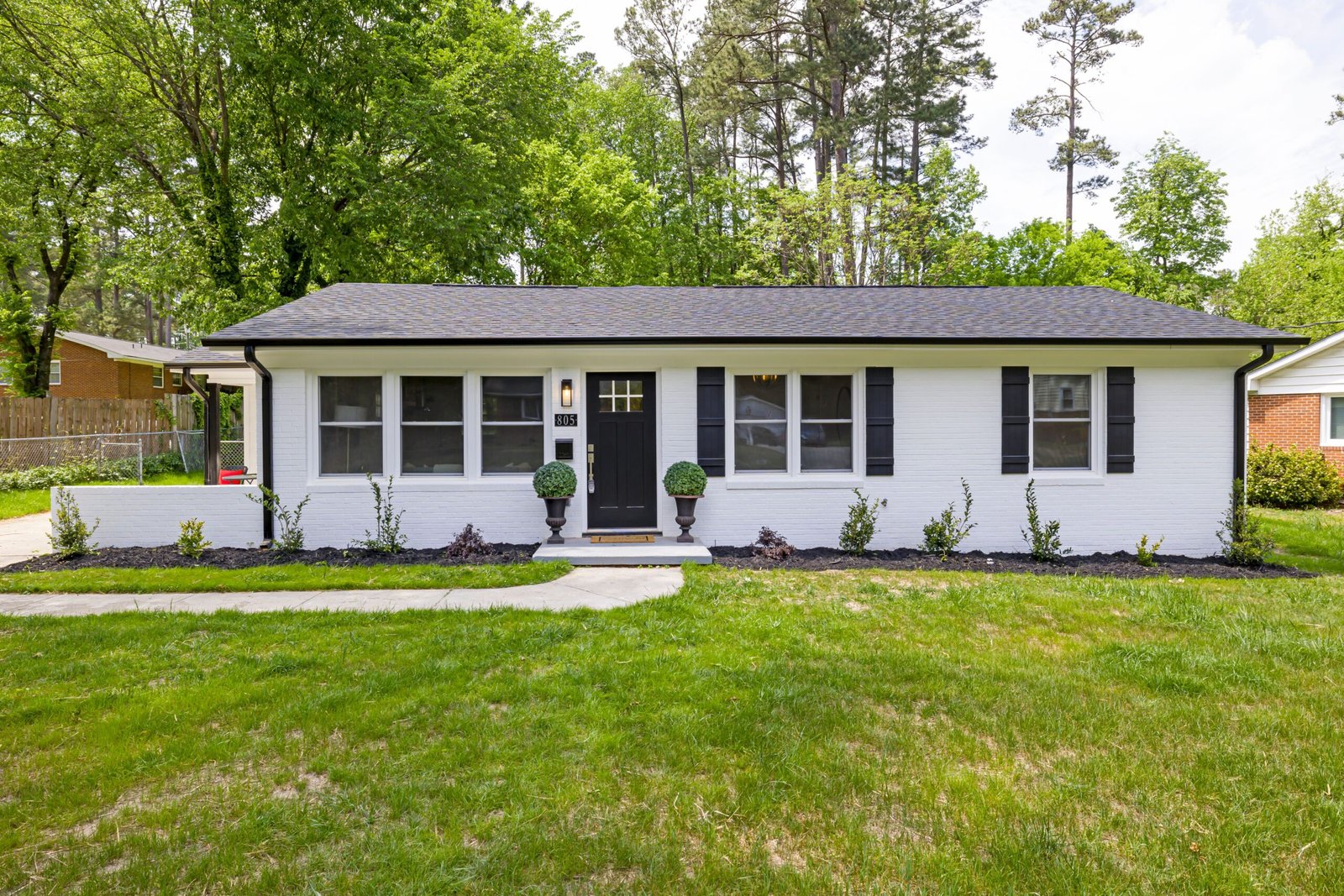
Black works best where it frames or grounds the house. Use it on window frames or window trim, the front door, porch posts or columns, gutters and downspouts, and a few light fixtures. These are the lines the eye follows. When they are black, the house looks intentional.
Stop before black takes over. If black covers the front door, all window trim, the garage, the porch ceiling, the shutters, and the fence, the house can look heavy and the white loses its calm. Keep at least one large surface white and unbroken, usually the main wall field, so the contrast has room to breathe.
Think in layers. The first layer is the white field. The second layer is black framing at windows and doors. The third layer is a warm material — wood, stone, or greenery — that softens the edge between them. A house with only two layers can feel graphic; a house with three layers feels finished.
Black by House Type: Four Variations
The same palette changes character with the house beneath it. Use these variations as starting points, then adjust for your roof, your light, and the materials already on the house.
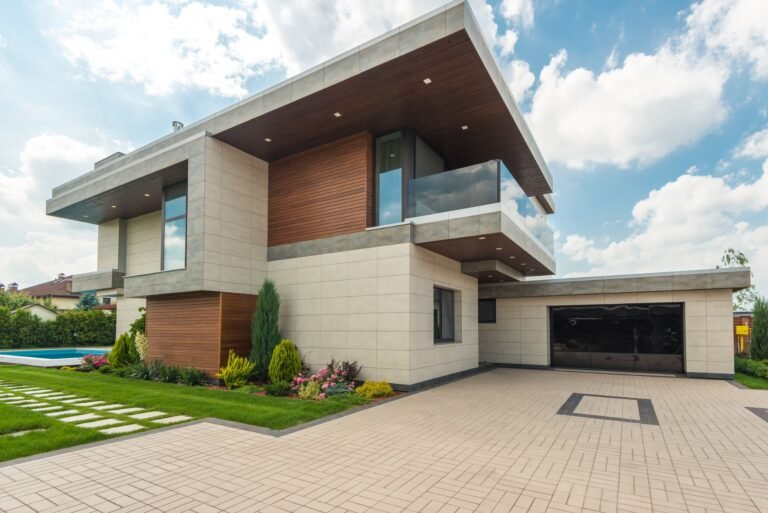
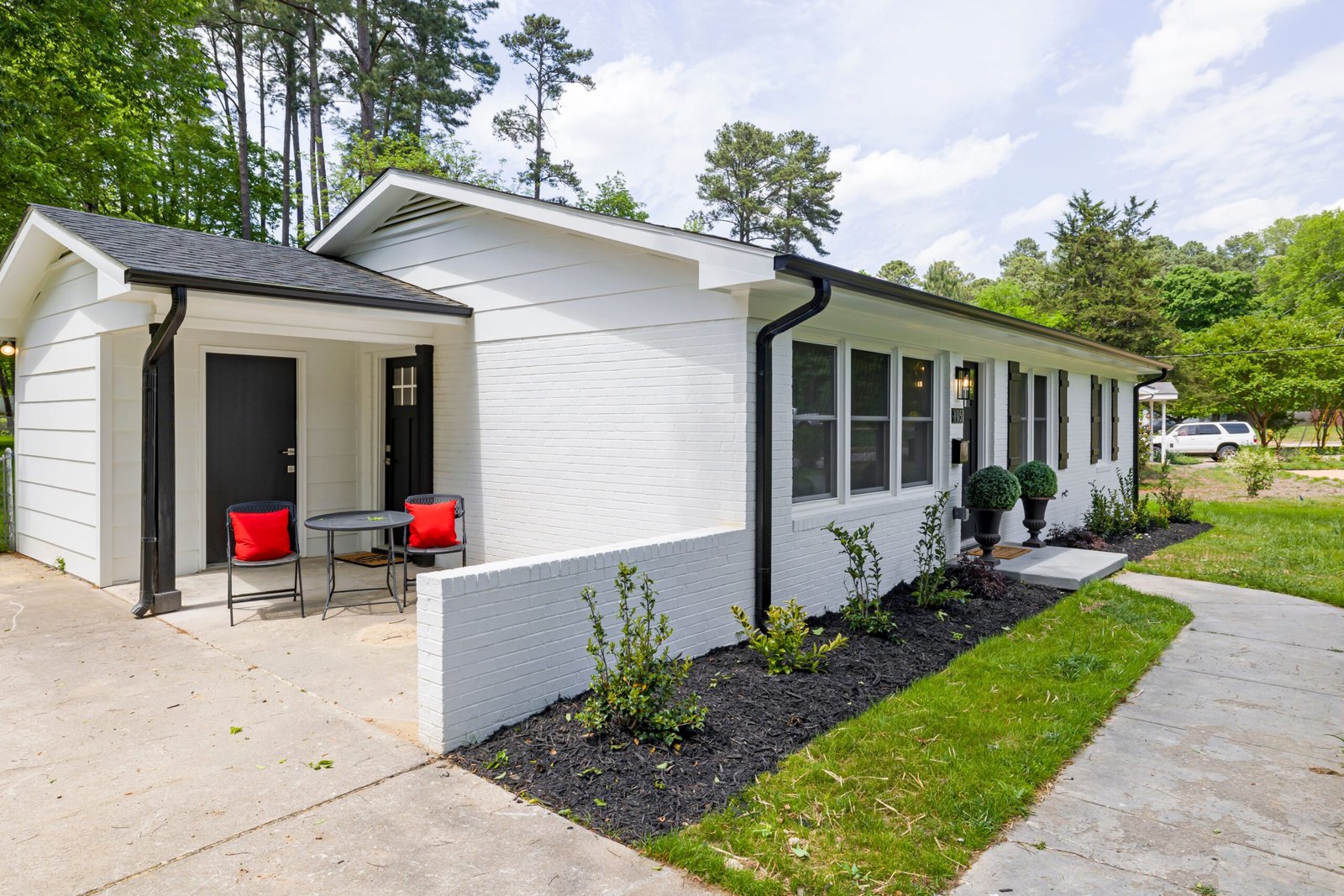
Modern or contemporary: Keep trim lines slim and consistent. Black window frames, a black front door, and a flat or low-pitched roofline suit this style. Avoid ornate details, and let the geometry do the work.
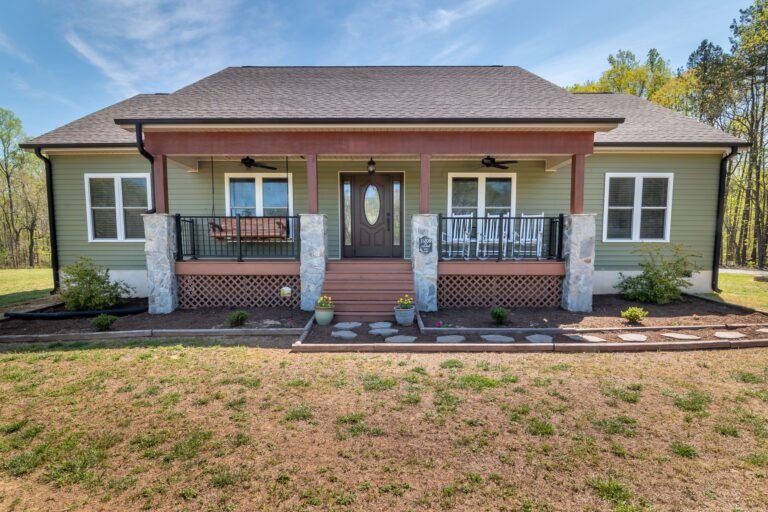
Farmhouse: Pair white board siding with black window trim and a black front door, then add warm wood on the porch. The wood is essential here. Without it, a farmhouse in white and black can feel stark rather than welcoming.
Traditional or Colonial: Use black on shutters, window trim, and the front door, and keep the rest of the trim white. Symmetry matters in this style, so match shutters, lights, and planters on both sides of the entry. A single unmatched black element breaks the formal balance.
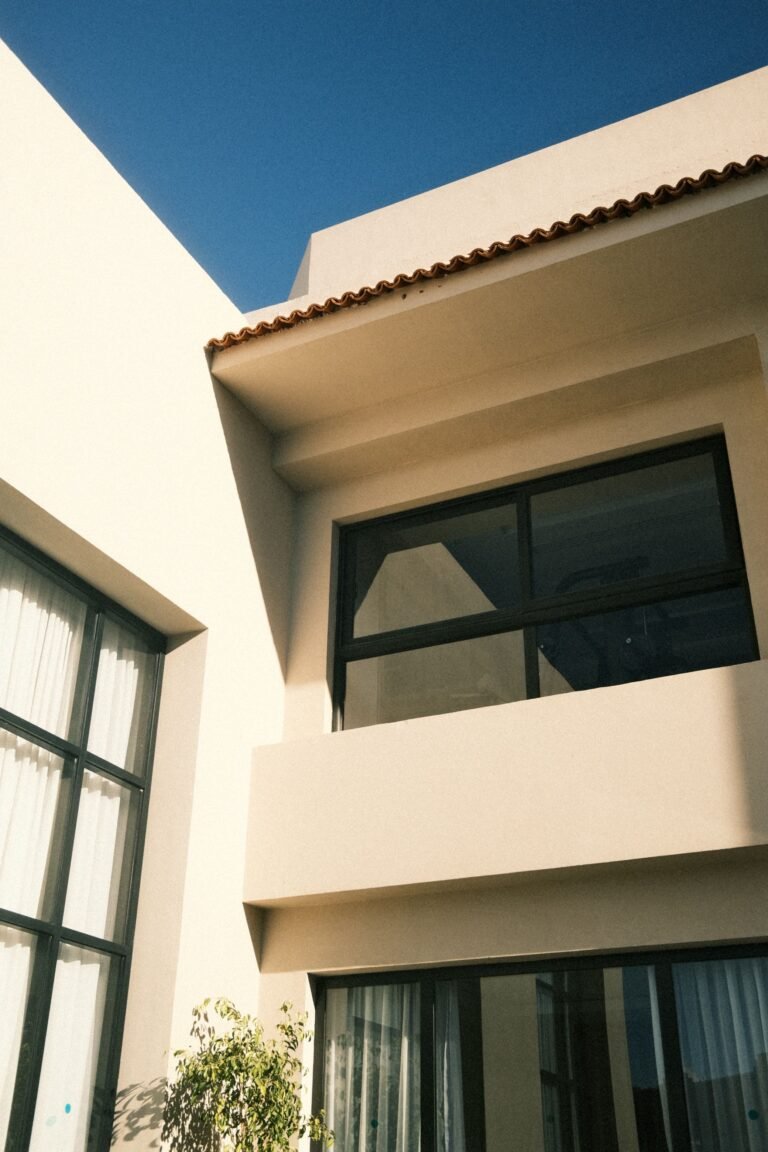
Spanish or Mediterranean: Let off-white stucco carry the field, with black or very dark trim on windows and doors, and a clay tile roof to warm the whole scheme. The roof color is part of the palette here, not an afterthought. A black trim that fights the roof tone will look disconnected.
Materials Change How Black Behaves
Black trim is not only a color choice. It is a material choice, and different surfaces handle dark colors differently.
On wood trim, black paint shows scuffs and chips more than lighter colors, but it is also easy to touch up. Keep the trim clean, fill small cracks before painting, and use a finish suited to exterior wood. A satin or semi-gloss finish is often easier to clean than a flat finish on trim that gets touched or splashed.
On vinyl windows and trim, dark colors need extra care. Darker colors absorb more heat, which can stress vinyl in hot sun. Some vinyl products are rated for dark colors and some are not. Check the manufacturer’s guidance for your specific product before you paint vinyl black, and ask a professional if the product is not rated for dark finishes. Painting vinyl that is not meant for dark color can void a warranty or cause warping.
On fiber-cement siding and trim, black holds up well when the product is properly primed and painted, and the material is more stable than wood in changing weather. On metal gutters, fascia, and light fixtures, factory-finished black often lasts longer than field-painted black, because the coating is applied evenly.
For any exterior painting that involves lead paint, high ladders, or electrical fixtures, hire a licensed professional. Do not strip old paint, work near overhead lines, or remove light fixtures on the basis of a color guide. If your home was built before 1978, assume lead paint may be present until a qualified professional tests it.
A Painting Sequence That Avoids Regret
Do not paint the whole house on the first day. Work in this order, and pause after each step to check the result in daylight.
- Repair first: Fix rotted wood, cracked caulk, and loose trim. Paint will not hide a failed surface, and black will highlight it.
- Sample large: Paint sample boards, not small chips, and test them in the three-light test above.
- Paint one elevation: Start with the least visible side or a small section of the front. Live with it for a day before you continue.
- Trim after the field: Paint the white field first, let it dry, then paint black trim with clean, masked lines. Sharp lines are the whole point of this scheme.
- Step back: View the house from the street, not only from the porch. Trim that looks perfect up close can look uneven or too heavy from the curb.
If you hire a painter, ask how they will mask, what primer they will use on each surface, and how many finish coats are included. Those answers matter more than the brand name on the can. Get the scope in writing, including preparation, primer, coats, and cleanup.
For inspiration on how designers use this combination across house types, see the white house black trim ideas collection and the white houses with black trim gallery. For more exterior ideas, explore Luxury Homes Idea and About Luxury Homes Idea.
Keeping White Bright and Black Crisp
White exteriors show dirt, algae, and mildew more than darker colors, especially on shaded or north-facing walls. Plan for gentle washing as part of routine care, and check gutters and drainage, because dirty water streaks show quickly on white siding or stucco.
Black trim fades and chalks with sun exposure, especially on south- and west-facing walls. Check those walls each spring for fading, chalking, or peeling, and touch up before small failures spread. Keeping a labeled record of your exact white and black products and sheens makes touch-ups far easier than guessing from a faded chip.
Landscaping completes the scheme. Green plants soften black and white without adding a competing color. Simple shrubs, a clean walkway, and a few planters at the entry keep the house welcoming. Avoid planting dense shrubs tight against white walls, where they trap moisture and stain the surface.
Frequently Asked Questions
Does a white house with black trim suit every neighborhood?
It suits many, but check the character of your street and any homeowner association rules before you commit. A high-contrast scheme stands out more than a muted one, so it should feel intentional, not accidental, next to neighboring houses.
Should the garage door be black or white?
Black garage doors can ground a front-facing garage and tie it to black windows and lights. White garage doors blend into a white field and make the garage less prominent. Choose black if the garage is a major part of the front and you want it to look deliberate. Choose white if you want the entry, not the garage, to be the focal point.
Is pure black or charcoal better for trim?
Charcoal is often easier to live with. It gives strong contrast without the harshness of pure black, and it hides dust and fading a little better. Pure black gives the sharpest graphic look, but it shows every flaw and can feel severe on a small house.
Can I paint vinyl window trim black?
Only if the product is rated for dark colors. Dark paint absorbs heat and can stress vinyl. Check the manufacturer’s guidance for your windows and trim, and ask a professional if you are unsure. Do not assume all vinyl can take black paint.
How do I warm up a white and black house that feels cold?
Add wood, stone, or greenery. A wood porch floor, a wood bench, stone at the base, warm porch lighting, and simple planters soften the contrast without adding a new paint color. Warm-white bulbs at the entry also help in the evening.
A white house with black trim succeeds when white stays true in all three lights, black frames only the lines that matter, and wood, stone, or greenery warms the result. Test large samples, paint in sequence, and step back to the street before you judge. The contrast will do the rest.
Disclaimer This guide offers general home design information only. Homes, budgets, and conditions vary. For structural, electrical, plumbing, painting at height, or lead-paint concerns, hire a licensed professional.