
Low Maintenance Landscaping Ideas for a Yard That Stays Tidy
Low maintenance landscaping ideas are not about removing every plant from your yard. They are about building a yard that needs less mowing, less watering, less weeding, and less replanting. In practice, that means a smaller lawn, plants suited to your sun and soil, a good layer of mulch, and water delivered on a timer instead of by hand.
No yard is truly zero work. Leaves fall, weeds find a gap, and plants grow. The honest goal is a yard where the regular work fits into a short weekly pass, with a couple of bigger jobs each season, instead of a yard that demands attention every weekend.
What “Low Maintenance” Really Means
A low-maintenance yard has fewer high-effort parts. A large lawn is high effort, because it needs mowing, edging, watering, and feeding. A bed of thirsty annuals is high effort, because you replant it every year. A plant that needs constant pruning to stay in bounds is high effort, even if it looks beautiful in a photo.
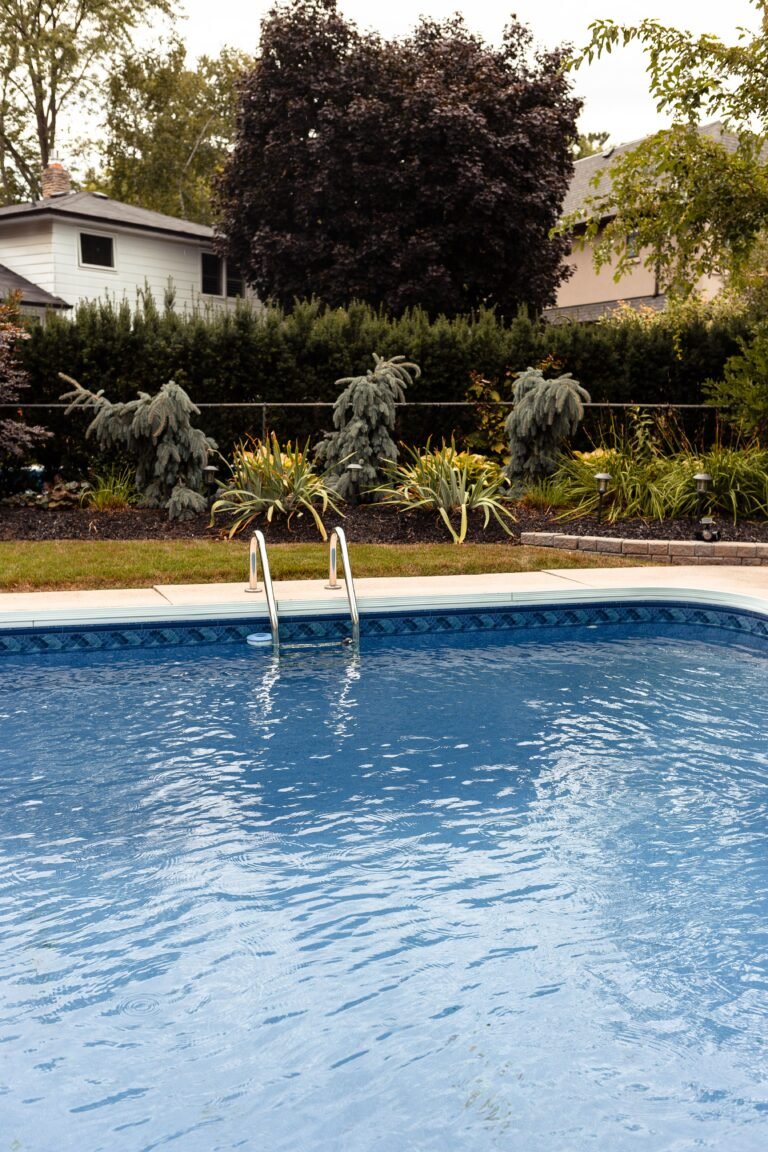
Flip that around, and the formula becomes clear. Keep the lawn only where you actually use it. Choose perennials and shrubs that return each year and fit their space at full size. Cover bare soil with mulch or groundcover so weeds have less room. Water at the roots on a schedule, instead of spraying everything by hand.
This approach also changes how a yard looks through the year. A yard built on shrubs, grasses, and evergreens may not blaze with color every single week, but it will not collapse in August or stand bare in January either. That steadiness is the real payoff.
Start With a Maintenance Audit
Before you buy anything, measure where your yard work actually goes. This audit is the original planning tool for this article, and it takes about ten minutes with a notebook.
Walk your yard and split it into zones: lawn, planting beds, watering, edging and trimming, and cleanup (leaves, debris, and clutter). For each zone, write down roughly how many minutes it takes in a normal month. Do not aim for perfect numbers. A rough total is enough.
Now look for the biggest number. That zone is your first project, not the prettiest one. If mowing eats four hours a month and weeding eats one, shrinking the lawn will change your life more than a new flower bed. If hand watering eats the most time, irrigation comes first. If edging a dozen fussy bed corners eats your Saturdays, simplifying the bed shapes comes first.
The audit also stops a common mistake: adding new work before removing old work. A new bed is lovely, but if you add it while keeping a huge lawn, you have just increased your total work. Cut first, then add.
Shrink the Lawn Before You Buy Plants
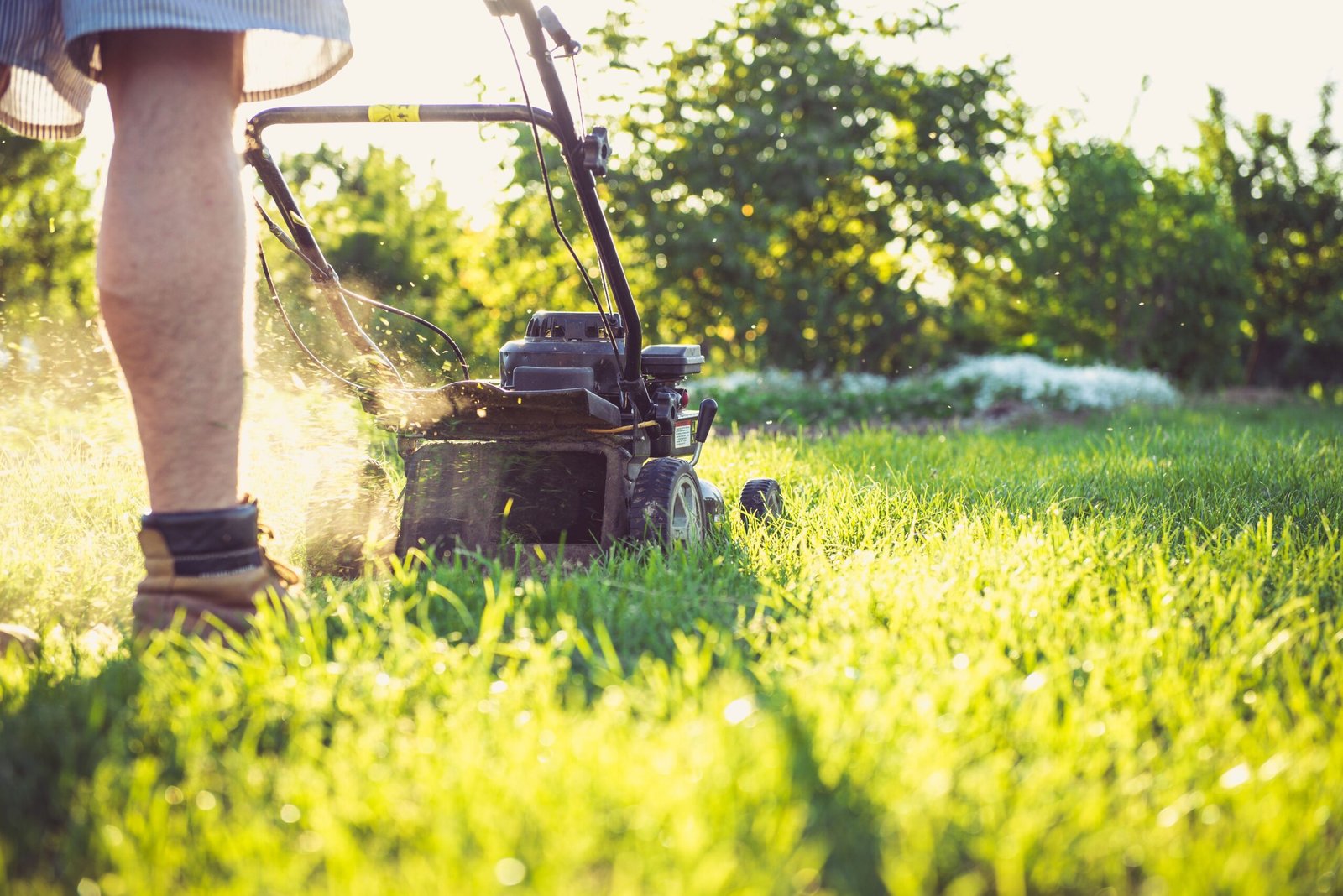
Most low-maintenance plans start here, because lawn is usually the largest single job. You do not need to remove all of it. Keep grass where children play, where you sit, or where you walk every day. Convert the rest, especially awkward corners, steep slopes, deep shade, and strips too narrow to mow in one pass.
| Replacement | What it does well | Trade-off to accept |
|---|---|---|
| Groundcover planting | Covers soil, softens the look, needs little mowing | Takes time to fill in; choose for foot traffic or no traffic |
| Gravel or rock beds | No mowing or watering; tidy, modern look | Weeds still appear; leaves are harder to clear; gravel heats up in sun |
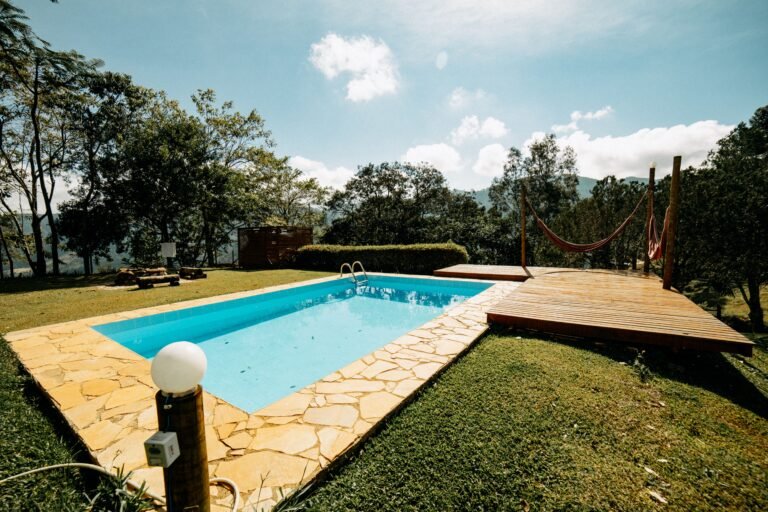
| Patio or pavers | Creates usable space; almost no weekly care | Upfront work and cost; needs a good base and drainage |
| Artificial turf | Green all year; no mowing or watering | Upfront cost; needs cleaning; can get hot; check local rules |
| Mulched natural area under trees | Solves the bare-grass-under-trees problem | Needs mulch topped up; keep it off trunks |
Under trees, grass often fails because of shade and root competition. A mulched natural area is usually a better answer than reseeding the same bare patch every year. Cover at least half the drip line area for large trees, and the whole area for smaller ones, with a crisp edge so mulch does not spill onto the lawn.
Artificial turf deserves an honest note. It removes mowing and watering, but it is not maintenance-free. It needs brushing, rinsing, and leaf removal, and it can feel hot in direct sun. It suits a small, high-visibility patch better than a whole yard, and some neighborhoods or local rules limit it, so check before you commit.
Choose Plants That Suit Your Sun, Soil, and Region
The easiest plant is the one that already likes your conditions. Native plants are a strong starting point, because they are adapted to local climate and soil, and they generally need less water, fertilizer, and care than plants from a very different climate. Your local extension office or a native plant finder by ZIP code can narrow the list for your area.
Repeat a few plants that work, rather than buying one of everything. One of everything means every plant needs different care, different water, and different pruning. A repeated palette looks more intentional, and you learn how each plant behaves.
Sun Beds
For full sun, look for drought-tolerant perennials and grasses once established, such as coneflower, black-eyed Susan, catmint, sedum, and little bluestem. These are reliable choices across much of the country, but “reliable” still means checking your region, soil, and winter cold. In hot, dry climates, agave, red yucca, and autumn sage are often better bets than plants that want regular summer rain.
Shade Beds
For shade, choose groundcovers and shrubs that tolerate low light, such as foamflower under trees, creeping juniper on sunny slopes, and inkberry holly for year-round green in sun to part shade. Shade beds fail most often when a sun-loving plant is placed under a tree and then blamed for not thriving. Match the plant to the light you actually have, not the light you wish you had.
The Evergreen Backbone for Winter
Perennials die back in winter, so a yard of perennials alone looks empty from late fall to spring. Pair them with evergreens, such as inkberry or creeping juniper, to keep structure and color in the cold months. A simple rule helps: at least one evergreen in every bed you see from the house or the street, so the yard never looks abandoned in winter.
Plant at the spacing the plant needs at full size, not the size it is in the pot. Small nursery shrubs look sparse at first, and the temptation is to crowd them. In three years, crowded plants fight each other and the house, and you are back to constant pruning. Space for the adult plant, and let mulch cover the gaps while it grows.
Mulch: The Cheapest Weed Control You Already Own
Mulch does several jobs at once. It holds moisture in the soil, suppresses weeds, moderates soil temperature, prevents erosion, and feeds soil life as organic mulch breaks down. That is why extension guidance treats mulch as a core low-maintenance tool, not a decoration.
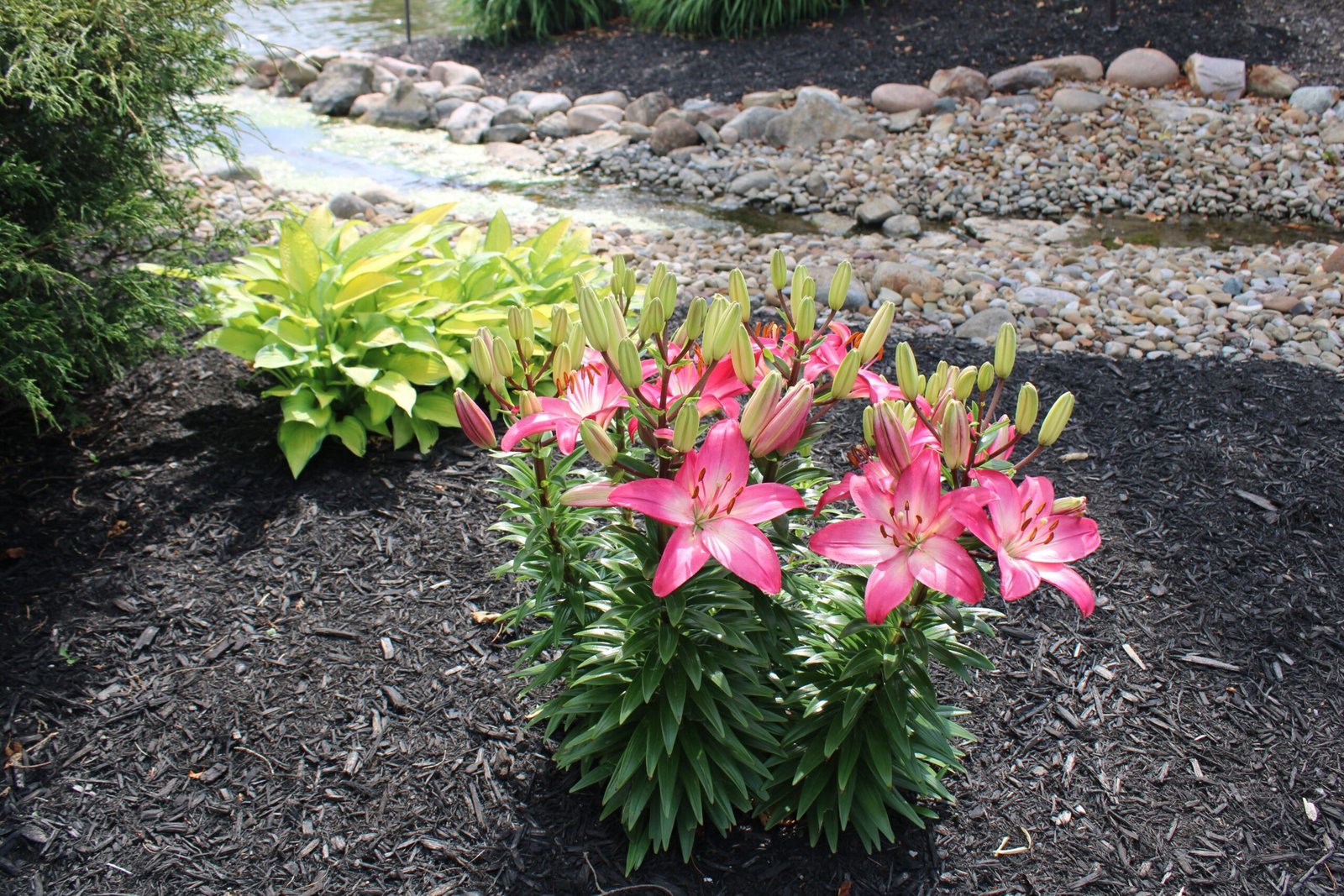
For planting beds, organic mulch such as arborist wood chips works well. A layer around four inches deep helps hold moisture, keep soil cool, limit weeds, and improve soil over time, according to Montana State University Extension’s xeriscaping guidance. Top it up once a year as it settles, and keep it a few inches away from stems and trunks.
That last point matters. A “mulch volcano” piled against a tree trunk keeps bark wet and invites rot. Pull mulch back from trunks and stems, and spread it wide instead of tall. Also avoid plastic sheet mulch or weed fabric in permanent plantings, because it limits oxygen and water reaching roots and soil life. Inorganic mulch such as gravel suits paths and some drought-tolerant plantings, but it can reflect heat and stress sensitive plants, so use it where that trade-off is acceptable.
Put Water on Autopilot
Hand watering is one of the most time-consuming yard jobs, and it is also one of the easiest to automate. Drip lines or soaker hoses on a simple timer water beds at the roots, without dragging a hose around. Group plants with similar water needs on the same zone, so one zone does not drown its neighbors while another stays thirsty.
University extension guidance makes the case clearly: drip irrigation uses 30 to 50 percent less water than sprinkler irrigation, because less water is lost to evaporation, as described in University of Georgia Extension’s xeriscape guide. Water deeply and less often, rather than lightly every day, to encourage deep roots. New plants still need regular water until they establish, so set the timer generously at first and taper as the plants settle.
Check the system each season. Flush lines, clear clogged emitters, and adjust the timer as days lengthen or shorten. A ten-minute seasonal check prevents the slow failure where half a bed quietly dries out.
Hard Surfaces That Save Work
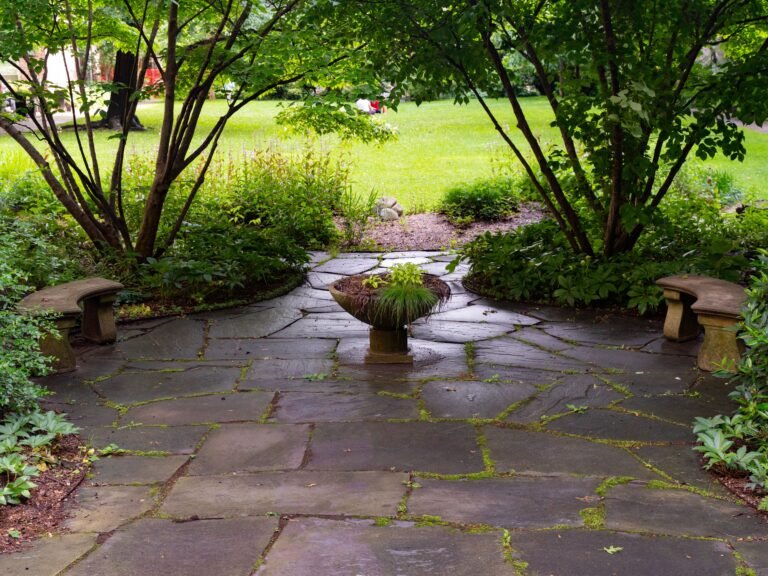
Paths, patios, and edging are not just decoration. They replace lawn and beds with surfaces that need almost no weekly care. A curved path often needs less trimming than a straight one with sharp corners, because curves do not demand a crisp, mowed edge at every angle. Free-flowing bed edges are also easier to mow around than boundaries that jut out abruptly.
Choose edging that keeps mulch in and grass out, and keep bed shapes simple. A bed with twelve corners takes twelve times the edging effort of a bed with a smooth curve. If a lawn strip is too narrow to mow in one pass, it is all edging and no lawn — convert it to a path or a bed and reclaim that time.
Permeable surfaces, such as pavers with gaps or gravel, let rain soak in rather than running off. That helps drainage and reduces puddles, but it does not remove the need for occasional weeding in the gaps. Plan for that small job, and it will not surprise you.
The One-Weekend Start
If you only have one weekend, do not try to redo the whole yard. Do this ordered sequence instead, and stop when the weekend ends.
- First, run the audit and pick the single biggest time-eater.
- Second, edge one bed cleanly and reshape any fussy corners into a smooth curve.
- Third, mulch that bed properly, keeping mulch off stems and trunks.
- Fourth, put one bed on drip irrigation with a timer, and group its plants by water need.
- Fifth, convert one awkward lawn strip or bare patch under a tree to mulch or groundcover.
That is a complete weekend project, and it is also a test. Live with it for a month. If the weekly pass feels shorter, you have proof the system works for you, and you can repeat it bed by bed. If something fails, you have only one bed to fix, not a whole yard.
A Seasonal Rhythm Instead of Weekly Panic
Low-maintenance yards still have seasons. Spring is for dividing crowded perennials, refreshing mulch, and checking irrigation. Summer is for deep watering, light weeding, and leaving established plants alone. Fall is for leaf cleanup, cutting back perennials where you want a tidy winter look, and planting shrubs while soil is still warm. Winter is mostly rest, with evergreens carrying the look.
The rhythm matters because it replaces guilt with a plan. You are not behind if you skip a week in summer. You are on track if the spring and fall jobs get done and the weekly pass stays short.
Mistakes That Create More Work
Three mistakes undo more low-maintenance plans than any other. Planting too close forces years of pruning. Buying too many different plants multiplies care routines. Piling mulch against trunks invites rot. Add a fourth: leaving narrow lawn strips that exist only to be edged.
A fifth mistake is subtler: choosing plants for a photo rather than for your soil. A soil test from your local extension office tells you what your soil actually needs, so you do not buy fertilizer it does not need. If you have heavy clay, resist mixing in sand, which can set into a concrete-like mix with clay. Spread compost on top instead, and let soil life do the mixing over time.
Frequently Asked Questions
What is the lowest-maintenance way to replace a lawn?
There is no single winner. Groundcover suits a bed you do not walk on. Gravel suits a dry, sunny area where you accept weeding and leaf clearing. A patio suits a space you sit in. Artificial turf suits a small, visible patch. Choose by how you use the space, not by which option sounds easiest in general.
How much mulch should I use, and where should it not touch?
For beds, around four inches of organic mulch is a good guide, topped up yearly. Keep mulch a few inches away from stems and tree trunks. Mulch against bark keeps it wet and invites rot, so spread wide rather than piling tall.
Do native plants really need less care?
Usually, yes, when they suit your site. Native plants are adapted to local climate and soil, so they generally need less water and fertilizer than plants from a very different climate. They still need the right sun, soil, and spacing, and they still need water until established.
Is artificial turf actually low maintenance?
It is lower maintenance than a lawn for mowing and watering, but not maintenance-free. It needs cleaning, brushing, and leaf removal, it can get hot in sun, and local rules may limit it. Treat it as one tool for a small area, not a whole-yard solution.
What should I do first if I only have one weekend?
Run the audit, then fix the biggest time-eater in one bed: clean edge, proper mulch, and drip irrigation on a timer. Live with that bed for a month before repeating the system elsewhere.
A Yard That Fits Your Life
A low-maintenance yard is a series of small, smart cuts: less lawn where you do not use it, plants that like your conditions, mulch that covers bare soil, and water on a timer. Start with the audit, fix one bed well, and let the result convince you before you expand. For more practical outdoor guidance in the same spirit, explore Luxury Homes Idea and the About page. If you have a yard problem you would like covered next, send it through the Contact page. A tidy yard is not a yard with nothing in it. It is a yard where everything in it earns its place by needing little from you.
Disclaimer This guide is general information, and yards, soils, climates, and local rules vary. Plants should be checked for your region and site, and drainage, irrigation, or tree work should be assessed by qualified professionals where needed.