What Is Luxury Interior Design? A Clear Guide to Quality, Comfort, and Personal Style
Luxury interior design is the careful planning of a room so it feels calm, comfortable, and refined to live in. It uses quality materials, good proportions, thoughtful light, and personal details. Price can be part of it, but price alone does not make a room luxurious.
That last point matters. A room can cost a lot and still feel cold, cluttered, or hard to use. Another room can feel luxurious with fewer pieces, if each piece fits well and the light is kind. This guide explains the difference in plain words, so you can recognize luxury design and use its ideas in your own home.
Luxury Interior Design, in Plain Words
Think of luxury interior design as design with intention. Every choice has a reason. The sofa fits the wall. The light helps you read at night. The rug is large enough to ground the seating area. Nothing feels random, and nothing feels forced.
Designers often describe luxury as harmony rather than expense. In other words, the room works as a whole. Colors relate to each other. Materials feel good to touch. There is space to move and space for the eye to rest. When these parts agree, the room feels settled, even if you cannot name why at first.
Luxury design also respects daily life. A beautiful chair that hurts to sit in is not luxurious. A white sofa that cannot survive a family dog may look refined in a photo, yet it fails the real test. True luxury design asks: how will this room be used on a normal Tuesday, not only when guests arrive?
This idea applies to many kinds of homes. You can find it in a small apartment, a suburban house, or a large estate. Size helps, but it is not the definition. What matters is how well the room is planned, made, and finished.
Luxury Is Not the Same as Expensive
Expensive and luxurious overlap, but they are not the same word. Expensive describes cost. Luxurious describes experience. A room can be one without being the other.
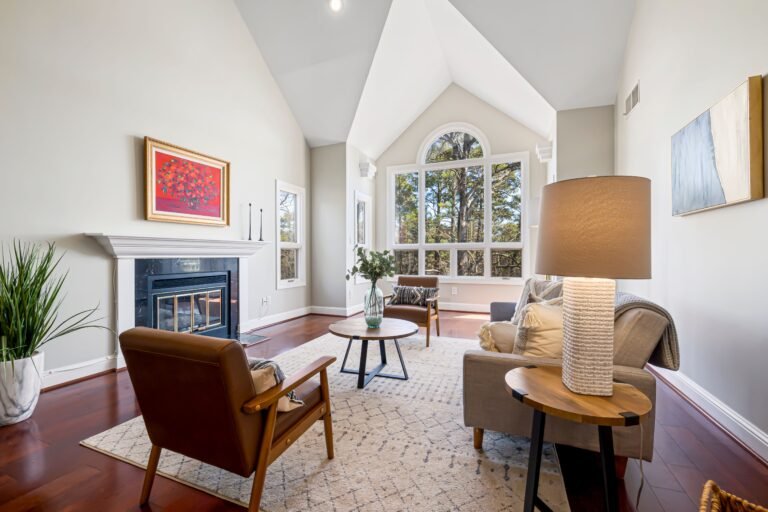
Consider two example living rooms. The first has a costly sofa, a costly rug, and a costly light fixture, but the sofa blocks a walkway, the rug is too small, and the light is harsh. The second has fewer pieces, a comfortable sofa at the right scale, warm layered light, and one piece of art the owner loves. Most visitors will call the second room more luxurious, even if it cost less. The difference is planning, not price.
What Expensive Rooms Sometimes Get Wrong
Expensive rooms often go wrong in the same few ways. They fill every wall and surface. They mix too many strong materials at once, so marble, brass, velvet, and bold pattern compete instead of supporting each other. They choose size for impact rather than for the room, so furniture crowds the space or floats in it.
Luxury design edits. It leaves breathing room. It repeats one or two materials so the room feels connected. It chooses a focal point, such as a fireplace, a window view, or a piece of art, and lets other pieces support it. Restraint is not emptiness. It is the confidence to stop before the room becomes noise.
This distinction is good news for beginners. You do not need to replace everything to move toward luxury. You need to make fewer, better decisions, and to check each decision against comfort and proportion.
The Seven Elements That Create the Feeling
No single element creates luxury on its own. The feeling comes from several elements working together. Here are the seven this guide uses, consistent with professional explanations of luxury interior design.
First, quality materials. Natural stone, solid wood, genuine leather, wool, linen, silk, and velvet are common because they age well and feel rich to touch. You do not need all of them. One honest, well-chosen material often does more than five flashy ones.
Second, craftsmanship. Look at joins, stitching, drawer movement, and edge finishes. In a well-made room, these details are neat and quiet. They do not draw attention to themselves, but they make the room feel solid and cared for.
Third, proportion and scale. Furniture should fit the room and fit each other. A sofa should relate to the rug beneath it. Art should relate to the wall it hangs on. A lamp should relate to the table beside it. When scale is right, the room feels natural. When it is wrong, even costly pieces look out of place.
Fourth, layered light. Luxury rooms rarely rely on one bright ceiling light. They combine general light, task light for reading or cooking, and accent light for art or texture. This layering lets the room change from day to evening.
Fifth, a restrained color palette. Many luxury rooms start with neutrals, such as warm white, cream, gray, or taupe, and add one or two deeper accents. The calm base lets materials and light do the work. Bold color can still belong, but it works best as an accent, not as a competition on every surface.
Sixth, personalization. Custom or tailored pieces, art you chose for a reason, books you actually read, and objects from travel or family give a room identity. Without personal touches, a room can look like a showroom: polished, but forgettable.
Seventh, comfort and function. Storage should be easy to reach. Seating should support long conversations. Walkways should stay clear. A room that is hard to live in will stop feeling luxurious quickly, no matter how it photographs.
Materials You Can See and Touch
Start with touch. Run your hand over a table edge. Sit on a chair for ten minutes, not ten seconds. Notice whether a fabric feels soft, stiff, scratchy, or warm. Luxury materials tend to feel consistent and honest. Wood looks like wood. Stone feels cool and solid. Metal has weight.
You can apply this idea at any budget. A solid wood side table, a wool throw, or a linen curtain can carry more feeling than a large piece made from thin, hollow materials. Choose fewer surfaces, and choose them with care.
Craft and Finishing Details
Details are where luxury hides. Check that cabinet doors close evenly. Check that a rug lies flat. Check that curtains hang to a consistent length. These small facts signal care. They also affect daily life: a drawer that sticks will annoy you far more than a slightly plainer drawer front.
If you are buying one piece at a time, spend your attention on the piece you touch most. For many people, that is the sofa, the bed, or the dining chairs. A well-made everyday piece improves daily comfort in a way a rarely used display piece cannot.
Personal Touches That Make It Yours
Personal does not mean cluttered. Choose three to five items that mean something to you, and give them a clear place. A framed print from a trip, a handmade bowl, or a stack of favorite books can anchor a room. Then remove items that carry no meaning and no function. The room will feel more personal, not less, because what remains was chosen on purpose.
Light and Proportion: The Two Quiet Signals
If you remember only two ideas from this guide, remember light and proportion. They shape how a room feels before you notice materials or brands.
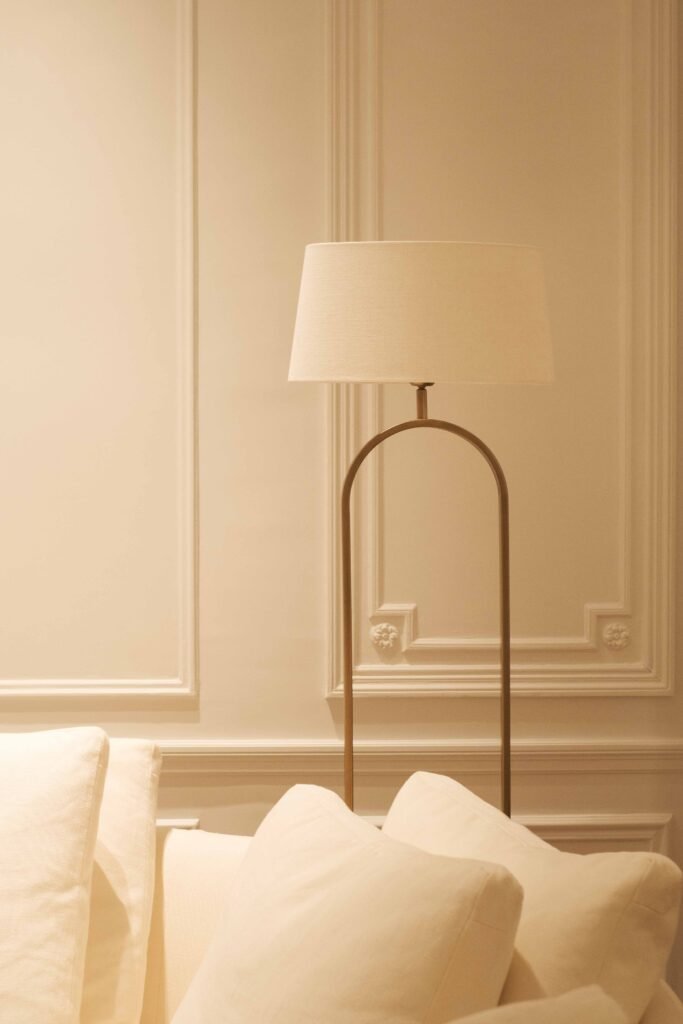
Layered lighting means using more than one kind of light. General light fills the room. Task light helps you read, cook, or work. Accent light draws the eye to art, a textured wall, or a plant. Dimmer switches help, because the same room needs brighter light for cleaning and softer light for evening rest. Warm light usually feels more relaxing in living rooms and bedrooms, while clearer light suits kitchens and work areas.
Proportion means relationships. A simple check helps: stand at the doorway and look at the largest piece first. Does it leave room to walk around it? Does the rug extend beyond the seating, or does it look like a small mat under a large sofa? Does art fill its wall in a balanced way, or does it look lost? If one relationship feels wrong, fixing that one relationship often improves the whole room.
Sources on modern luxury design make the same point: furniture chosen for proportion, before looks alone, will feel more luxurious than an oversized piece that leaves no room to move, however plush it is. That advice is worth repeating because it saves money. It stops you from buying size when you need fit.
For more room-by-room inspiration, you can browse the Luxury Home Design guides on this site. They show how these same ideas appear in kitchens, bathrooms, and whole-home plans.
Styles That Carry Luxury Well
Luxury is not one style. It is a quality that different styles can carry. Knowing the main styles helps you choose a direction instead of copying random images.
Modern luxury uses clean lines, open space, and a calm palette, with warmth from wood, stone, and soft textiles. It suits people who like order and quiet rooms.
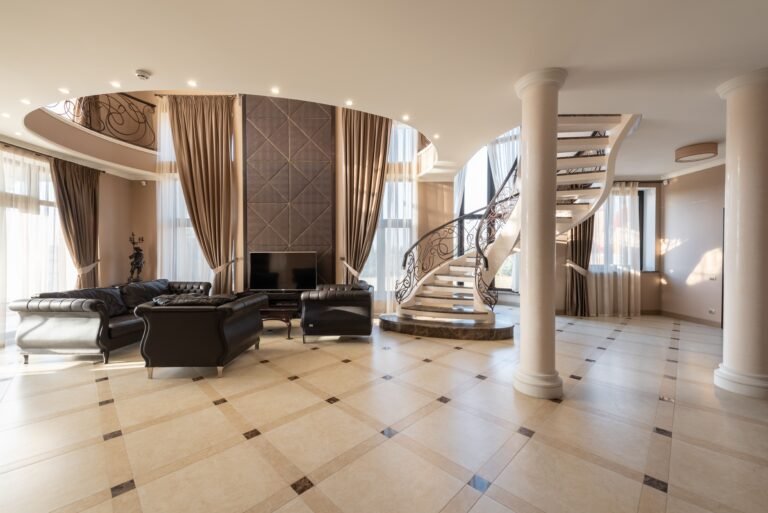
Classic luxury uses symmetry, moldings, rich wood, and refined pattern. It suits people who love traditional rooms and formal detail. The risk is heaviness, so classic rooms need light and breathing space too.
Minimalist luxury uses very few pieces, but each piece is excellent. It suits people who dislike clutter. The risk is coldness, so texture and warm light matter even more here.
Transitional luxury sits between modern and classic. It mixes clean shapes with softer, traditional comfort. Many beginners find this style easiest to live with, because it forgives a mix of old and new pieces.
Maximalist luxury uses pattern, color, and collections with confidence. It can feel rich and personal. The risk is chaos, so it needs a repeated color or material to hold the collection together.
No style is more luxurious than another. The right style is the one that fits your architecture, your daily life, and your taste — and that you can carry consistently from room to room.
Try This: The Three-Question Room Test
Here is an original test you can use in any room, without buying anything. Stand in the room at two times of day, once in daylight and once in the evening, and ask three questions.
One, can I move easily? Walk the paths you use most: from door to seat, from seat to kitchen, from bed to bathroom. If you must turn sideways, step around furniture, or move a chair every time, proportion or layout needs work before decoration.
Two, does the light help what I do here? Try reading, talking, eating, or resting in the room. If one harsh light creates glare, or if corners stay dark, the room needs another layer of light, not another object.
Three, what do I touch and notice first? Sit where you sit most. What is at hand height? What do you see straight ahead? Luxury rooms put comfort and meaning at that level: a good lamp, a soft throw, a view, or art you enjoy. If the first thing you notice is clutter, a broken item, or an empty wall, that is your next fix.
Score the room simply. Three yes answers mean the room already carries luxury well, even if it is plain. Two yes answers mean one clear fix will lift it. Fewer than two mean you should fix layout and light before buying accessories. This test keeps you from spending on decoration when the room’s real problem is movement or light.
Mistakes That Break the Feeling
A few mistakes appear again and again, and all of them are fixable. The first is relying on a single harsh ceiling light, which flattens texture and creates hard shadows. Add a lamp or two before you add more decor.
The second is mixing too many styles without a link. Eclectic rooms can be beautiful, but the pieces should share something: a color, a material, a shape, or a period. Without a shared thread, the room reads as a collection of separate purchases.
The third is choosing furniture by showroom size. Measure your room, doorways, and stairways before ordering. Note ceiling height, window positions, and outlets. A piece that fits the store may not fit your home.
The fourth is filling every surface. Luxury needs empty space. Leave part of a shelf empty. Leave a wall bare if the room already has a focal point. Empty space is not wasted space; it lets the good pieces be seen.
The fifth is copying a photo exactly. A room in a photo was styled for a camera, with light and angles chosen for that shot. Your room must work for morning routines, pets, children, guests, and cleaning. Borrow the idea, then adapt it to your life.
If your plans involve moving walls, changing wiring, or altering plumbing, stop and hire a licensed professional before that work begins. Design ideas are safe to explore on paper. Structural and electrical changes are not do-it-yourself experiments.
How to Start Without a Full Renovation
You do not need to renovate to practice luxury interior design. Start with the room you use most, and work in this order.
First, clear and measure. Remove items that are broken, unused, or meaningless. Measure the room and the main furniture. This step costs nothing and often improves the room immediately.
Second, fix light. Add one task lamp where you read, and one warm accent light for the evening. Use dimmers where they are already available, and replace harsh bulbs in living areas with warmer ones. Notice how the room changes at night.
Third, fix scale. Adjust the rug, move one oversized piece, or raise art to eye level. Small moves in proportion often matter more than new purchases.
Fourth, add one quality touch. Choose the material you touch most: bedding, a throw, towels, or a dining chair cushion. One good texture can change how the whole room feels.
Fifth, add one personal piece. Hang art you love, display a meaningful object, or place books you return to. Then stop, live with the room for two weeks, and notice what still bothers you. That irritation is your next brief, and it will be more accurate than any shopping list.
If you want to learn more about the ideas behind this site, read About Luxury Homes Idea. It explains the site’s view that luxury means comfort, character, and thoughtful design, not price alone.
Frequently Asked Questions
What is luxury interior design in simple terms?
It is interior design that plans a room around quality, proportion, light, comfort, and personal detail, so the room feels calm and refined to live in, not only to look at.
Does luxury interior design have to be expensive?
No. Expense can buy quality materials and custom work, but luxury comes from intention, fit, and finish. A modest room with good light, right-sized furniture, and one quality texture can feel more luxurious than a costly room with poor layout.
What is the difference between luxury and expensive design?
Expensive describes what something cost. Luxury describes how a room feels and works. An expensive room can feel harsh or cluttered. A luxurious room feels settled, comfortable, and personal, whatever its budget.
Can a small room have luxury interior design?
Yes. Small rooms often benefit most from luxury principles: clear surfaces, correctly scaled furniture, layered light, and a restrained palette. In a small room, editing matters more, because every piece is visible.
What are the main elements of luxury interior design?
Quality materials, careful craftsmanship, good proportion, layered light, a restrained palette, personal touches, and everyday comfort. No one element is enough alone; the feeling comes from their combination.
How do I start if I cannot hire a designer?
Start with the three-question room test above: movement, light, and what you touch first. Fix layout and light first, then add one quality texture and one personal piece. Live with the result before buying more.
Luxury interior design, at its best, is quiet. It does not shout about cost. It makes daily life easier, calmer, and more pleasant — and it leaves room for the people who live there. Start with one room, one fix, and one honest question: does this help me live better here? If the answer is yes, you are already designing with luxury in mind.