Pool Design: How to Plan a Pool That Fits Your Yard and Life
Pool design is the process of matching a pool’s type, size, shape, and safety features to your yard and to how you will actually swim. A good pool is not the largest or the most photographed one. It is the one that fits the lot, suits the swimmers, can be kept safe, and can be maintained for years without becoming a burden.
Before any other planning, read the safety section below. Pools involve water, electricity, and structure, and the decisions in that section change what you can build, where you can put it, and what it will cost. They are not finishing touches.
Before Anything Else: Safety, Permits, and Professionals
Safety first, in plain terms. Drowning is fast and often silent, and young children are at particular risk around residential pools. The Consumer Product Safety Commission recommends layers of protection, not a single safety feature. That means a fence with self-closing, self-latching gates completely surrounding the pool to prevent unsupervised access by young children, alarms on doors if the house forms one side of the barrier, and a power safety cover where appropriate. It also means keeping rescue equipment and a phone near the pool, learning CPR, and never leaving a child unattended in or near water. Designate one undistracted adult as the Water Watcher when children are swimming — not someone reading, texting, or cooking at the same time.
Barrier details matter and vary by local code, so treat these as the commonly cited baseline to check against your own rules, not as your local law: fences and walls at least 4 feet (48 inches) high, gates that close and latch by themselves with the latch out of a small child’s reach, and, for above-ground pools, steps and ladders secured, locked, or removed when the pool is not in use. Keep children away from pool drains and make sure drain covers comply with federal safety standards. If you own an above-ground pool, also check whether any of its parts have been recalled — the CPSC has flagged cases where straps or similar parts created footholds and helped children climb in.
Permits and setbacks come before digging. In most parts of the United States, an inground pool needs a building permit before work starts, and separate electrical and plumbing permits may also apply depending on the design, as summarized in guidance on pool permits and barrier rules. Skipping permits can lead to fines, delayed inspections, required reconstruction, or insurance problems later. Check with your city or county building department early, and get the barrier, gate, and alarm requirements in writing.
Hire a licensed professional for technical work. Pool construction involves excavation, structure, plumbing, and electrical systems, including pumps, lights, and bonding. Do not attempt do-it-yourself work on gas lines, main electrical panel work, structural changes, or pool electrical systems. Use licensed pool builders, electricians, and plumbers for those parts, and have the work inspected as your local code requires. This article explains planning choices; it is not a construction manual, and it does not replace a professional’s assessment of your soil, lot, utilities, and local code.
With that foundation set, you can plan the pool itself with a clear head.
Start With Who Swims and How
The most useful planning question is not “What shape do I like?” It is “Who swims, and what do they do in the water?” The answers change everything.
- Lap swimming needs length and a straight stretch. A short, curvy pool frustrates a lap swimmer every day.
- Family play needs a shallow play area, easy steps in and out, and space for adults to watch from the deck.
- Relaxing and cooling off needs comfortable seating in the water, shade nearby, and a depth where adults can stand comfortably.
- Hosting needs deck space, seating, and a layout where swimmers and non-swimmers can talk without shouting across water.
- Therapy or gentle exercise needs easy entry, handrails, and a depth and temperature plan discussed with a health professional where relevant.
Also ask how often the pool will be used, and by what ages. A pool used daily by teenagers has different needs from a pool used on summer weekends by grandparents and grandchildren. Be honest about the off-season, too. A pool that sits unused for months still needs care, covering, and protection from weather. If that honest answer is “a few weekends a year,” a smaller pool — or no pool — may be the better design decision.
Write the main use in one sentence before you look at shapes or types. For example: “A family pool for play and weekend hosting, used by two adults and three children.” That sentence becomes your filter for every later choice.
The Four Main Pool Types Compared
There are four main types for homes. Each has a different character, and none is right for every yard.
Concrete (often called gunite or shotcrete). Concrete is sprayed over steel reinforcement and finished with plaster or a similar surface, so almost any shape or depth is possible. That freedom suits custom shapes, beach entries, and built-in benches. The trade-off is time: concrete pools generally take the longest to build, and the surface needs refinishing over its life. Concrete is a strong choice when the yard is awkwardly shaped or the design is highly custom.
Fiberglass. A fiberglass pool is a molded, one-piece shell made in a factory and delivered to the site. Installation is generally faster than concrete, and the smooth surface is easy to clean. The trade-off is choice: you pick from available shell shapes and sizes rather than designing any shape you like, and the shell must be transported to your yard, which can be difficult on narrow or hard-to-access lots. Fiberglass suits buyers who like a standard shape and want a shorter build.
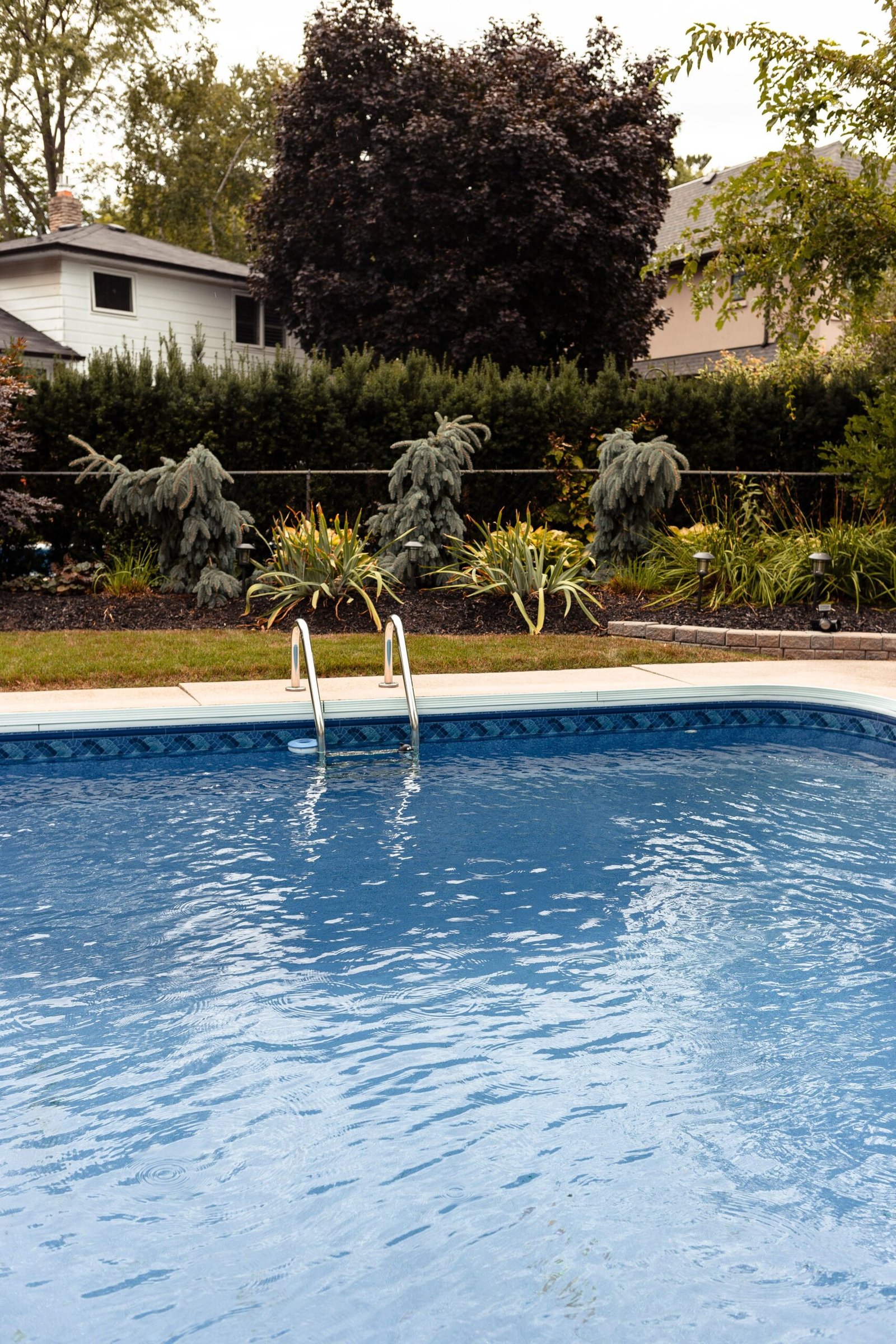
Vinyl liner. A vinyl-liner pool uses wall panels with a flexible liner as the water-holding surface. It usually has the lowest first cost of the inground types, and the liner can be replaced to refresh the look. The trade-off is the liner itself: it needs replacement every 7 to 12 years in general guidance, and it can be punctured or wrinkled if not cared for. Vinyl suits buyers who want an inground pool at a lower starting cost and accept a recurring liner cost.
Above-ground. Above-ground pools sit on the ground rather than in an excavation. They cost less to install, can sometimes be moved, and suit renters or uncertain buyers better than inground types. The trade-off is depth, size, and appearance: they are usually shallower and less integrated into landscaping, and they still need barriers, permits where required, and safe, lockable access. An above-ground pool is not a way to skip safety rules.
A note on cost: this article deliberately gives no national price, because pool prices vary so much by region, site conditions, size, and finishes that a single figure would mislead. Get written quotes from licensed local builders for your lot, and compare the same scope — shell, deck, fence, equipment, and permits — not just the shell price. Ask each builder what is included, what the running costs are, and what future costs (such as resurfacing or a liner) to expect.
Size and Shape: Fit the Yard, Not the Photograph
A pool that looks perfect in a photograph can overwhelm a real yard. When you size a pool, leave room for everything around it: deck, fence and gates, equipment access, and a patch of yard that is not pool or deck. A yard that is all pool and concrete has nowhere to dry off, sit in shade, or store equipment, and it can feel smaller, not grander.
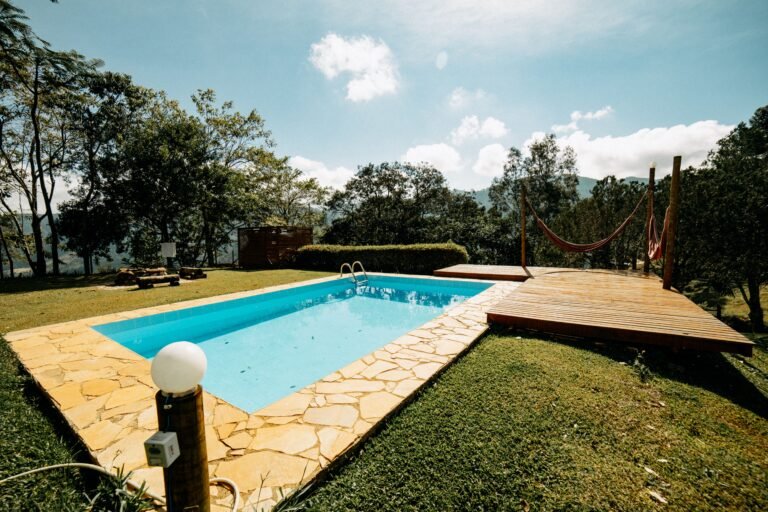
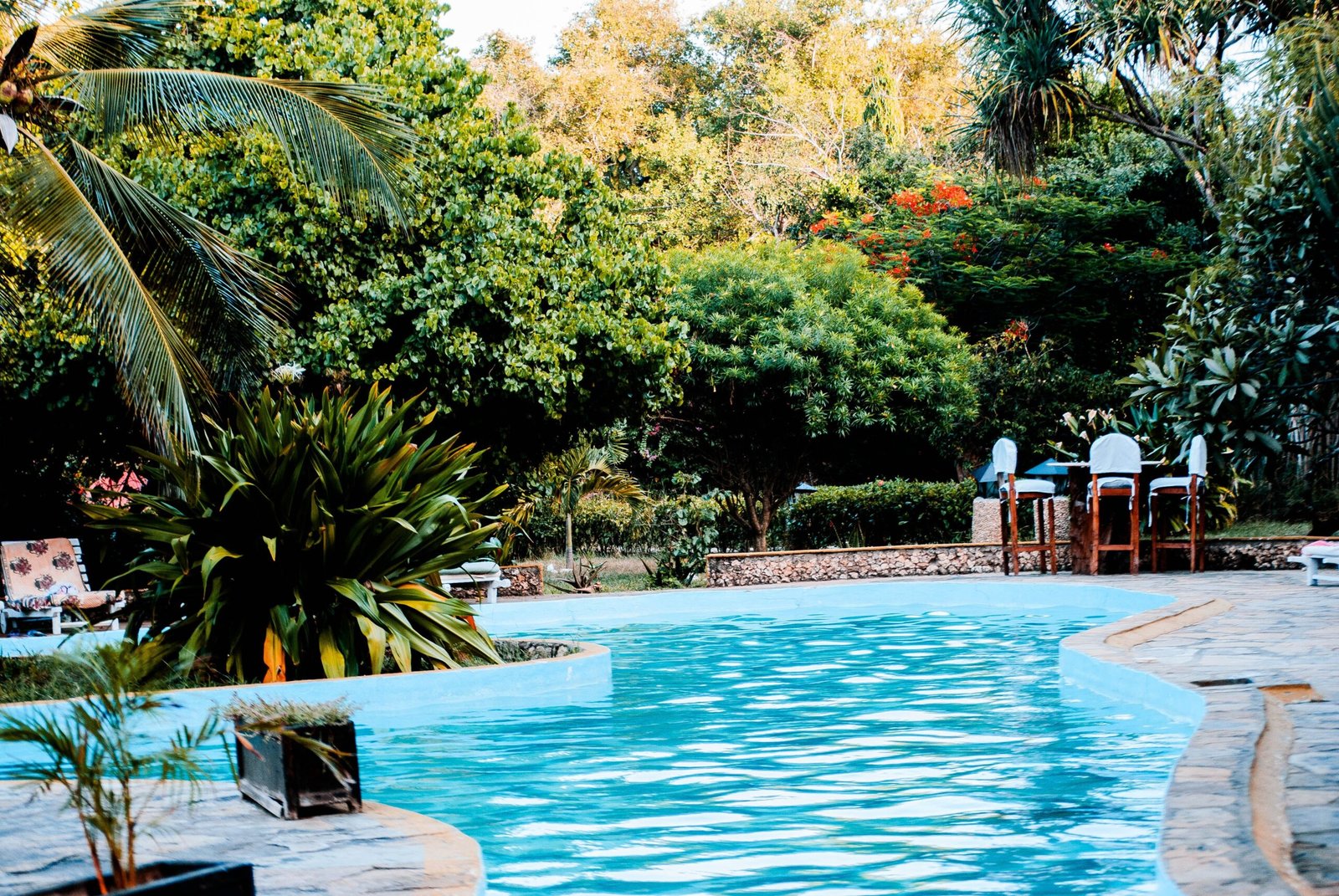
Shape should follow use. A rectangle suits laps and games. A freeform, curved shape suits a natural, garden-like setting and can fit an awkward lot. A small plunge pool suits cooling off and relaxing in a tight yard where a full pool cannot fit. Depth should follow use as well: a play pool needs a generous shallow area, while a diving pool needs a deep end designed and built to the relevant safety standards by professionals — do not add diving features to a pool that was not designed for them.
Entries that matter more than shape
How people get in and out of the water matters more, day to day, than whether the pool is curved or rectangular. Wide steps, a beach-style gradual entry, a bench along one wall, and sturdy handrails make a pool usable for children, older adults, and anyone with limited mobility. A pool with one narrow ladder is harder to use and harder to supervise than a pool with broad, visible steps. When you visit display pools or builders’ past projects, watch how people enter and exit, not just how the water looks.
Shade and wind matter, too. A pool in full afternoon sun without shade nearby is hard to enjoy, and a pool under a large tree will collect leaves daily. Note the sun, wind, and leaf fall on your lot across the day before you fix the pool’s position. A little shade on the deck, a windbreak of shrubs, and a position away from the heaviest leaf fall will save hours of cleaning and make the pool more pleasant.
The Pool Fit Scorecard
Here is a decision tool you can use before you choose a type. For each of the five questions, note which type handles your answer with the fewest compromises. The type with the fewest compromises is your starting point for builder conversations — not a final decision, but a focused one.
- Use: Does the type offer a shape and depth that fit your main use (laps, play, relaxing, hosting)? A custom shape need points to concrete; a standard shape need points to fiberglass or vinyl.
- Yard: Can the type be delivered and built on your lot? Check access for a fiberglass shell, excavation space for concrete, and setbacks for all types.
- Safety budget: Can you afford the full safety package — fence, gates, alarms, cover — not just the shell? If the shell leaves no budget for barriers, the pool is not affordable yet.
- Upkeep time: How much weekly and seasonal care will you honestly do? A smooth fiberglass surface and a simple shape need less scrubbing; a complex shape with many corners needs more.
- Future plans: Will you stay in this home long enough to enjoy a long build and a long-lived pool, or might you move in a few years? A shorter, simpler installation suits an uncertain horizon better.
Work through the scorecard with your household, not alone. A pool is a shared, long-lived decision, and the person who cleans it should have a vote in how complex it is.
Deck, Shade, and Equipment in Plain English
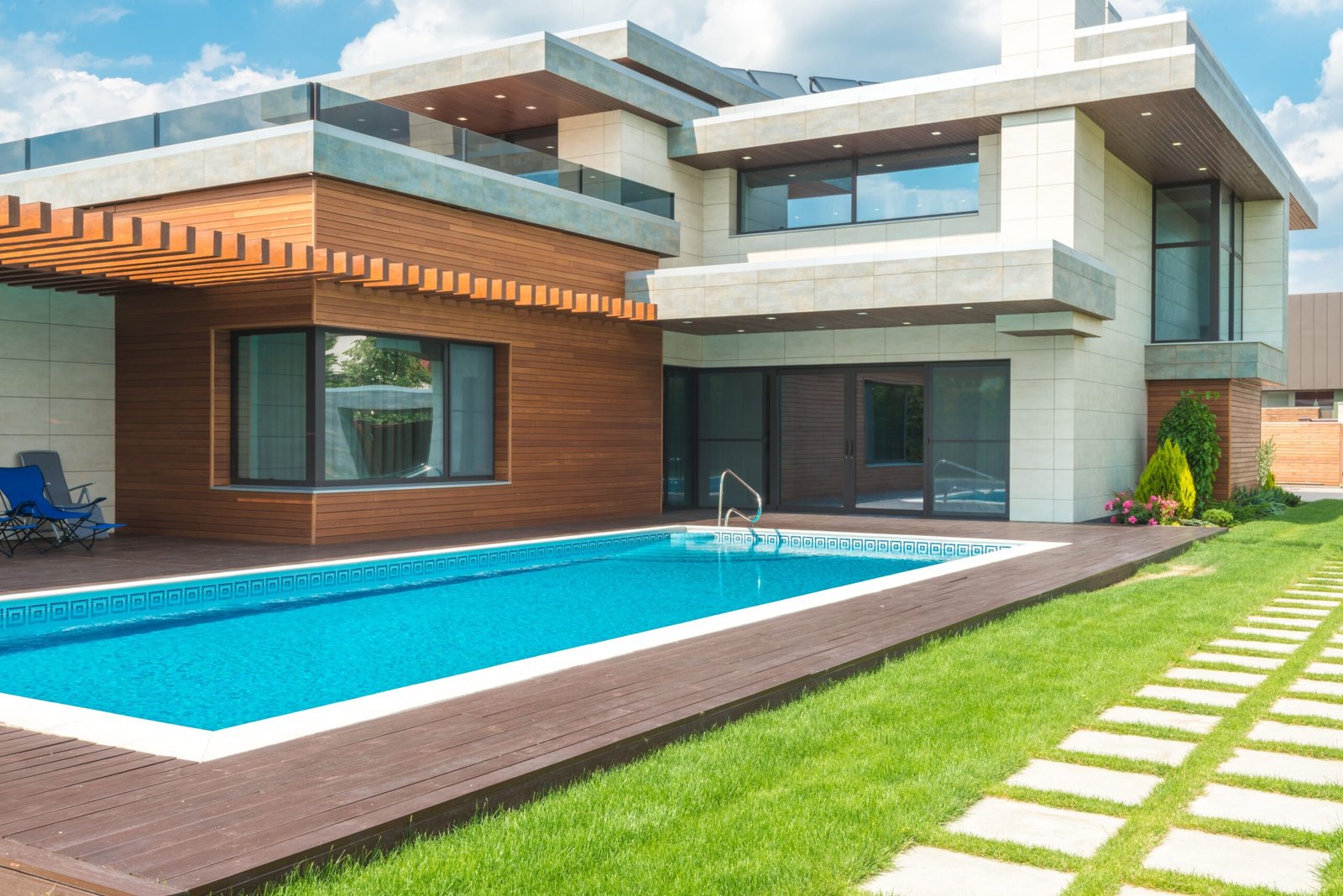
The deck is the floor around the pool, and it matters as much as the water. It should be slip-resistant when wet, comfortable to walk on barefoot in summer, and wide enough for chairs and safe movement. Different surfaces — concrete, pavers, stone, wood — differ in heat, slipperiness, and upkeep, so ask builders how each behaves in your climate and how it is maintained.
Shade is not optional in most of the United States. A pergola, shade sail, umbrella, or well-placed tree on the deck gives swimmers a place to rest and protects children from long sun exposure. Plan shade at the design stage, not as an afterthought, because a shade structure needs footings and space that are hard to add later.
Equipment is simpler than it sounds. A pump moves water through the system. A filter removes debris and fine particles. A heater (gas, electric, or heat pump) extends the swimming season. A sanitizer keeps the water safe to swim in — most commonly chlorine, either added directly or made on site by a salt chlorine generator, which converts dissolved salt into chlorine. A salt system does not mean a chlorine-free pool; it means chlorine is produced in the system rather than added by hand. Ask a licensed professional which sanitizer, pump, and filter suit your pool size, use, and local water, and how each is maintained. Equipment choices affect running costs for years, so compare them on lifetime cost, not just purchase price.
The Real Upkeep Rhythm
A pool needs regular care, and the rhythm is part of the design decision. Expect weekly tasks in swimming season: testing and adjusting water chemistry, skimming leaves, emptying baskets, and checking equipment. Monthly tasks include deeper cleaning and equipment checks. Seasonal tasks include opening and closing the pool, covering it, and protecting equipment from freezing weather where relevant.
If that rhythm sounds like more than you will do, say so now. You can hire a pool service, choose a simpler shape and a smoother surface, or choose a smaller pool. Neglected water chemistry damages surfaces and equipment, and neglected safety features — a gate that no longer latches, a cover that no longer closes — stop protecting anyone.
Mistakes That Shrink a Yard or a Budget
- Treating safety as an extra. Fence, gates, alarms, and covers are part of the pool, not upgrades. Budget them from the first quote.
- Sizing by photograph. A pool that fills the yard leaves no deck, no shade, and no access. Leave breathing room around the water.
- Ignoring leaves, wind, and sun. A pool under a shedding tree or in a wind tunnel costs time every week. Walk the lot at different times before you fix the position.
- Comparing shell prices only. Two quotes can differ by tens of thousands of dollars in what they include. Compare deck, fence, equipment, permits, and future costs side by side.
- Adding diving features to an unsuitable pool. Diving needs a pool designed and built for it by professionals. Do not retrofit a diving board onto a shallow or unsuitable pool.
For more outdoor planning ideas, browse the home design ideas on Luxury Homes Idea, and read about Luxury Homes Idea for the site’s approach to comfortable, livable homes.
Frequently Asked Questions
Which pool type is best?
There is no single best type. Concrete suits custom shapes, fiberglass suits faster builds with standard shapes, vinyl suits a lower starting cost with a recurring liner cost, and above-ground suits lower cost and flexibility. Use the Pool Fit Scorecard above — use, yard, safety budget, upkeep time, and future plans — to find the type with the fewest compromises for you.
Do I need a permit and a fence for a pool?
In most US areas, an inground pool needs a building permit before digging, and separate electrical or plumbing permits may apply. A barrier completely surrounding the pool, with self-closing, self-latching gates, is a standard safety expectation and is required by many local codes. Check your city or county building department for the exact rules for your lot, and get them in writing before you sign a build contract.
How big should a pool be?
Big enough for its main use and small enough to leave deck, fence, shade, and yard around it. Lap swimming needs length; family play needs a generous shallow area; cooling off needs only a small plunge pool. Measure your lot, subtract setbacks, deck, and access, and size the pool from what remains — not from a photograph.
Is a saltwater pool better than a chlorine pool?
A salt chlorine generator makes chlorine on site from dissolved salt, so owners often report softer-feeling water and steadier sanitizer levels, with less hand-dosing. It is still a chlorinated pool, and the generator cell needs maintenance and eventual replacement. The better choice depends on your pool size, use, budget, and what your licensed builder or service professional recommends for your water and equipment.
How much upkeep does a pool need?
Expect weekly care in swimming season — water testing and adjustment, skimming, basket emptying, and equipment checks — plus monthly deeper cleaning and seasonal opening and closing. Simpler shapes and smoother surfaces need less scrubbing. If you will not do this work yourself, budget for a pool service from the start.
Decide the main use, confirm safety and permits with your local authority, run the scorecard, and only then compare builder quotes for the same scope. A pool planned in that order is far more likely to be enjoyed for years than one chosen from a photograph.
Disclaimer
This article shares general planning information only. Pools involve water, electricity, and structure, and local codes vary. Hire licensed professionals for pool construction, electrical, plumbing, and structural work, and confirm permits and safety requirements with your local authority.