Back Porch Ideas: How to Turn the Back of Your House Into a Room You Actually Use
A back porch works when it stops being a passage and starts being a room. Most back porches fail for a simple reason: they were never given a job. A chair is placed by the door, a table is pushed against the wall, and the space becomes a place to pass through on the way to the yard, not a place to stay.
Start with the life you want on the porch, not with furniture. Do you want slow mornings with coffee, a place for family dinners, a quiet corner for reading, or a safe spot where children can play while you watch from the kitchen? Each answer leads to a different layout, a different cover, and a different kind of light.
That order matters because a porch is exposed to weather, light, and insects in a way an indoor room is not. If you choose the job first, the rest of the choices become easier. You will know how much shade you need, how much seating is enough, where the light should fall, and what you can leave outside all year.
First, Give the Porch a Job
A porch without a job becomes storage. A porch with a job becomes a habit. The job does not need to be grand. It needs to be specific enough that you can test every later choice against it: does this help the morning coffee, the family dinner, or the quiet hour?
Morning coffee. If mornings matter most, put a small table and two comfortable chairs near the kitchen door, where coffee is close and the walk is short. Add a light that is soft enough for early light, and a spot for a book or a phone that does not take over the table.
Quiet work or reading. If you want a place to read or work, choose one chair with good back support, a side table at elbow height, and shade that does not glare on a screen or a page. Keep the chair away from the main walk so you are not in the path every time someone goes to the yard.
Family dinner. If dinner is the job, the table is the center. Leave room to pull a chair out, to carry food from the kitchen, and to clear plates without squeezing past a railing. A table that is too large for the porch will make every meal feel crowded, even when only two people sit down.
Easy play. If children will use the porch, keep the middle open, choose pieces that can be moved, and avoid sharp corners at head height. A porch that can change from play in the afternoon to dinner in the evening will be used more than a porch that is fixed for one moment.
Unfinished jobs. If you are still deciding, leave the porch flexible for a season. Use light pieces, a rug you can move, and a table that can change size. Live with the space before you build anything fixed, and watch where the sun falls, where the rain reaches, and where you naturally sit.
Pick one main job and let the others be guests. A porch can host dinner sometimes and reading often, but if it tries to do everything at once, it will do nothing well. The main job decides the size of the table, the number of chairs, and the kind of light you need after dark.
That job then decides the cover, the zones, and the budget. A coffee porch needs little more than shade and a small table. A dinner porch needs a larger table, more light, and a cover that keeps rain off the food. Start with the job, and the rest of the porch will follow.
Cover It Like a Room, Not a Roof
A cover is what turns a porch into a room. Without it, the porch is only usable when the weather is perfect, which is rarely. With it, the porch can hold furniture, light, and a rug without everything being carried inside at the first cloud. Browse covered porch ideas for inspiration, but choose the cover that fits your climate, your house, and your budget, not the one that looks best in a photo.
Solid Roof
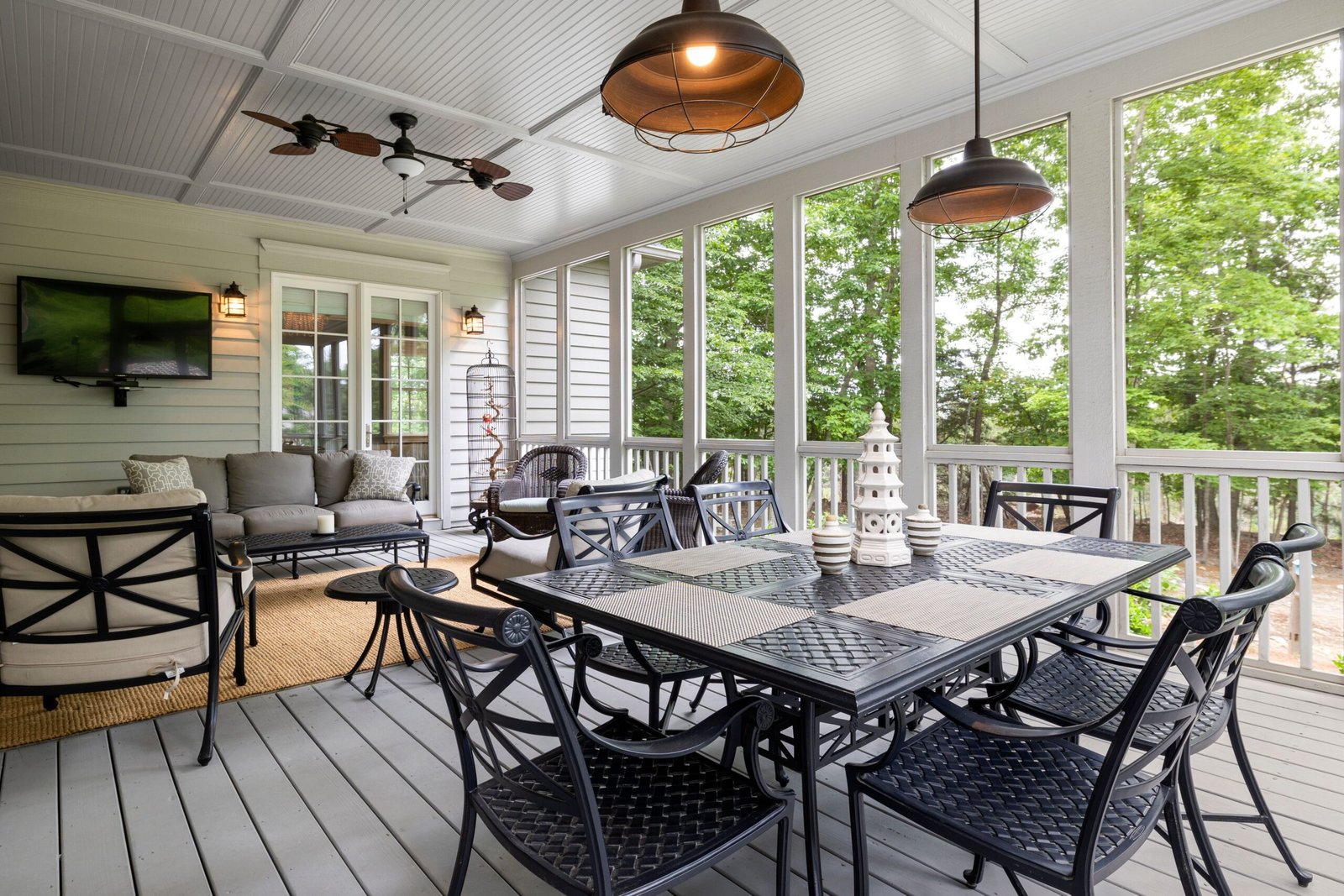
A solid roof gives the most protection. It keeps rain off the table, shades the seating in summer, and lets you add a ceiling fan and fixed lights. It also costs the most and needs proper structure, drainage, and permission where local rules require it. If you build a solid roof, plan for how water leaves it, how it joins the house wall, and how it will hold up in wind and snow.
Pergola
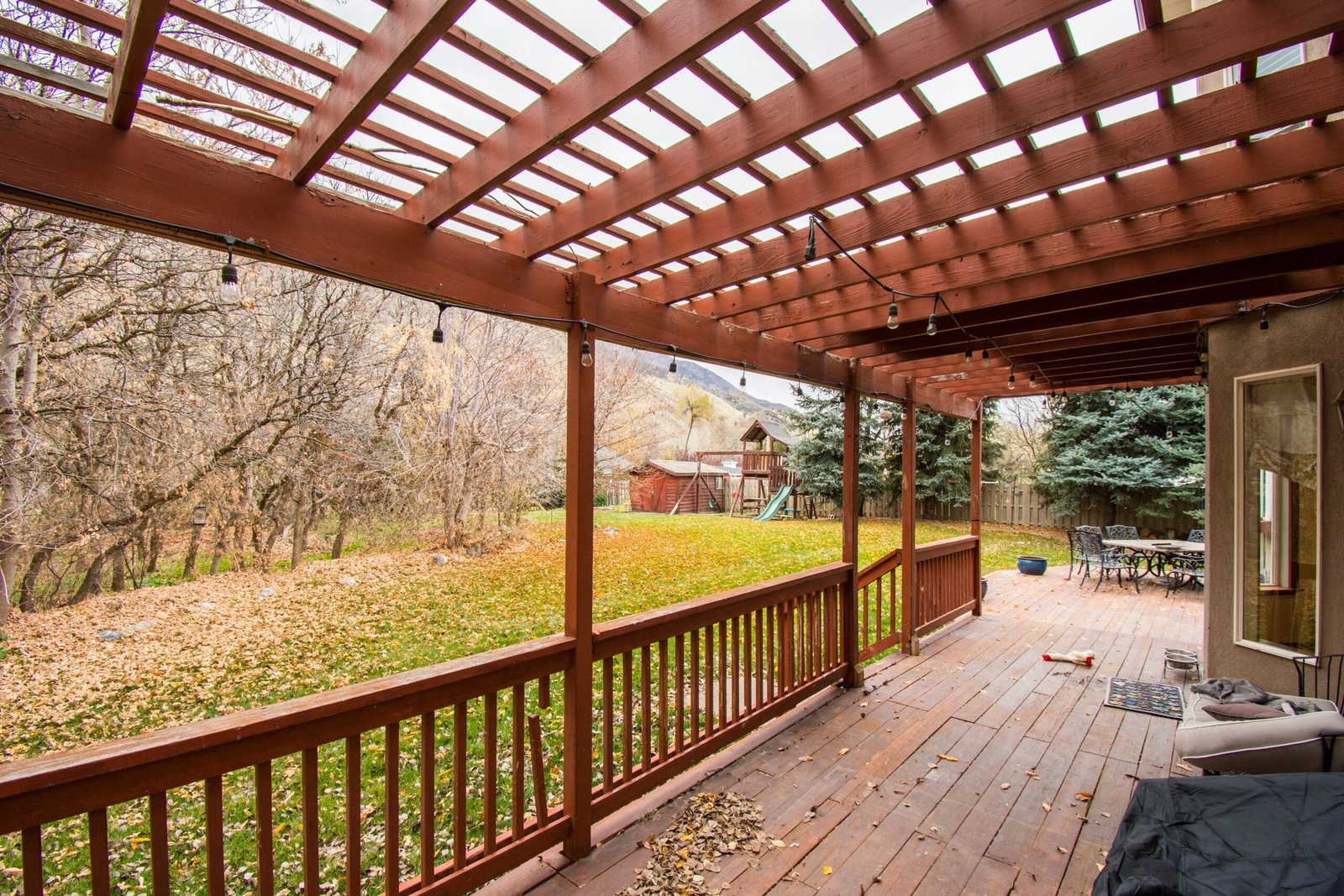
A pergola gives partial shade and a clear sense of a room without a full roof. It works well where summers are mild, where you want light in winter, and where you like plants to grow overhead. It will not keep rain off a table, so choose furniture that can get wet or add a retractable cover for the times you need it. A pergola also needs posts that do not block the walk or the view.
Retractable Shade
Retractable shade, such as an awning or a shade sail, gives you control. You can open it for sun in winter and close it for shade in summer. It costs less than a solid roof, but it needs a frame that can hold wind, a fabric that can be cleaned, and a way to dry it before it is stored. Do not leave a retractable cover open in a storm, and do not use it as a roof for heaters or fire features.
If rain matters in your climate, a solid roof or a well-drained cover will be used more than an open pergola. If light matters more, a pergola or a retractable cover will keep the porch bright without making it dark inside the house. Choose the cover for the weather you actually live with, not the weather you wish for.
The cover also decides what else you can add. A solid roof can hold a fan, a heater rated for outdoor use, and lights that stay up all year. A pergola can hold string lights, plants, and a fan only if the structure is built for it. Check the weight, the wiring, and the clearance before you hang anything from a cover.
Start simple if the budget is tight. A good shade sail, a well-placed awning, or a pergola with a shade cloth can make a porch usable this summer, while a solid roof can wait for a later year. The best cover is the one that gets used, not the one that is most expensive.
Zone It the Way You Live
A porch feels larger when it is zoned, even if it is small. A zone is a small area with one job, one light, and one kind of seating. When zones are clear, people know where to sit, where to eat, and where to walk, and the porch stops feeling like a pile of furniture.
Lounge Zone
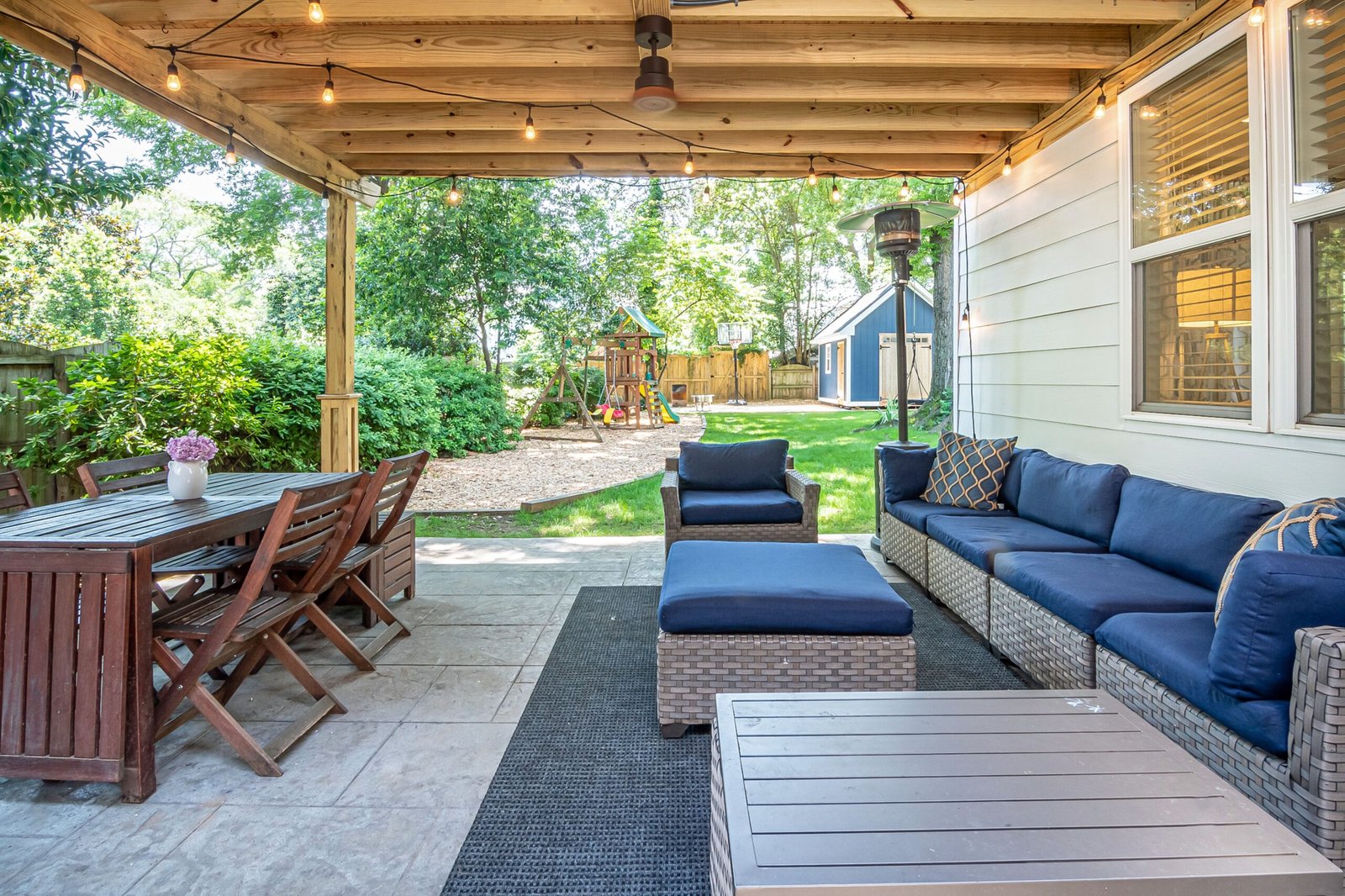
The lounge zone is for sitting without a task. Put a sofa or two deep chairs facing the yard, not the wall, so the view is part of the room. Add a coffee table that is low enough to put a cup down without reaching, and a rug that marks the zone without blocking the walk. Keep the lounge away from the kitchen door so people are not walking through it with food and plates.
Dining Zone
The dining zone is for meals. Put the table near the kitchen door, where carrying food is short and clearing is easy. Leave room to pull chairs out and to walk around the table without moving it. A light over the table, even a simple pendant or a string light, makes dinner feel intentional after dark.
Quiet Corner
A quiet corner is for one person. A single chair, a small table, and a plant can make a corner that is used every day, even on a porch that is mostly for family. Put it where the light is good in the morning or where the view is best, and keep it away from the main walk so it feels private.
Give each zone one light and one surface. A lounge needs a low light and a coffee table. A dining zone needs a light over the table and room for plates. A quiet corner needs a reading light and a place for a book. When each zone has its own light, the porch can be used in parts, not only as a whole.
Leave walking paths open. A clear path of 30 inches from the door to the yard, and between zones, keeps the porch safe and easy to use. Do not block the path with a rug edge, a plant pot, or a chair that sticks out. A porch that is easy to walk through is a porch that will be used.
Choose Seating That Passes the Sit Test
Seating is where most porches fail. A chair that looks good in a store can be hard to sit in for an hour, and a sofa that is too deep can make a small porch feel crowded. Test seating the way you will use it: sit, lean back, put your feet up, and stay for ten minutes. If you need patio furniture sets for comparison, look for pieces that fit your porch first, not pieces that fill a showroom.
Test size before you buy. Measure the porch, mark the footprint with tape on the floor, and walk around it. Leave room for chairs to pull out, for a table to be reached from every side, and for a path to the yard. A sofa that fits on paper can still block a door or a walk when it is placed.
Comfort first. Choose cushions that are firm enough to support you, fabric that dries quickly, and a seat height that lets your feet rest on the floor. A chair that is too low or too deep will be avoided, no matter how good it looks. Sit in a chair before you buy it, and keep a clear walk of 30 inches around the seating so no one has to climb over furniture.
Weight and weather. Choose pieces that can be moved by one person, that can be stacked or covered in winter, and that will not rust or fade in a season. Heavy stone or iron pieces look solid, but they are hard to move for cleaning or for a different layout. Light pieces that can be rearranged will adapt as your needs change.
Easy moves. A porch that can change layout will be used in more ways. A table that folds, chairs that stack, and a rug that can be rolled up let the same porch host dinner, play, and quiet reading in one day. Do not buy a set that only works in one arrangement.
If you buy a set, test every piece, not only the sofa. A set that includes a chair no one likes will leave that chair empty, and a table that is too high for the chairs will make every meal uncomfortable. Buy for the way you sit, not for the way a set photographs.
Light It in Layers, Not One Bright Bulb
One bright bulb makes a porch feel like a parking lot. Layers of light make it feel like a room. A porch needs at least three kinds of light: a general light for walking, a task light for reading or eating, and a low light for atmosphere after dark.
Evening light. Start with a soft general light that lets you walk safely without glare. A ceiling light on a dimmer, a wall light by the door, or string lights under a cover can give enough light to move without making the porch feel harsh. Keep the light warm, not blue, so the porch feels calm in the evening.
Task light. Add a light where you need to see: over the dining table, beside a reading chair, or near a grill or a work surface. A task light should be bright enough to read by, but shielded so it does not shine in the eyes of people sitting nearby. A portable lantern can be a task light that moves with you.
Low light. Finish with low light for atmosphere: candles in safe holders, small lanterns on a table, or lights along a railing. Low light makes a porch feel intimate and lets you see the yard without flooding it with light. Keep low lights away from curtains, fabric, and plants that can catch fire.
Keep it soft after dark. A porch that is too bright will attract insects, glare into the house, and make it hard to see the yard. A porch with layers, each on its own switch or dimmer, can be bright for dinner and soft for a quiet evening, without changing any furniture.
Make Small and Narrow Porches Work Harder
A small porch is not a failed porch. It is a porch that needs fewer pieces, chosen better. A narrow porch, in particular, needs a clear middle, furniture that hugs the wall, and a view that is not blocked by a large table or a tall plant.
Narrow porch. On a narrow porch, put seating against the house wall and leave the outer edge open to the yard. A bench along the wall, a narrow table, and a single chair can give a place to sit without blocking the walk. Do not put a large sofa across a narrow porch, or the porch will become a corridor with furniture in it.
Use the wall. A wall can hold a fold-down table, a shelf for plants, a light, and hooks for a lantern or a blanket. Wall pieces save floor space and keep the middle open. A fold-down table that is up for coffee and down for walking is a small porch’s best friend.
Keep the middle open. The middle of a small porch is the walk, the play space, and the view. Keep it clear, use a rug that is small enough to walk around, and choose plants that are at the edges, not in the center. A small porch with an open middle feels larger than a large porch filled with furniture.
Long and narrow. A long, narrow porch can be zoned along its length: a quiet chair at one end, a small table in the middle, and a plant or a storage bench at the other end. Each zone can be small, but each should have its own light and its own surface, so the porch does not feel like one long corridor.
Small porch, big use. A small porch used every day is better than a large porch used once a month. Choose one job, one comfortable chair, one table, and one light, and use the porch for that job for a season. You can add more later, but you cannot add use to a porch that is too crowded to sit in.
Keep It Dry, Safe, and Easy to Care For
A porch that works hard in summer can fail in winter. A heater rated for outdoor use can extend the season, but do not use indoor heaters outside, and do not run a portable heater under a fabric cover or near curtains. If you live where it snows, confirm the roof and its supports are built for snow load and ice.
Watch the edges. Check where the porch meets the house, where water can pool, and where leaves collect. A porch that drains well, that is swept regularly, and that has a clear edge to the yard will last longer and be safer to walk on. Do not let a rug trap water against wood or stone.
A porch you can sweep. Choose surfaces that can be swept, hosed, or wiped without moving every piece of furniture. A porch that is hard to clean will be avoided, and a porch that is easy to clean will be used in every season. Keep storage for cushions close, so they can be put away before rain, and brought out quickly for a sunny morning.
Keep the house wall clear. Do not block vents, outlets, or the path to a door with furniture or plants. Keep wiring for lights and fans rated for outdoor use, and keep fire features away from covers, curtains, and furniture. A safe porch is a porch that can be used without worry.
For more inspiration, browse our design ideas and learn more about our approach.
A Porch You Will Use Tomorrow Morning
The best back porch idea is not a style. It is a job, a cover that matches your weather, seating that passes the sit test, and light that lets you stay after dark. Name the job, zone the space, fix the cover and light before you decorate, and test the plan against a summer evening, an autumn morning, a rainy afternoon, and a winter view from inside. Do that, and your porch will stop being a passage to the yard and start being a room you choose every day.
Disclaimer This article offers general home and design information, not professional construction, electrical, or safety advice. Porch structures, roofs, wiring, fire features, and local rules vary, so hire a licensed professional for structural, roofing, electrical, gas, and fireplace work and check local codes.