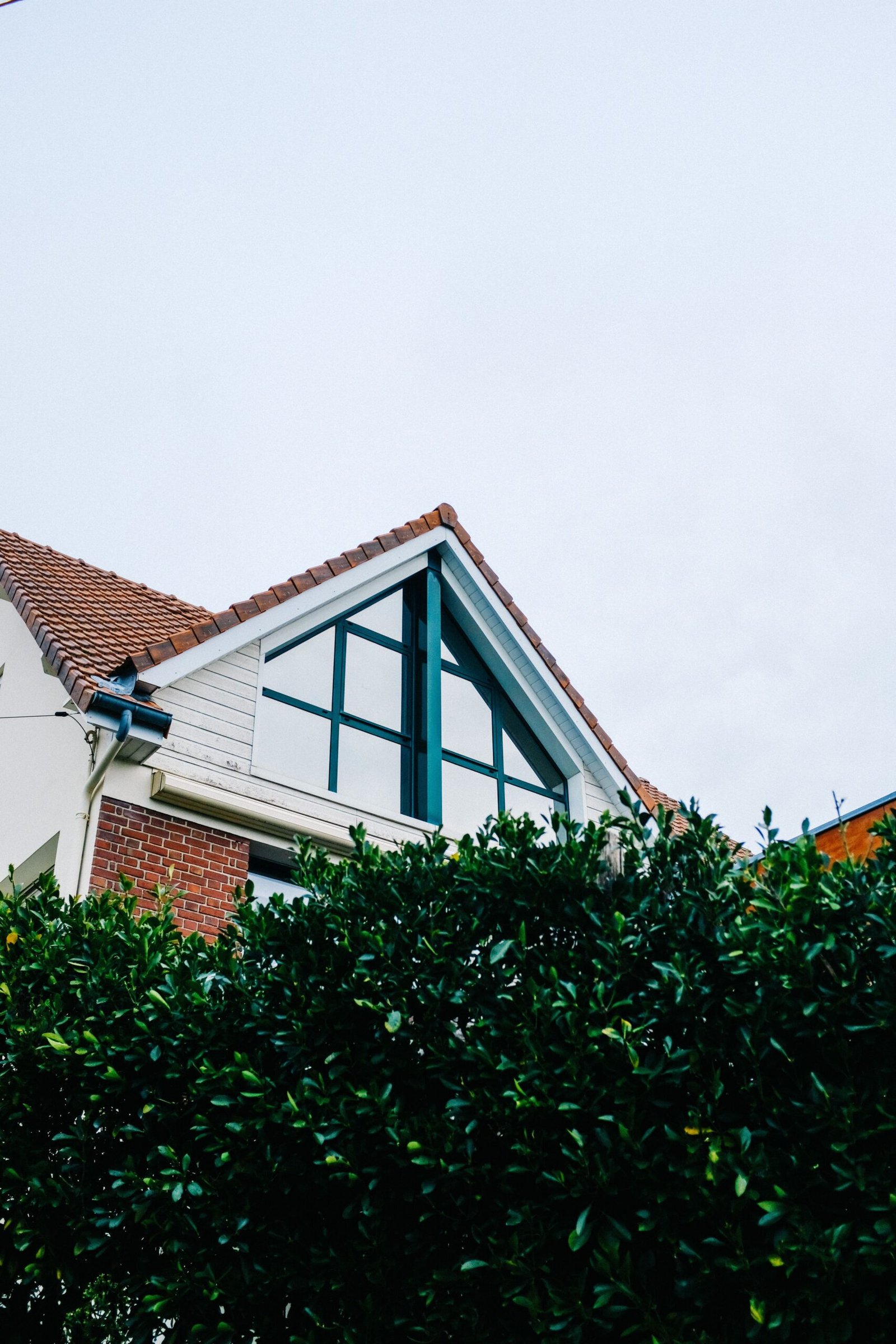
Bushes for Front of House: How to Pick Shrubs That Frame Your Home, Not Fight It
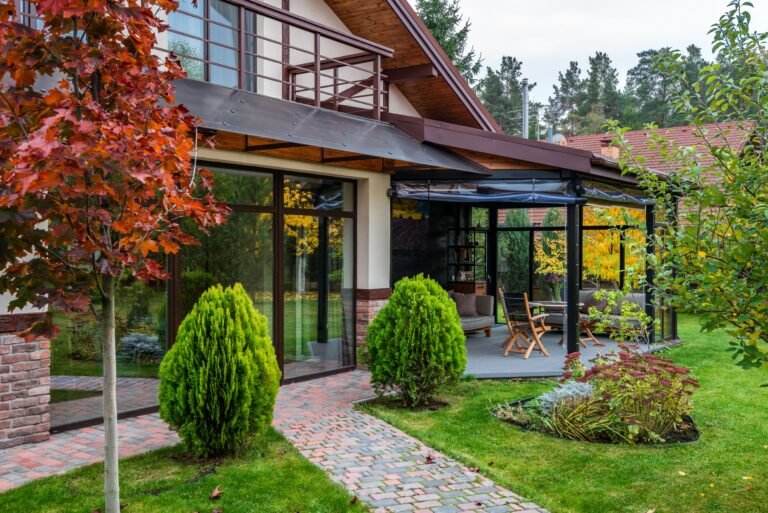
Bushes for front of house planting should frame your home, soften its edges, and stay a size you can live with. The most reliable choices are compact evergreens for year-round structure, a flowering shrub for seasonal color, and a low plant in front — all chosen by mature size, sunlight, and distance from the house, not by how pretty they look in a nursery pot.
That last point matters more than any plant list. Most front-yard shrub problems start the same way: a small plant goes in too close to the wall, grows far larger than expected, blocks a window, rubs the siding, and then needs constant cutting. Choose the grown-up plant first, and the rest gets much easier.
Start With the Spot, Not the Shrub
Before you browse plant names, answer four questions about your front yard.
How much sun does the bed get? A south- or west-facing bed may get full sun most of the day. A north-facing bed may stay shaded. Many shrubs fail simply because they were planted in the wrong light. Check the spot morning and afternoon, not just once.
How wide and tall can the plant grow? Read the plant tag for mature height and width, then double-check the cultivar name. The same species can include a dwarf form that stays 2 feet tall and a standard form that reaches 15 feet. Plant for the mature size, not the nursery size.
How far is it from the house? As a working rule from university extension guidance, large shrubs belong about 5 to 6 feet from the house, measured to the center of the plant, while smaller shrubs need at least 3 to 4 feet, per LSU AgCenter foundation bed guidance and Clemson Extension foundation plantings. Clemson Extension adds a useful clearance rule: foliage of shrubs over 6 feet tall should sit at least 5 feet from the wall, and shorter shrubs at least 3 feet. That space protects siding, lets air move, and leaves room for you to paint, clean gutters, or check the foundation.
What is under and around the bed? Note windows, vents, faucets, walkways, and the roof overhang. A shrub under an eave may stay too dry. A shrub over a vent can block airflow. Keep mulch and soil away from siding, and keep the ground sloping away from the house so water does not sit against the foundation.
For general outdoor planning ideas, browse the Outdoor & Garden ideas on Luxury Homes Idea, and see the site’s approach to practical, comfortable design on the About Luxury Homes Idea page.
The Three-Layer Formula That Keeps Front Beds Looking Planned
Most good foundation beds use three layers, tallest at the back and lowest at the front. You do not need many plants. You need the right heights in the right order.
Back layer: structure. This is usually one or two evergreens or taller shrubs near the corners or beside the door. They give the bed shape in winter, when flowering plants are bare. Columnar evergreens suit corners, but keep them away from windows they could block.
Middle layer: color and softness. This is where flowering shrubs earn their place: hydrangeas, spirea, azaleas in warmer climates, or compact hollies. They carry the bed through spring and summer.
Front layer: finish. Low shrubs, ground cover, or perennials edge the bed and hide bare stems. This layer should stay low enough that it never blocks the path or the view from inside.
A common mistake is planting a single row of identical shrubs along the whole wall, like a green fence. It looks tidy at first, then flat and heavy. Groups of different heights, with a little space between groups, look more natural and are easier to care for, because air moves between plants and you can reach each one to prune.
Shrubs That Work Well in Front of a House
No single list suits every climate, so treat these as starting points and confirm hardiness for your USDA zone at a local nursery or extension office before buying.
Dwarf boxwood is the classic foundation evergreen. It holds a neat shape, stays green through winter, and tolerates sun to part shade. It suits formal and traditional homes, and it clips well if you like a tidy hedge. Give it well-drained soil and room to reach its mature width, since some boxwoods spread wider than they grow tall.
Compact inkberry holly is a native evergreen alternative to boxwood. It suits wetter soils better than many evergreens and gives a softer, less clipped look. Check the cultivar, since inkberry sizes vary.
Panicle hydrangea is one of the easiest flowering shrubs for beginners. Types such as ‘Limelight’ and ‘Bobo’ bloom for months in summer, and their cone-shaped flowers shift from white toward pink as they age. Panicle types are generally tougher and less fussy than bigleaf hydrangeas. They need room, so do not squeeze a 6-foot hydrangea under a low window.
Spirea gives spring flowers and, in many types, colorful fall leaves. Compact forms suit small front yards, attract pollinators, and need little pruning beyond removing old stems. Gold-leaf types brighten a shady corner, but check sun needs for the exact cultivar.
Dwarf yew suits shady walls where many flowering shrubs struggle. It is an evergreen with soft needles, tolerates pruning, and keeps a calm, dark-green presence. It needs good drainage, so avoid spots where water stands.
Azalea and rhododendron suit part-shade beds in mild climates and give a strong spring flower show. They prefer acidic, well-drained soil and shelter from harsh afternoon sun. In cold regions, confirm winter hardiness first, since evergreen leaves can suffer from winter wind and sun.
Juniper offers blue-green color and tough, drought-tolerant growth once established. Low, spreading types edge a bed well. Upright types suit sunny corners but can outgrow a small space, so read the mature size carefully.
Virginia sweetspire ‘Little Henry’ and dwarf fothergilla ‘Beaver Creek’ are two compact shrubs worth knowing for smaller beds. Both stay around 2 to 3 feet tall, give seasonal interest, and fit where a large shrub would crowd the house. They are good examples of why cultivar names matter: the dwarf form, not just the species, is what keeps the bed in scale.
A note on evergreen versus deciduous: a bed of only deciduous shrubs looks bare in winter. A bed of only evergreens can look heavy in summer. Mixing the two, with evergreens as the backbone and flowering shrubs for seasonal change, usually gives the best year-round result.
Sun, Shade, and Small Front Yards
For sunny front beds, lean on boxwood, juniper, spirea, panicle hydrangea, and compact holly. These handle sun well once established, though all new shrubs need regular watering in their first season.
For shady front beds, especially north-facing walls, choose dwarf yew, inkberry holly, azalea, hostas and coral bells as companions, and shade-tolerant shrubs your local extension lists for your area. Avoid sun-loving flowering shrubs in deep shade; they will bloom weakly and stretch toward light.
For small front yards, the rule is simple: fewer, smaller plants, planted with room to grow. A dwarf boxwood, one panicle hydrangea as a focal point beside the door, and a low front edge will frame a small house better than five large shrubs fighting for space. Leave the corners a little taller than the middle, so the eye moves toward the entrance rather than getting stuck on a wall of green.
For a formal look, repeat one evergreen, such as dwarf boxwood, in a clean line or in matched pairs by the door, then add one flowering accent. Symmetry suits brick and traditional homes.
For a relaxed look, mix textures: a rounded evergreen, a loose flowering shrub, and a grassy or ground-cover edge. This suits cottages, ranch homes, and modern houses with soft landscaping.
The Window Rule and the Door Rule
Two simple checks prevent most regrets.
The window rule. Choose plants whose mature height stays below the windowsill, or at least two-thirds of the way from the ground to the sill, unless the shrub sits beside, not in front of, the window. A shrub that blocks light and view will be cut back hard every year, and hard cutting rarely looks good.
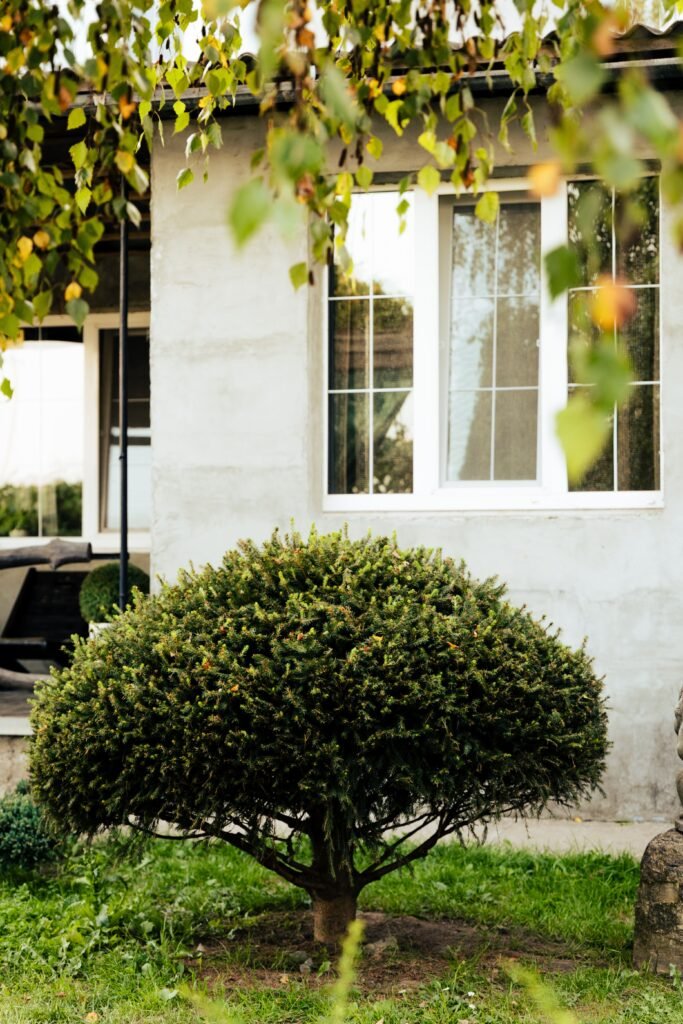
The door rule. Frame the entrance, do not hide it. Place a slightly taller plant or a pair of matched shrubs beside the door, keep the path clear, and keep plants low enough that visitors can see the door from the street. A hidden entrance feels unwelcoming and makes deliveries and guests harder.
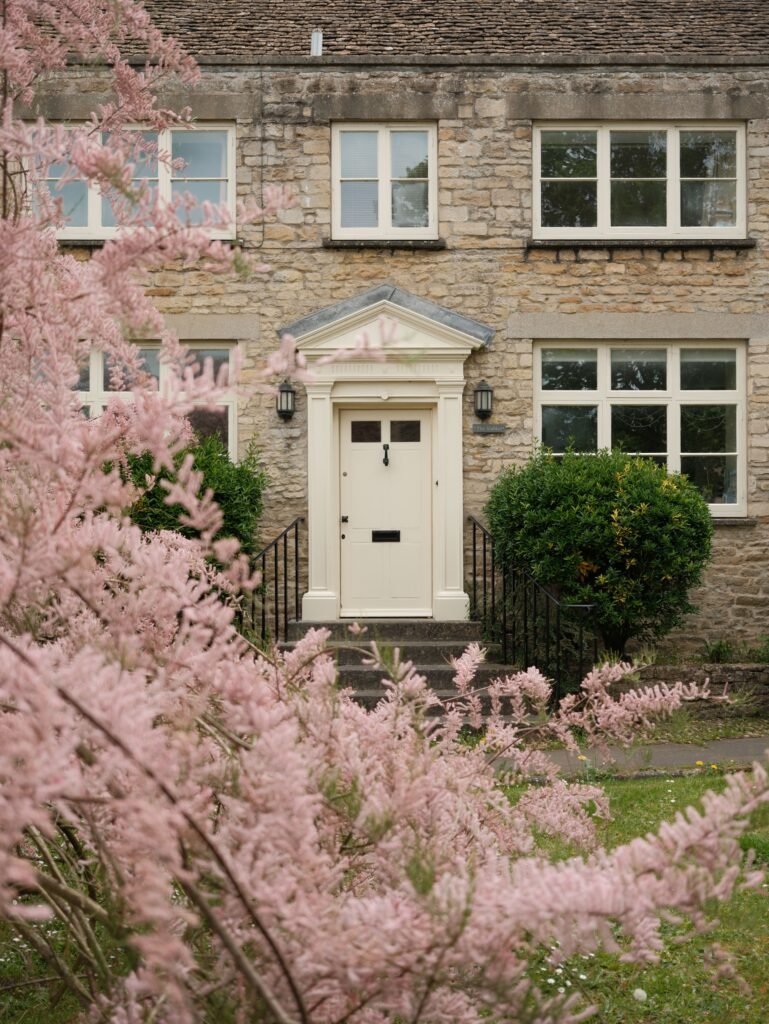
Walk to the street and look back at your house after planting. That view, not the close-up view from the porch, is what most people see. If the shrubs form a neat frame with the door visible and the windows clear, the planting works.
A Worked Example: One Front Bed, Three Budgets of Effort
Suppose you have a 20-foot-wide front bed, part sun, with one door in the center and a window on each side. Here is how the same bed can work at three levels of effort, using only the shrubs discussed above. This is an example, not a prescription for your soil or zone.
Low effort. Dwarf boxwood along the back, spaced for mature width, with a low ground-cover edge. One panicle hydrangea beside the door for summer color. Prune lightly once a year, water in dry spells, and mulch once a year.
Medium effort. Dwarf boxwood at the corners, compact inkberry holly as the backbone, spirea in the middle layer for spring and fall color, and a dwarf fothergilla near the path for seasonal interest. Prune flowering shrubs after bloom where needed, and refresh mulch in spring.
Higher effort, higher color. The medium plan, plus azaleas in the part-shade section and seasonal bedding plants at the front edge. This gives the longest color season, but it also needs more watering, feeding, and seasonal change-outs. Choose it only if you enjoy that routine.
Notice what does not change across the three levels: distance from the house, mature size, and the tall-to-low layering. Effort changes the plant mix, not the structure. That is the point. Good structure makes any level look intentional.
Planting and First-Year Care
Planting well matters as much as choosing well.
Dig a hole about twice as wide as the pot, but no deeper than the root ball. Set the shrub so the top of the root ball sits level with, or just above, the surrounding soil. Backfill with the soil you removed, water deeply, and mulch 2 to 3 inches deep, keeping mulch at least a foot away from the foundation in termite-prone guidance and away from the shrub trunk itself.
Water deeply and less often, rather than a little every day, so roots grow outward. New shrubs usually need regular watering for their first growing season, and sometimes into the second, until roots establish. University of Florida extension guidance notes establishment can take about 5 to 7 months for a new plant, which is a useful reminder not to judge a shrub by its first few weeks.
Check drainage after a heavy rain, too. If water stands in the bed for hours, the shrubs are sitting in the wrong spot or the bed needs better grading, and no amount of fertilizer will fix that. A shrub that stays wet will yellow, drop leaves, and invite root problems, while the same shrub a few feet away, on slightly higher ground, may thrive. Fix the wet spot first, then judge the plant.
Prune with a purpose. Remove dead or crossing branches first. Shape evergreens lightly. Prune spring-flowering shrubs after they bloom, so you do not cut off next year’s flowers. Avoid shearing everything into identical balls unless you truly want a formal hedge; most shrubs look better with a natural shape and a little air inside.
Finally, label or photograph your plants with their cultivar names. In two years, when you wonder why one shrub is twice the size of its neighbor, that label will explain it — and it will stop you from buying the same oversized plant twice.
Mistakes That Cost the Most
- Planting by nursery size. A 1-gallon pot tells you nothing about a 6-foot mature shrub. Always check mature height and width.
- Planting too close to the house. Crowding traps moisture, blocks maintenance, and forces hard pruning. Use the 3-to-6-foot center distances above as a starting point, then adjust for the exact cultivar.
- Blocking windows and vents. Keep foliage clear of windows, vents, faucets, and meters.
- One row of one plant. A single-species hedge along the whole front looks flat and fails all at once if disease or weather hits that species.
- Ignoring the eave line. Plants under a deep overhang may get almost no rain. Water them by hand or choose drought-tolerant types for that strip.
- Piling mulch against the trunk or foundation. Keep mulch off trunks and, per Clemson and LSU guidance, about a foot from the foundation, filling that strip with stone if you want a tidy look.
Frequently Asked Questions
How far from the house should bushes be planted?
Measure from the center of the plant. Large shrubs need about 5 to 6 feet from the house, and smaller shrubs at least 3 to 4 feet, according to LSU AgCenter guidance. Clemson Extension adds that foliage of taller shrubs should sit at least 5 feet from the wall and shorter shrubs at least 3 feet. Always add the plant’s mature radius to that clearance.
What bushes stay small in front of a house?
Dwarf boxwood, dwarf yew, Virginia sweetspire ‘Little Henry’, dwarf fothergilla ‘Beaver Creek’, and compact spirea types stay around 2 to 3 feet tall in many cases, though exact size depends on the cultivar. Check the tag and confirm the cultivar, not just the species.
Which bushes are easiest for beginners?
Dwarf boxwood for evergreen structure, panicle hydrangea for long summer color, and spirea for spring flowers and fall leaves are forgiving choices in the right sun and zone. All still need correct spacing, soil drainage, and first-year watering.
Can shrub roots damage a foundation?
Small shrubs planted at a sensible distance rarely threaten a sound foundation. Problems more often come from water pooling near the house, poor drainage, or large, vigorous plants placed too close to the wall. Keep soil sloping away from the house and keep large trees, not small shrubs, well away from foundations.
When should I plant bushes in front of my house?
Spring, once the ground is workable, is a safe default, and container-grown shrubs can be planted any time the ground is not frozen. Avoid planting in hot, dry weather if you cannot water regularly, and give new shrubs a full season to establish.
A Front Yard That Welcomes People In
Good front-of-house bushes do quiet work. They hide a plain foundation, frame the door, and make the house look cared for without shouting for attention. Start with sun and mature size, keep the right distance from the wall, layer tall to low, and let the door stay visible. Do that, and your front bed will look better every year, instead of needing rescue every spring.
Disclaimer
This article offers general home and garden information, not professional landscaping or construction advice. Plants, soils, sunlight, and local conditions vary, so confirm hardiness and mature size for your area and hire a qualified professional for drainage, structural, or utility work.