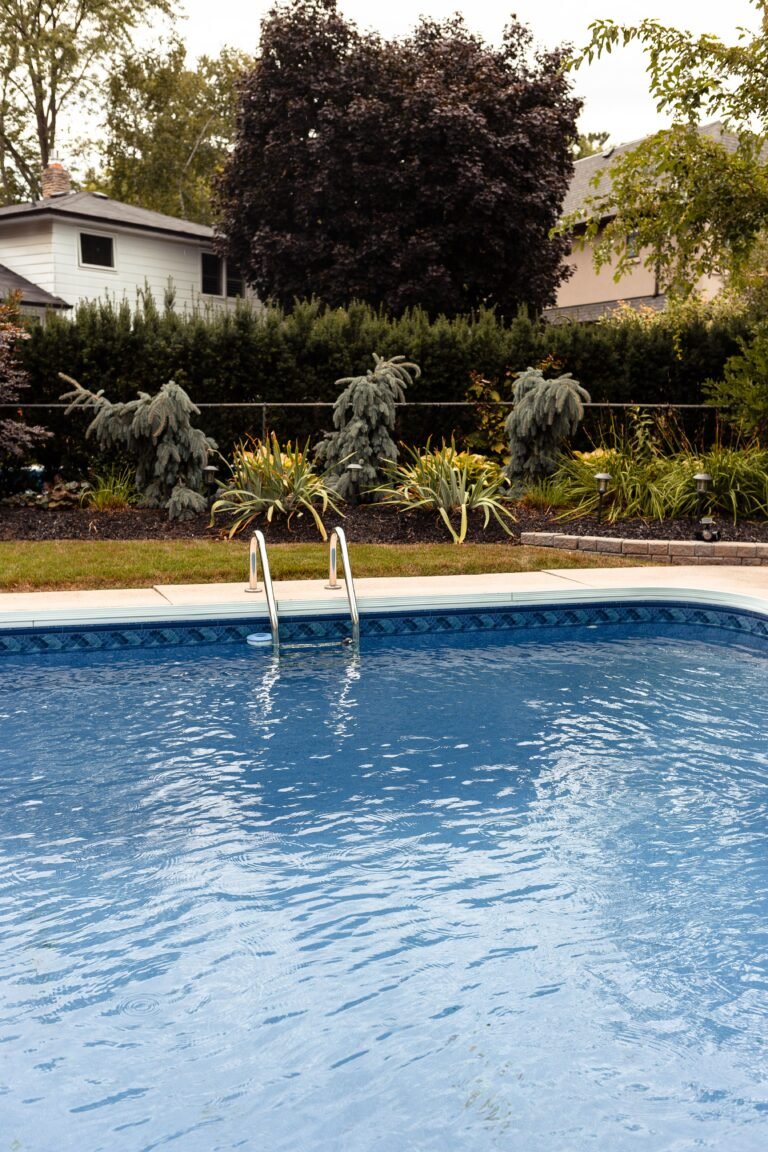
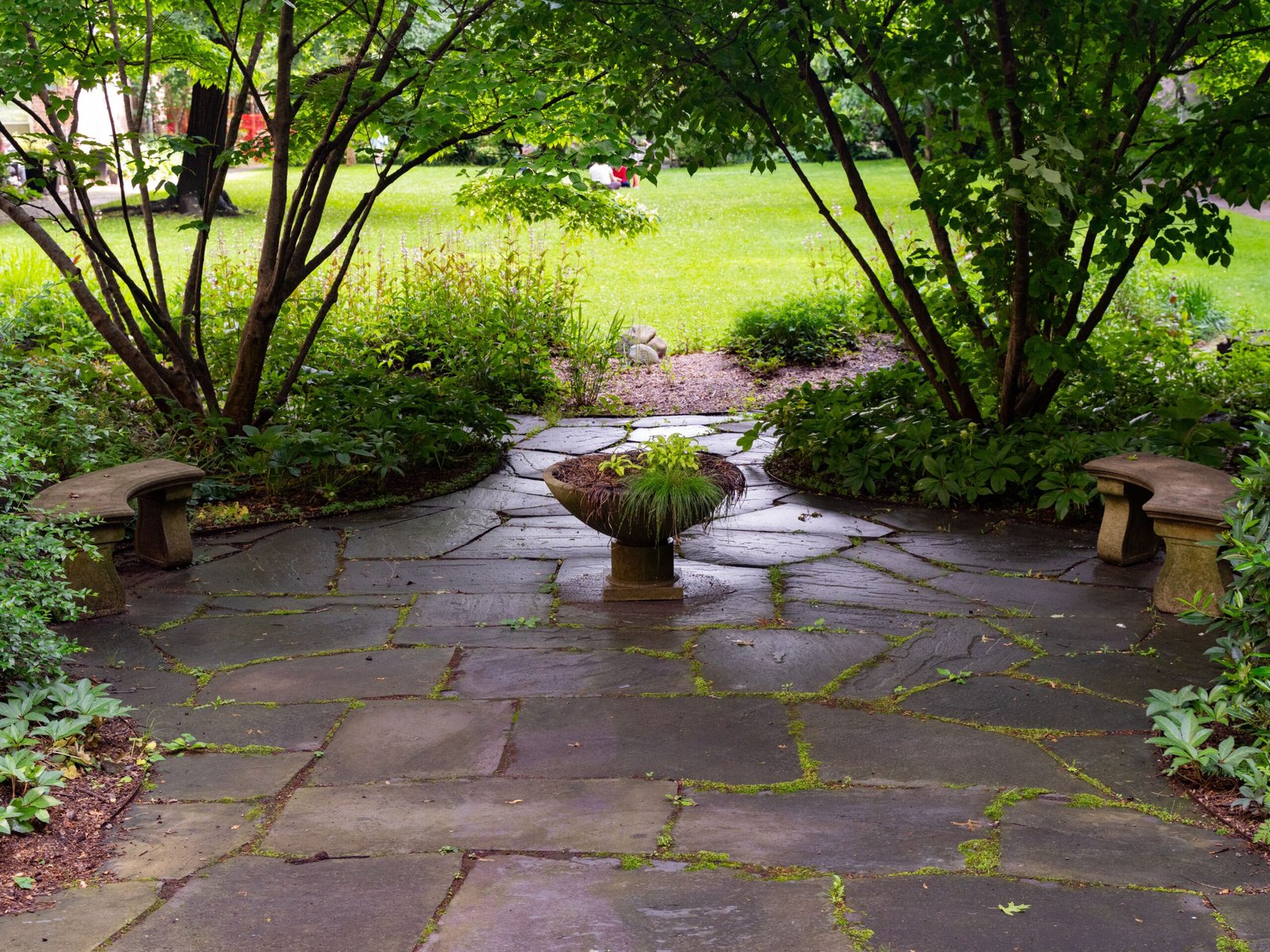
What Is Hardscaping? The Built Bones of a Yard, Explained Simply
Hardscaping is the non-living, built part of a landscape. It includes patios, walkways, retaining walls, driveways, steps, decks, and other structures made from stone, concrete, brick, pavers, wood, or metal, as described in guides to what hardscaping includes and what counts as a hardscape. These features give a yard its shape, paths, and places to sit, gather, and move around.
Think of a yard in two parts. Hardscaping is the structure. Softscaping is the living part: lawn, trees, shrubs, flowers, and ground cover. Landscaping is the whole picture, both parts working together. That simple split is the key to understanding almost every landscape plan you will see.
Hardscaping and Softscaping: The Difference That Matters
A patio does not grow, bloom, or need watering. A shrub does. That is the core difference, and it affects cost, care, and timing.
Hardscaping usually goes in first. It sets the boundaries that plants then soften. A walkway decides where people step. A retaining wall decides where a slope becomes a level area. Once those lines are set, planting becomes much easier to plan, because you can see the spaces left for beds, lawn, and trees.
Softscaping, by contrast, changes with the seasons. Plants grow, spread, lose leaves, and need pruning, watering, and feeding. A balanced yard needs both. Too much hardscape can feel bare and hot. Too much softscape, with no clear paths or sitting areas, can feel messy and hard to use.
Here is a quick way to tell them apart:
| Part of the yard | What it includes | What it does |
|---|---|---|
| Hardscaping | Patios, paths, walls, steps, decks, fences, fire pits | Creates structure, access, and usable space |
| Softscaping | Trees, shrubs, lawn, flowers, soil and mulch beds | Adds color, softness, shade, and life |
| Landscaping | Both parts together | Creates a complete, usable outdoor space |
One gray area is worth knowing. A planter is hardscape, but the plant inside it is softscape. A wooden deck is hardscape, even though wood comes from a tree, because the deck itself is a built structure, not a living plant.
What Counts as Hardscaping?
Most hardscape features fall into a few clear groups.
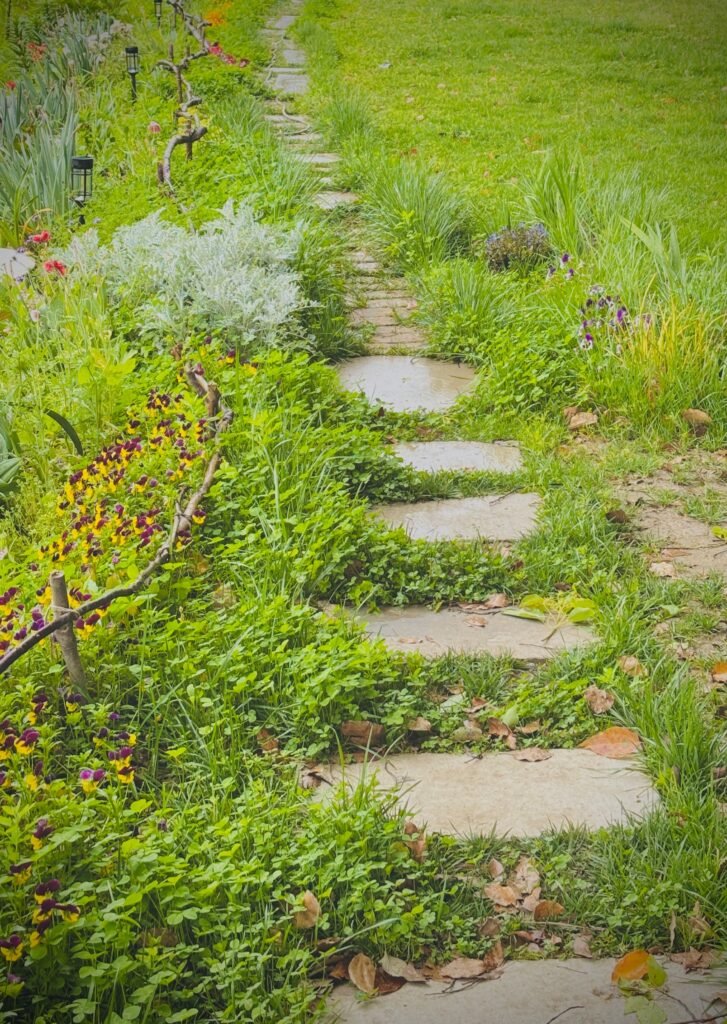
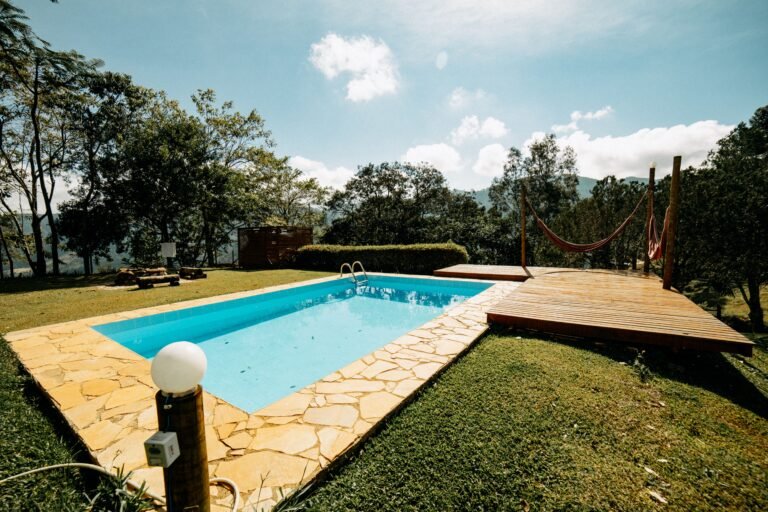
Surfaces you walk or drive on. Patios, walkways, driveways, and pool decks are the most common. They turn muddy or uneven ground into firm, usable space.
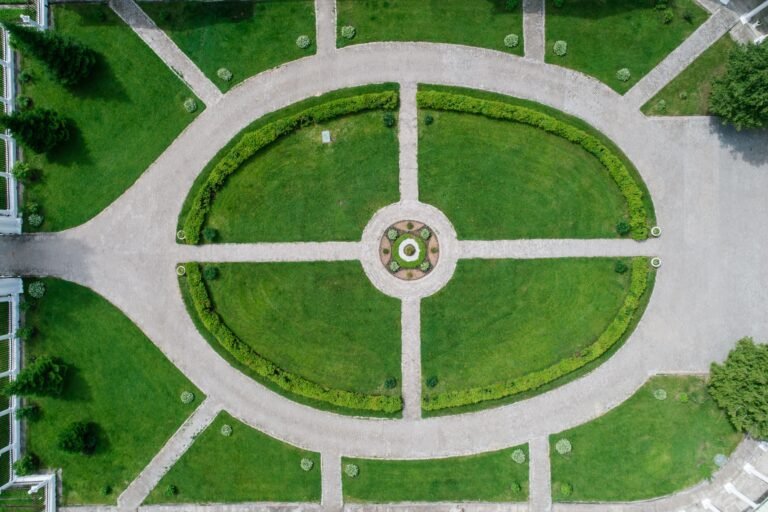
Structures that shape the land. Retaining walls hold back soil on a slope. Steps connect levels. Garden walls and edging mark where one area ends and another begins.
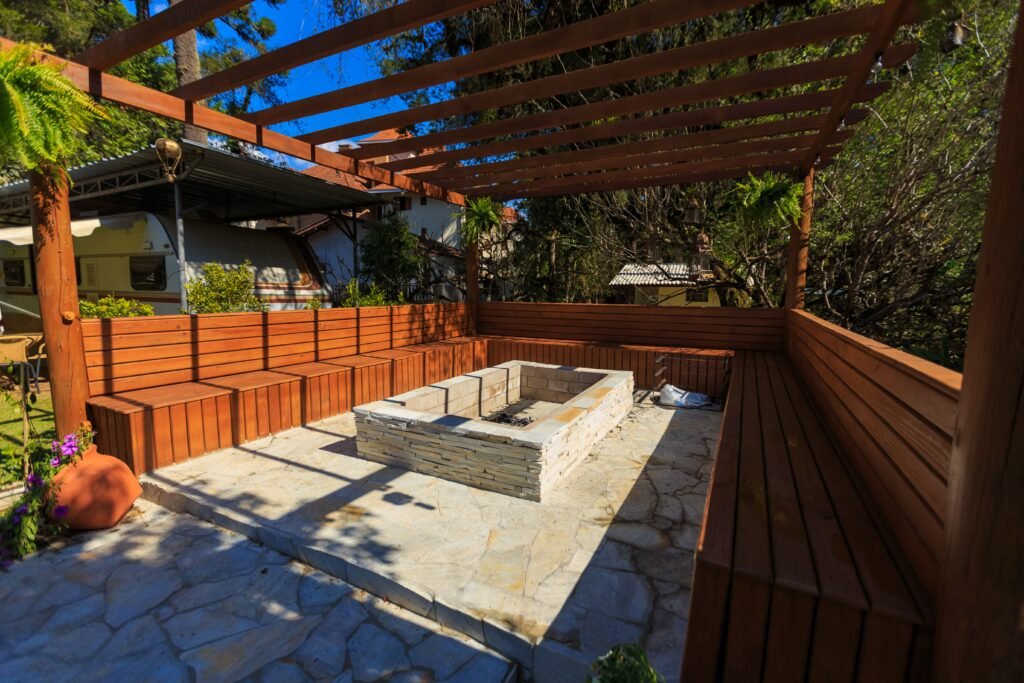
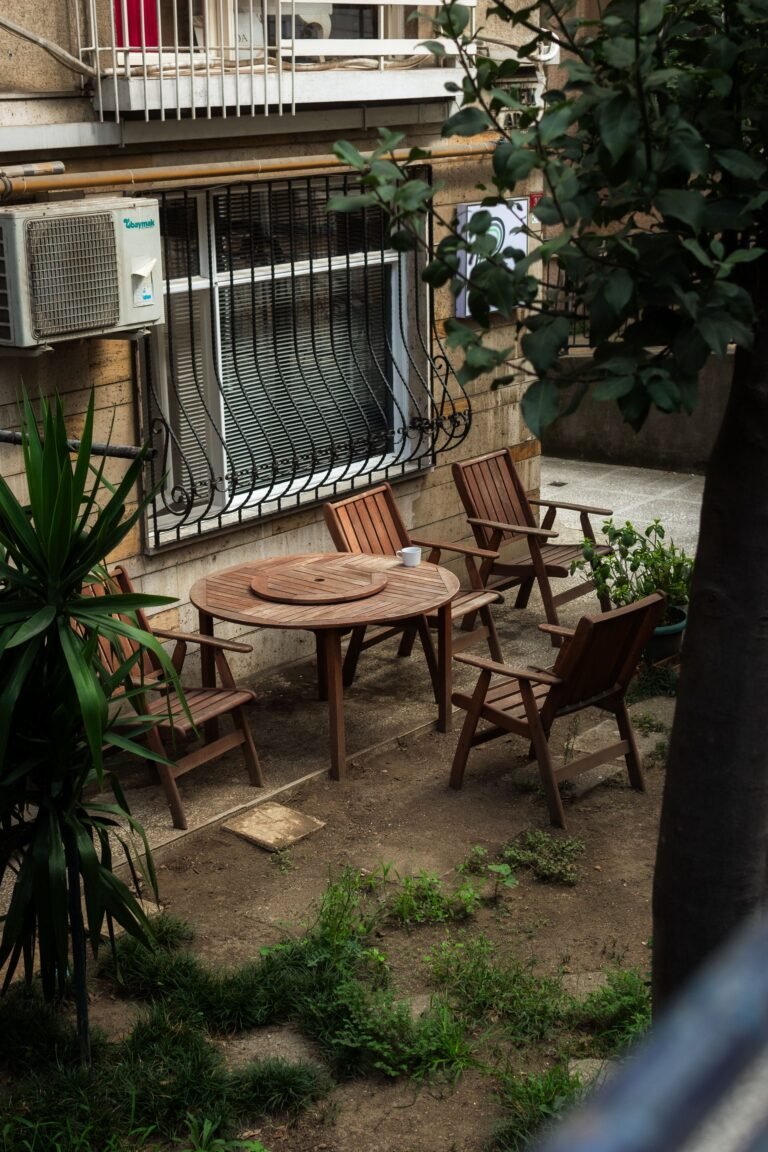
Places to gather. Fire pits, outdoor fireplaces, pergolas, and outdoor kitchens create spots for cooking, eating, and sitting outside. A pergola gives partial shade and a sense of enclosure without closing a space in completely.
Water and decoration. Fountains, ponds with built basins, and stone features add sound and focus. Note the distinction: the stone basin is hardscape, while the water plants inside it are softscape.
Boundaries. Fences and gates are often counted as hardscape too, because they are built, non-living structures that define and protect a yard.
You do not need all of these. Most homes need only a few: a path to the door, a place to sit, and a way to handle a slope or a muddy patch. Start with the problems your yard actually has, not with a long wish list.
Common Hardscaping Materials, and How to Choose
Materials matter more than most beginners expect. They affect cost, grip, heat, drainage, and how a space feels underfoot.
Natural stone includes flagstone, granite, and bluestone. It looks timeless and suits many house styles, but pieces vary in shape and thickness, and installation takes skill.
Concrete pavers are factory-made blocks in many shapes, sizes, and colors. They are popular because they can be replaced one at a time if one cracks or settles, unlike a single poured slab.
Poured concrete gives a smooth, uniform surface and often costs less up front than stone. It can crack over time, especially where the ground moves or freezes, and repairs are more visible.
Brick gives a warm, classic look for paths and patios. It can become slippery when wet or mossy, so it suits drier, well-drained spots better than constantly shaded, damp ones.
Gravel and crushed stone are low-cost, drain well, and suit informal paths and seating areas. They shift underfoot, need topping up, and can wander onto lawns and into houses on shoes.
Wood and composite decking suit decks and raised platforms. Wood needs sealing and care; composite boards need less upkeep but cost more at the start. Check the product guidance for your climate before choosing.
Permeable pavers have joints or openings that let water pass through into the ground below. They can help with drainage and runoff, but they need the right base and regular joint care to keep working.
A simple choice rule helps: pick the material that fits your climate, your drainage, and how you will use the space. A sunny, south-facing patio gets hot, so a pale, heat-reflecting surface may feel better than dark stone. A shaded path needs grip and drainage more than it needs a fancy finish.
For more outdoor planning ideas, explore the Outdoor & Garden ideas on Luxury Homes Idea, and read how the site sees luxury as comfort, character, and thoughtful design on the About Luxury Homes Idea page.
Why Homeowners Add Hardscaping
Hardscaping solves practical problems first, and looks good second.
It creates usable space. A level patio turns a sloped or muddy corner into a place for a table and chairs. A path keeps feet off wet grass and protects planting beds from being walked through.
It manages water and slopes. Retaining walls turn a steep bank into level terraces. Well-graded paths and patios direct water away from the house instead of letting it pool against the foundation. This is important: water should always drain away from your home, never toward it.
It cuts some kinds of upkeep. A paved seating area needs no mowing. That does not mean hardscape is maintenance-free. Joints need weeding or re-sanding, surfaces need cleaning, and wood needs care. But the work is different, and often less frequent, than weekly lawn and bed care.
It adds year-round structure. In winter, when plants are bare, a stone path, a wall, and a patio still give the yard shape. That is why designers often call hardscape the “bones” of a landscape.
The Yard-First Test: A Worked Example
Imagine a small backyard with three problems: the back door opens onto mud after rain, the lawn slopes toward the house, and there is nowhere flat to sit. A planting-only plan would not fix any of these. A hardscape-first plan would work in this order:
- Grade the ground so water slopes gently away from the house.
- Add a small patio by the back door, with a path to the gate.
- Add a low retaining edge or steps where the slope changes level.
- Plant beds around the patio edges to soften the stone.
This order matters. If you plant first and pave later, you may dig up new plants, change drainage, and pay twice. If you pave first, plants fill the remaining spaces and the whole yard looks planned rather than patched together.
Try the same test on your own yard. Walk it after rain. Note where water sits, where feet naturally go, and where you wish you could sit. Those three notes are often a better brief than any photo you save online.
What Hardscaping Is Not
Hardscaping is not the same as “low maintenance forever.” Stone settles, joints loosen, timber weathers, and sealers wear off. Budget a little time each year for cleaning and inspection.
It is not always a do-it-yourself job either. Small gravel paths and simple stepping-stone routes are realistic weekend projects for many homeowners. Retaining walls, drainage changes, gas lines for fire features, and outdoor electrical work are not. For walls, drainage, and any work near utilities, get a licensed professional and check local permit rules before you dig or build. Many areas require permits or engineering for retaining walls above a certain height, often around 4 feet, but the exact rule varies by location, so check yours.
It is also not a fixed formula. There is no required ratio of hardscape to softscape. A small paved courtyard with pots can be a complete design. So can a mostly planted garden with one narrow path. Choose the balance that fits your site, your budget, and the care you can realistically give.
Planning Checklist for a First Hardscape Project
Use this list before you buy materials or hire anyone:
- Walk the yard after rain. Mark wet spots, slopes, and natural walking routes.
- Name one job for each feature. A patio is for sitting. A path is for access. A wall is for holding soil. If a feature has no job, skip it.
- Check drainage first. Water must move away from the house and not pool on paths or patios.
- Measure mature planting space. Leave room for plants beside paths and walls so they do not crowd the stone later.
- Check utilities and permits. Call your local utility locator before digging, and ask your local building office about permits for walls, structures, and electrical or gas work.
- Compare materials in place. Look at samples outdoors, in daylight, and walk on them if you can. A showroom floor is not the same as a sunny yard.
- Get itemized quotes. Ask what the base, drainage, edging, and jointing include. The unseen base is often where cheap quotes cut corners.
- Plan the softening. Budget for a few plants, pots, or a small bed beside the new stone so the finished space does not feel bare.
Frequently Asked Questions
Is a deck hardscaping or softscaping?
A deck is hardscaping. It is a built, non-living structure, even though it is made from wood. The plants in pots on the deck are softscaping.
Does hardscaping increase home value?
It can help a home show well and work better, especially when it fixes drainage, access, or usable outdoor space. There is no guaranteed value increase, and a poorly built or poorly drained feature can hurt more than it helps. Build for your own use first, and get professional work for structural or drainage jobs.
Is hardscaping expensive?
It varies widely by material, size, site access, and base work. A small gravel path costs far less than a stone patio with a retaining wall. Get written, itemized quotes for your own site rather than relying on national averages, which hide local labor and material differences.
Can I add hardscaping to an existing garden?
Yes, and it is often the smartest upgrade. Start with paths and sitting areas, fix drainage, and then adjust planting around the new structure. Avoid digging through established tree roots without professional advice, since root damage can harm a tree.
What is the difference between hardscaping and landscaping?
Landscaping is the whole design and care of an outdoor space. Hardscaping is one part of it: the built, non-living part. Softscaping is the other part: the living plants. Good landscaping balances both.
A Simple Way to Start
Hardscaping is the built bones of a yard: the paths, patios, walls, and structures that decide how you move through and use outdoor space. Plants bring it to life, but stone, brick, and timber give it shape. Start with one real problem, fix drainage first, and let planting soften the result. That order keeps the project useful, honest, and easier to enjoy for years.
Disclaimer
This article offers general home and garden information, not professional design, construction, or legal advice. Yards, soils, drainage, and local rules vary, so check local permit requirements and hire a licensed professional for structural, drainage, electrical, or gas work.