Interior Design Styles Explained: How to Recognize the Main Styles and Find Your Own
An interior design style is a shared set of clues. It shows up in furniture shapes, colors, patterns, materials, and how a room is laid out. When several rooms share the same clues, we give the pattern a name, such as traditional, modern, or Scandinavian. Naming the pattern helps you make decisions, because once you know which clues you like, you can repeat them on purpose instead of guessing item by item.
Here is the reassuring part: almost no real home fits one label perfectly. Most homes mix, and that is normal. The goal of this guide is not to stamp your home with a single name. It is to help you recognize the main styles, notice which clues keep attracting you, and use that knowledge the next time you buy a sofa, choose paint, or rearrange a room.
Why Style Names Confuse Everyone
Style names confuse people for three good reasons. First, some names describe a time period, while others describe a place or an attitude, so the categories overlap. Second, sellers stretch labels to sell furniture, so a “modern farmhouse” lamp may have little to do with either modern design or a farmhouse. Third, two names sound alike but mean different things.
The biggest mix-up is modern versus contemporary. Modern design refers to a movement from the early to mid 20th century. It values clean lines, function, and little ornament. Contemporary design means whatever is current right now. A contemporary room today might include curves and mixed metals, while a modern room from the movement’s era would look stricter and simpler. If a store calls a brand-new curvy sofa “modern,” it may mean fashionable, not modern in the design-history sense. Knowing the difference saves you from buying a look you did not intend.
Another confusion: transitional is not a lack of taste. It is a real style with its own rules, as you will see below. And eclectic is not a polite word for random. A good eclectic room holds its contrast together with one clear thread, such as a repeated color or material.
The Two Roots: Traditional and Modern
Almost every other style grows out of, or reacts against, two roots. Learn these two, and the rest get easier.
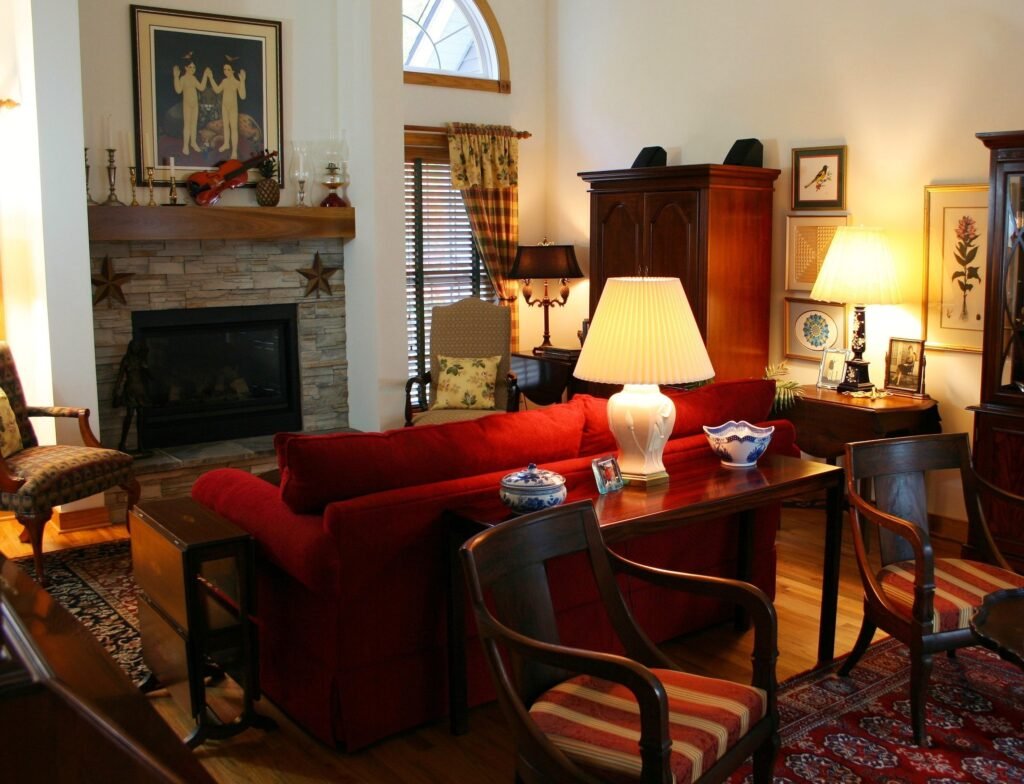
Traditional draws on 18th and 19th century European decor. Look for symmetry, such as matching chairs or lamps on both sides of a sofa. Furniture has curves: rolled arms, turned legs, skirted bases, wingback chairs. Fabrics carry pattern: florals, damask, chinoiserie. Woods are rich and dark, moldings are detailed, and art leans toward portraits and landscapes. A traditional room can feel formal, but it can also feel like a comfortable cottage when the colors soften and the patterns simplify. The root clue is ornament and history, used with confidence.
Modern, in the design-history sense, strips that ornament away. Look for straight lines, flat planes, smooth profiles, and minimal accessories. Furniture sits low or floats on slim legs. Materials include glass, steel, chrome, and leather. Colors stay neutral, with an occasional bold accent. Counters stay empty. Art leans abstract or photographic. The root clue is simplicity and function, with beauty coming from proportion rather than decoration.
Try this quick read on any room photo. If your eye lands first on carved wood, pattern, and symmetry, the room leans traditional. If it lands first on clean edges, empty surfaces, and one strong shape, it leans modern. Most rooms you love will lean one way, even if they borrow from the other.
The Blend in the Middle: Transitional
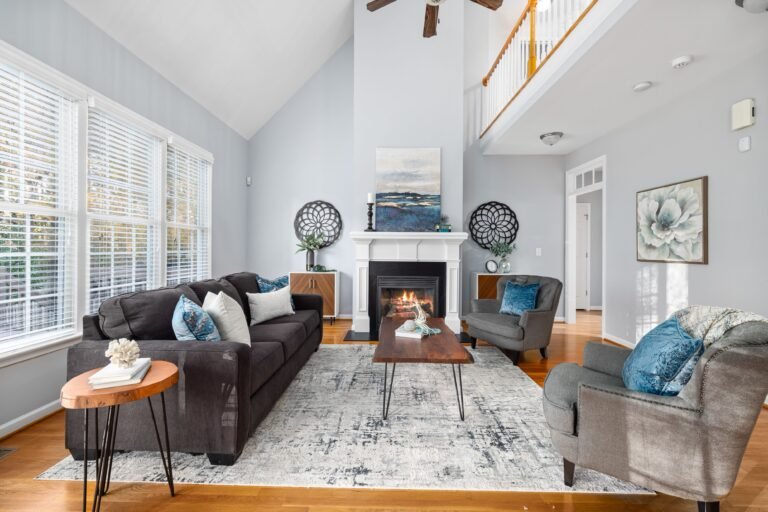
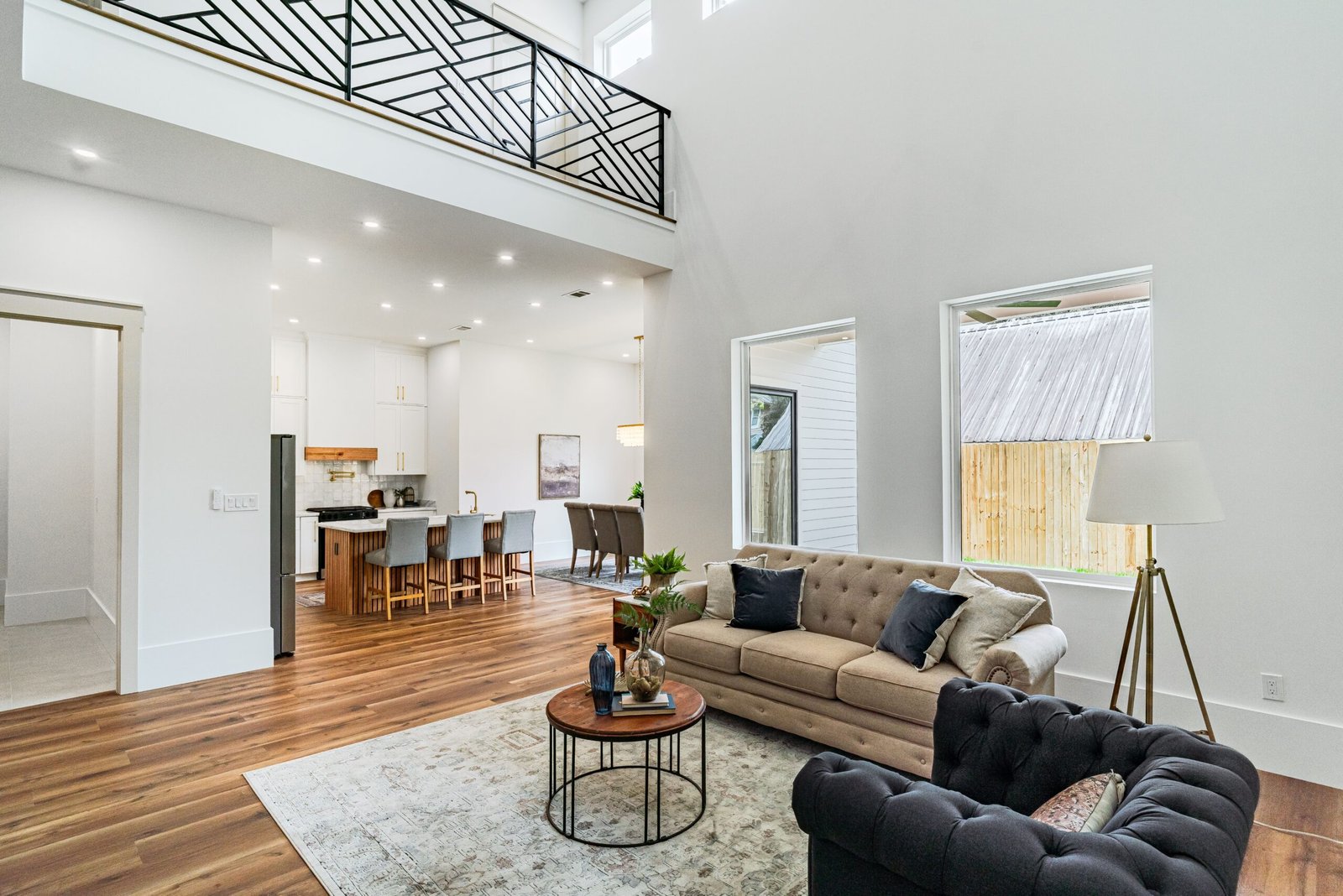
Transitional design is the deliberate middle ground between traditional and modern. It keeps the warmth and familiar shapes of traditional design, such as a comfortable sofa with soft curves, but simplifies them with modern restraint: cleaner lines, a neutral palette, and fewer fussy details. A transitional room might pair wingback chairs with a simple modern rug, or hang a classic chandelier over a plain wooden table.
The style emerged in the 1950s, when designers and homeowners grew tired of stark modern minimalism but did not want to return to full formality. It has kept evolving since, because “modern” keeps changing while “traditional” stays roughly the same. That is why transitional rooms often feel both fresh and timeless: they borrow the newest restraint and the oldest comfort at once.
Layout is a strong transitional clue. Rooms often keep a balanced, symmetrical arrangement, such as two chairs opposite a sofa or two nightstands flanking a bed, but the furniture itself is slimmer and simpler than a fully traditional set. If you like traditional warmth but find fully traditional rooms stuffy, and you like modern calm but find fully modern rooms cold, transitional is often your home base.
Era Styles: Mid-Century Modern and Art Deco
Some styles belong to a specific era, and their dates are part of their identity.
Mid-century modern covers roughly 1945 to 1969. Its furniture is low and long, with tapered legs, warm woods such as teak and walnut, and bold accent colors. Shapes are organic but simple. A mid-century room feels relaxed and a little playful, without the strictness of earlier modern design. It is one of the easiest styles to spot, because the furniture silhouette is so distinct.
Art deco comes from the 1920s and 1930s. It loves geometry: stepped forms, fan shapes, chevrons, and strong symmetry. Surfaces are glossy, metals are brass or gold, and colors run to jewel tones with black and cream. An art deco room feels glamorous and graphic, like a poster you can sit in. A little deco goes a long way, so many people use it as an accent style in lighting, mirrors, or a single bold piece rather than across a whole home.
Place Styles: Scandinavian, Coastal, Farmhouse, Industrial
Other styles are tied to a place, a building type, or a way of life.
Scandinavian comes from the Nordic countries and the mid 20th century. It is light, functional, and calm: pale woods, white walls, simple furniture, soft textiles, and plenty of natural light. The goal is comfort without clutter, in rooms that must feel warm through long winters.
Coastal borrows from seaside living: airy whites, sandy neutrals, soft blues, and natural textures such as linen, rattan, and weathered wood. It should feel breezy, not themed. A coastal room with too many shells and anchors stops feeling like a home and starts feeling like a gift shop.
Modern farmhouse takes rustic materials, such as reclaimed wood and shiplap, and handles them with clean modern lines. It is warmer than pure modern design and simpler than a traditional farmhouse. The risk is overdoing the rustic signs until the room feels like a set.
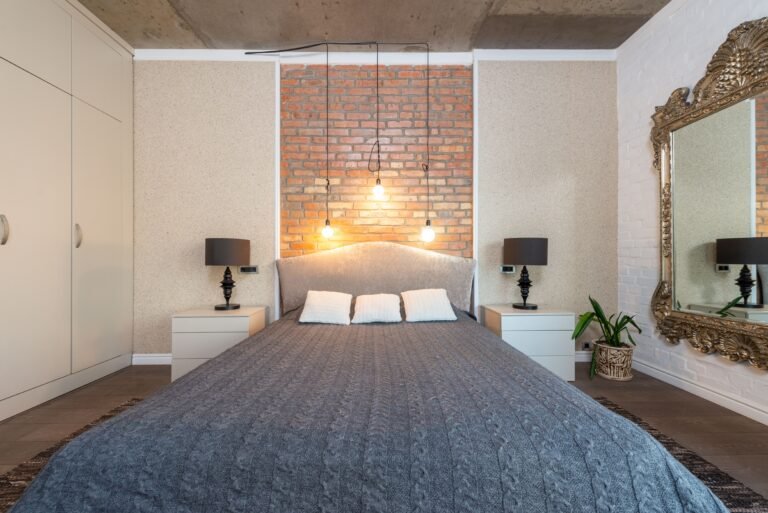
Industrial grows out of converted warehouses and lofts. It leaves structure visible: exposed brick, steel, concrete, ductwork, and tall windows with steel frames. Leather, Edison-style bulbs, and raw wood complete the look. Industrial needs the right building or a careful imitation, because exposed pipes in a standard suburban room can look unfinished rather than intentional.
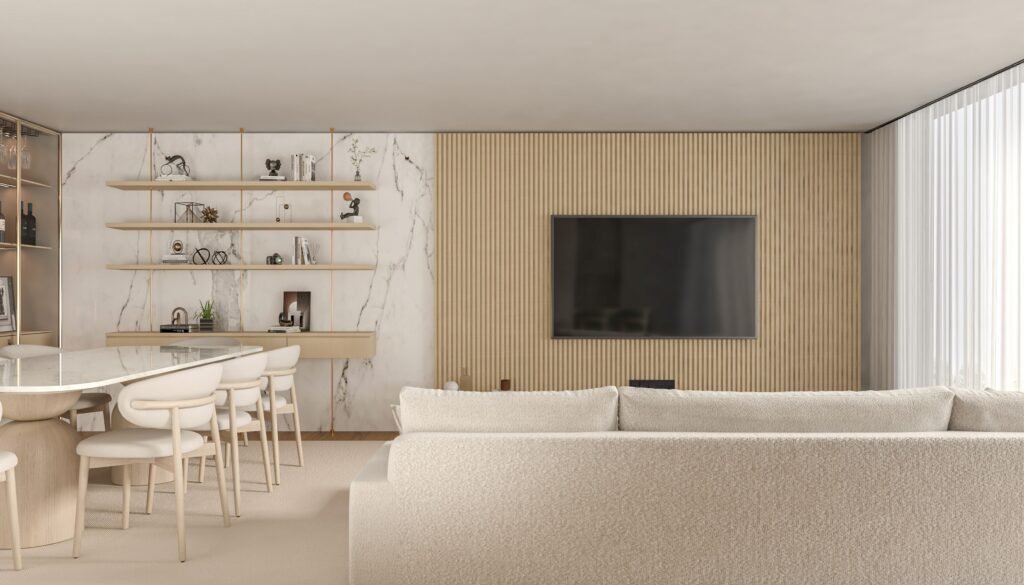
Attitude Styles: Minimalist, Maximalist, Bohemian, Eclectic, Japandi
A third group is defined less by era or place and more by attitude toward “how much.”
Minimalist edits hard. Every object earns its place, lines stay clean, and empty space is treated as a design choice, not a gap. A minimalist room feels calm because there is little to compete for your attention.
Maximalist does the opposite on purpose. It layers saturated color, pattern, and collected objects, but the layering is deliberate. The difference between maximalist and cluttered is intention: a maximalist room repeats colors and balances its layers, while clutter has no pattern at all.
Bohemian, often called boho, layers textiles, plants, and collected objects with no need for matching sets. It feels traveled and personal. The risk is that without any repeated color or texture, it can slide into clutter, so even boho rooms benefit from one grounding neutral.
Eclectic mixes eras and styles on purpose, held together by one thread. That thread might be a color, a wood tone, or a shape that appears in every piece. Eclectic is a skill, not an excuse: the thread is what makes the mix read as a choice.
Japandi fuses Japanese craft and imperfection with Nordic function. It is calm, natural, and spare, with handmade textures, low furniture, and muted tones. If Scandinavian feels too pale and minimalism feels too strict, Japandi often sits in the comfortable middle.
The Photo-Sorting Test: Find Your Style in 20 Minutes
Reading lists is useful, but your own taste is better evidence. This is an original method you can try at home, not a scientific test. It takes about twenty minutes and a phone full of saved room photos, or a fresh search through images you like.
First, save or screenshot twenty room photos you genuinely like, without worrying about their labels. Do not pick rooms you think you should like. Pick rooms you would happily live in.
Second, sort them into piles by what you notice first. Ignore the style names entirely. Sort by clues: curved furniture versus straight furniture, busy pattern versus plain surfaces, dark wood versus pale wood, lots of objects versus few objects.
Third, count. Which pile is biggest? Which clue appears in at least half your photos? That clue is your lean. Now check the style names against your winning pile. Curved furniture, pattern, and symmetry point traditional or transitional. Straight lines and empty surfaces point modern or minimalist. Pale wood and white walls point Scandinavian. Layered textiles and plants point bohemian. Low tapered wood furniture points mid-century modern.
Fourth, name a winner and a runner-up, not a single label. For example: “I lean transitional, with a Scandinavian runner-up.” That pair is more useful than one word, because it tells you what to do next. When you shop, favor your winner’s clues for large pieces, such as sofas and beds, and let your runner-up’s clues appear in smaller pieces, such as textiles and lighting. If a purchase fits neither pile, pause. It may be a passing crush rather than your taste.
Mixing Styles Without a Mess
Mixing is where most rooms succeed or fail, and one rule explains most of it: keep one unifying thread. The thread can be a color repeated in three places, a wood tone used across furniture, or a metal finish carried through lighting and hardware. When the thread is present, a traditional chair can sit beside a modern table without argument. When it is absent, even two beautiful pieces can look like strangers.
Proportion helps too. As a labeled suggestion, not a rule from any source, let one style lead about three-quarters of the room and let the second style play a supporting part. The lead style sets the furniture shapes and the color base. The supporting style appears in accents, art, or a single statement piece. Test a mix in one room before repeating it across the house, and live with it for a week before buying more. A mix that still pleases you after a week is a keeper.
Styles in Small or Rented Homes
Style is not reserved for large owned homes. In a small room, the clue sets still work, but scale matters more. Choose one style’s furniture shapes, keep the palette tight, and let mirrors and lighting do the enlarging work. A small traditional room can feel rich with one patterned chair and warm wood, rather than a full matching set. A small minimalist room needs fewer, better pieces, not empty walls that feel unfinished.
Renters can test a style without paint or renovation. Textiles, rugs, lamps, art, and removable pieces carry most of a style’s clues. Before you change any light fixture, switch, or wiring, hire a licensed professional if the work goes beyond what your local rules allow a homeowner to do safely, and check your lease first. Simple changes such as swapping a lampshade or adding a floor lamp carry a style a long way without touching wiring at all.
For more home design ideas, explore the site’s home design collection, and read about Luxury Homes Idea for the perspective behind these guides. For deeper reading, the transitional living room ideas from Better Homes & Gardens shows the blend style in practice, and the interior design styles explained list from Family Handyman profiles eight popular styles to compare.
Frequently Asked Questions
What is the difference between modern and contemporary design?
Modern design is a movement from the early to mid 20th century, defined by clean lines, function, and little ornament. Contemporary design means whatever is current right now, so it changes over time. A room can be contemporary without being modern, and a modern room can look dated if it copies the movement too literally.
What is transitional interior design?
Transitional design blends traditional warmth with modern restraint. It keeps familiar, comfortable shapes but simplifies them, uses a neutral palette, and balances the layout symmetrically. It emerged in the 1950s as a middle path between stark modernism and full formality.
How do I find my interior design style?
Gather twenty room photos you love, sort them by clues rather than labels, and count which clues repeat. The winning clue set names your lean. Naming a winner and a runner-up is more useful than forcing one label, because most homes mix.
Can I mix two interior design styles?
Yes, if you keep one unifying thread, such as a repeated color, wood tone, or metal finish. Let one style lead most of the room and let the second style support it in accents. Test the mix in one room before repeating it.
What interior design style suits a small home?
Any style can work at a small scale if you tighten the palette and choose furniture that fits the room. Scandinavian and minimalist styles suit small rooms naturally, but a small traditional or bohemian room works too when the pieces are scaled well and the clues stay consistent.
A Final Word
Interior design styles are tools, not tests. Traditional and modern are the roots, transitional is the bridge, and the era, place, and attitude styles are variations you can borrow from. Use the photo-sorting test to learn your own lean, keep one thread when you mix, and let large pieces carry your main style while smaller pieces carry your runner-up. A home chosen that way does not need a perfect label. It needs to feel like yours, and that is a standard no style list can set for you.