Pool Landscaping Ideas: How to Plant, Pave, and Screen a Pool Area That Stays Safe and Easy to Care For
Pool landscaping works when the area around the water is safe to walk on, easy to see across, and pleasant to sit beside. A pool is not a flower bed with water in the middle. It is a wet, sunny, busy outdoor room where children run barefoot, adults carry drinks, and plants face splash, heat, and reflected light. The best pool landscapes respect those conditions first, then add beauty on top.
Before any planting or paving idea below, read the safety section first. It sets limits that good design must work inside. A beautiful pool area that hides the water, blocks a gate, or makes the deck slippery is not a good pool area.
Pool Safety First: Barriers, Electricity, and Permits Before Planting
A pool area is a safety zone first and a garden second. The U.S. Consumer Product Safety Commission sets out barrier, alarm, and supervision guidance that every pool owner should read before changing anything near the water. Landscaping cannot replace a fence, a self-latching gate, or supervision, but it can support them or, if done badly, undermine them.
Keep these rules in front of every landscaping choice:
- The fence must stay effective. Do not plant trees, large shrubs, or climbing structures that give a child a foothold over the fence. Keep planting low and set back from the fence line.
- Gates must close and latch on their own. Do not block a gate with pots, let planting grow across its swing, or add a latch that a child can reach. A gate that does not close by itself is not a gate.
- Sightlines must stay clear. Seating should offer a clear view of the whole water surface. Tall planting, screens, and structures must not hide a swimmer from the main seating or the house.
- Walking surfaces must be non-slip and clear. Choose textured, heat-resistant deck materials, keep paths wide and clear, and avoid loose gravel, slippery stone, and low obstacles near the water.
- Electricity and water do not mix casually. Pool lights, pumps, heaters, and outdoor outlets are electrical work. Keep planting and digging away from buried lines, and hire a licensed electrician for any new light, outlet, or pump circuit.
- Check permits and local rules first. Fence height, gate type, setbacks, drainage, and plant placement are all regulated in many places. Check local rules and permits before you build, plant, or pave.
Landscaping should make safety easier, not harder. If a planting idea weakens the fence, blocks a gate, hides the water, or creates a trip or slip hazard, it is the wrong idea for that spot, however attractive it looks.
For more outdoor planning ideas, explore the Outdoor & Garden ideas.
The Three-Ring Map: An Original Way to Plan Poolside Space
Most poolside mistakes come from planting the right plant in the wrong ring. Use three rings, working outward from the water, and judge every plant by the ring it will live in.
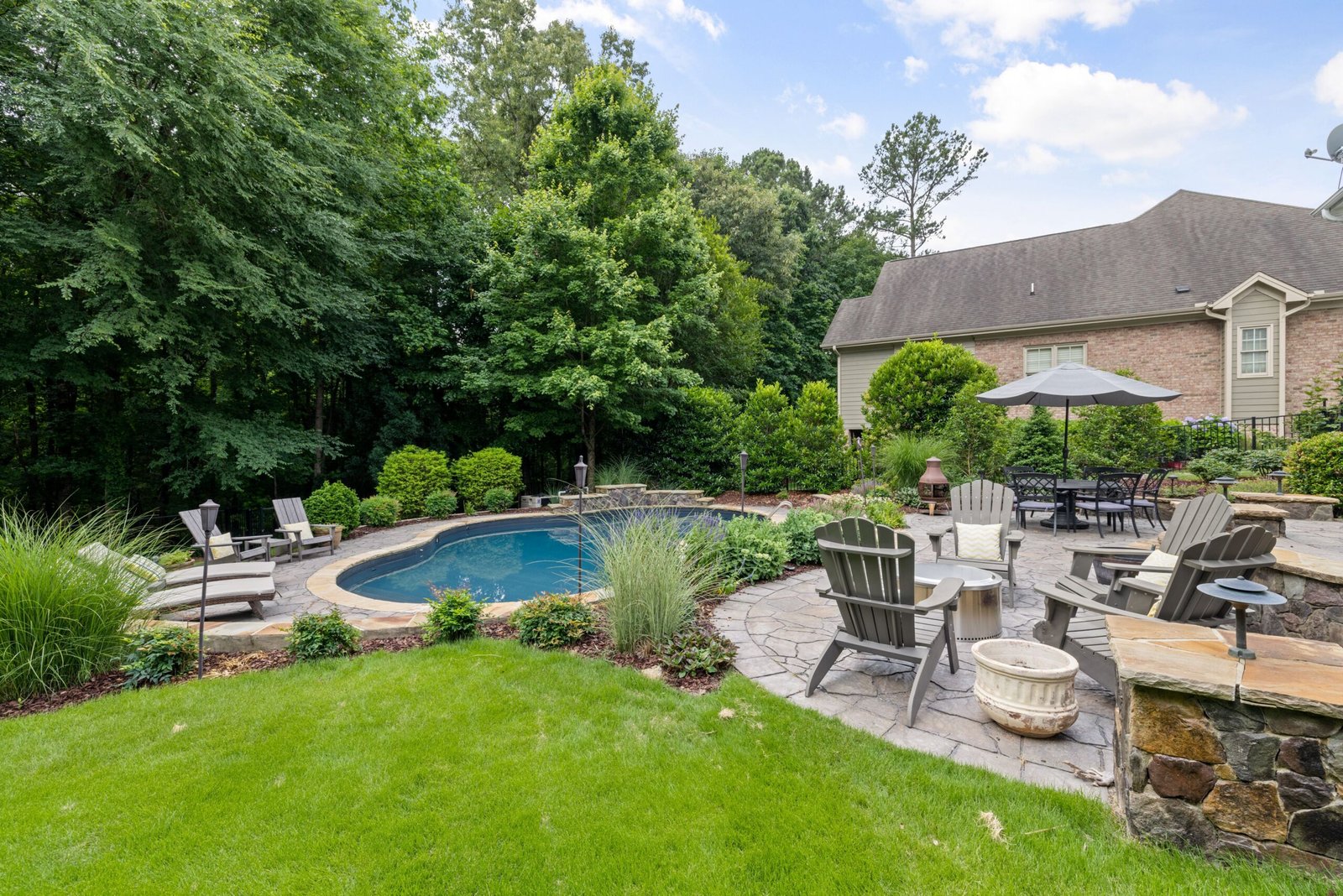
- Ring 1: the splash ring, right beside the water. This ring gets splash, walked on barefoot, and must stay non-slip and plant-light. Keep plants small, hardy, and in containers where possible.
- Ring 2: the living ring, where people sit, walk, and gather. This is the deck, shade structure, seating, and walking space. Planting here should frame views, not block them, and should stay out of paths and gate swings.
- Ring 3: the screen ring, at the boundary. This is where tall hedges, trees, fences, trellises, and screens sit. Planting here can be taller, fuller, and more layered because it is away from splash and bare feet.
Walk your pool area and draw these rings, even roughly, on paper. Most "pool landscaping" confusion disappears once you can see which ring a plant, a path, or a screen belongs in. A plant that fails in Ring 1 may be perfect in Ring 3, and a screen that is too tall for Ring 2 may be exactly right at the boundary.
If you want to see how Luxury Homes Idea frames these ideas for other yards, start with the About Luxury Homes Idea page.
Choosing Plants That Can Handle Poolside Life
Poolside plants face conditions most garden plants never meet: chlorinated or salt splash, reflected heat from water and paving, wet feet after swimming, and strong sun. The plants that last share a few traits.
- Low litter. Choose plants that do not drop large leaves, flowers, seed pods, or fruit into the water. Every leaf in the pool is work for the filter, and every fruit is a slip or stain risk. See poolside landscaping considerations and pool landscaping plant guidance for why litter matters, but choose by your own zone and pool type.
- Non-thorny and non-toxic where people walk barefoot. Avoid thorny shrubs, spiky agaves, and plants with toxic berries or sap near paths, seating, and the water edge. Keep those plants, if you want them at all, in Ring 3 and away from play.
- Splash-tolerant. Some plants sulk after repeated chlorine or salt splash. For saltwater pools, choose salt-tolerant plants and rinse foliage after heavy splash. For chlorine pools, choose plants that tolerate occasional splash and do not need constant shelter.
- Non-invasive roots. Avoid trees and shrubs known for aggressive roots near the pool shell, plumbing, and deck. Willows, poplars, and similar vigorous-root trees are poor neighbors for a pool, even if they give fast shade. Choose smaller, well-behaved trees and keep them in Ring 3, at a distance a licensed pool or landscape professional confirms for your soil and pool type.
- Right size at maturity. A shrub that looks tidy in a pot can grow across a path in three years. Read mature height and width, and plant for that size, not for the pot size. This rule, borrowed from foundation planting, matters even more beside a pool, where an overgrown shrub can block a gate or a sightline.
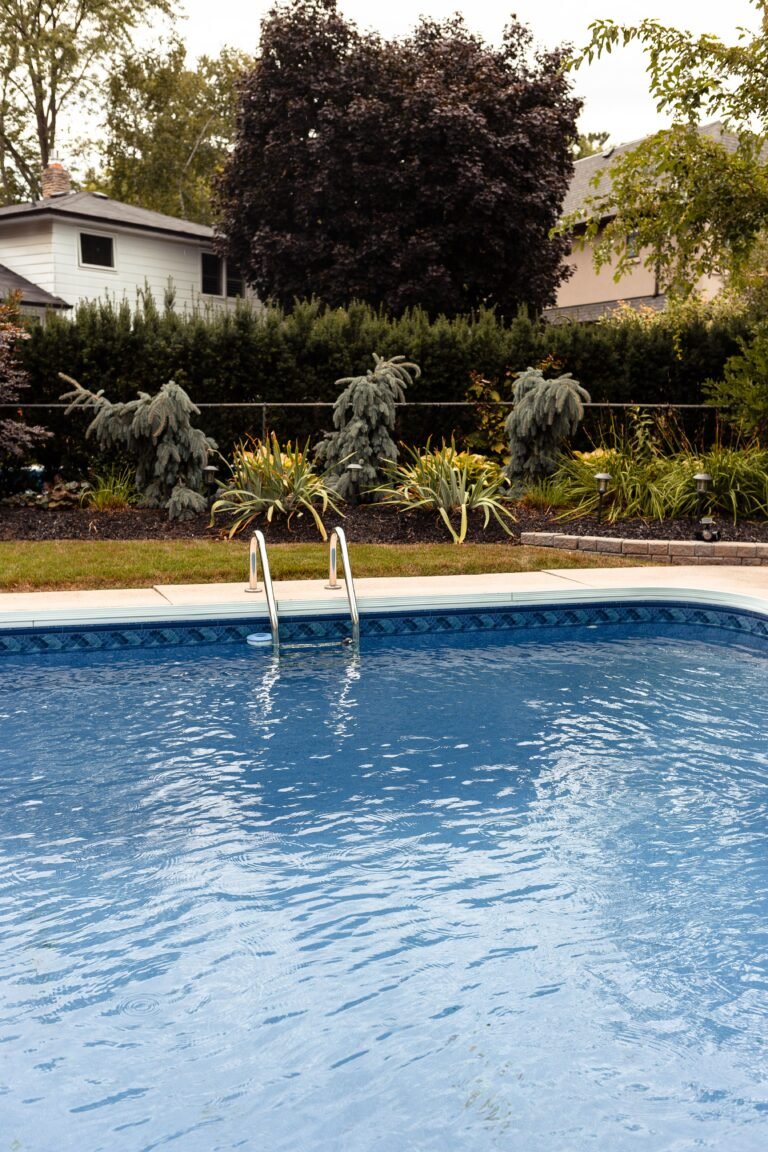
Plants that often suit poolside rings, subject to your zone and pool type, include ornamental grasses for movement and soft screening, compact evergreen shrubs such as boxwood for structure, succulents such as agave in containers away from bare feet, dwarf palms in warm climates, and tropical-looking plants such as bird of paradise and hibiscus where the climate allows and litter is managed. None of these is a universal pick: confirm hardiness, salt tolerance, and mature size for your area before buying.
Privacy Without Hiding the Pool
Privacy is the most requested pool landscaping feature, and the easiest to get wrong. The goal is to block neighbors’ views into the pool area, not to block your own view of the water.
- Hedges in Ring 3 give the most natural privacy. Evergreen hedges such as arborvitae and cedar screen year-round, while mixed hedges of evergreen and flowering shrubs give seasonal change. Plant hedges with room to reach mature width, and keep them off the safety fence so they never become a climbing aid.
- Trellises and pergolas give privacy with less ground space than a hedge. A trellis with climbing plants, set back from the fence and the water, screens a seating area without taking a wide bed. A pergola with curtains or climbing plants shades a lounge zone and softens a view, but keep its posts out of walking paths and its canopy clear of the fence line.
- Fences, screens, and decorative panels give instant privacy where planting would take years. Choose materials that handle splash and sun, keep panels clear of the pool safety fence’s gate swing, and check local height and setback rules before building. A decorative screen that blocks a gate or a sightline is a safety problem, however attractive it looks.
- Layered planting works better than a single tall wall of green. A low shrub layer, a mid-height flowering layer, and a taller evergreen layer at the boundary give depth, block views at different heights, and look softer than a flat hedge. It also means one plant failure does not leave a bare gap in your privacy.
Test privacy from the places that matter: sit in your lounger and look toward the neighbors, then stand where a neighbor would stand and look back. If you can see the water surface clearly from seating and cannot see a swimmer clearly from the neighbor’s side, the screening works.
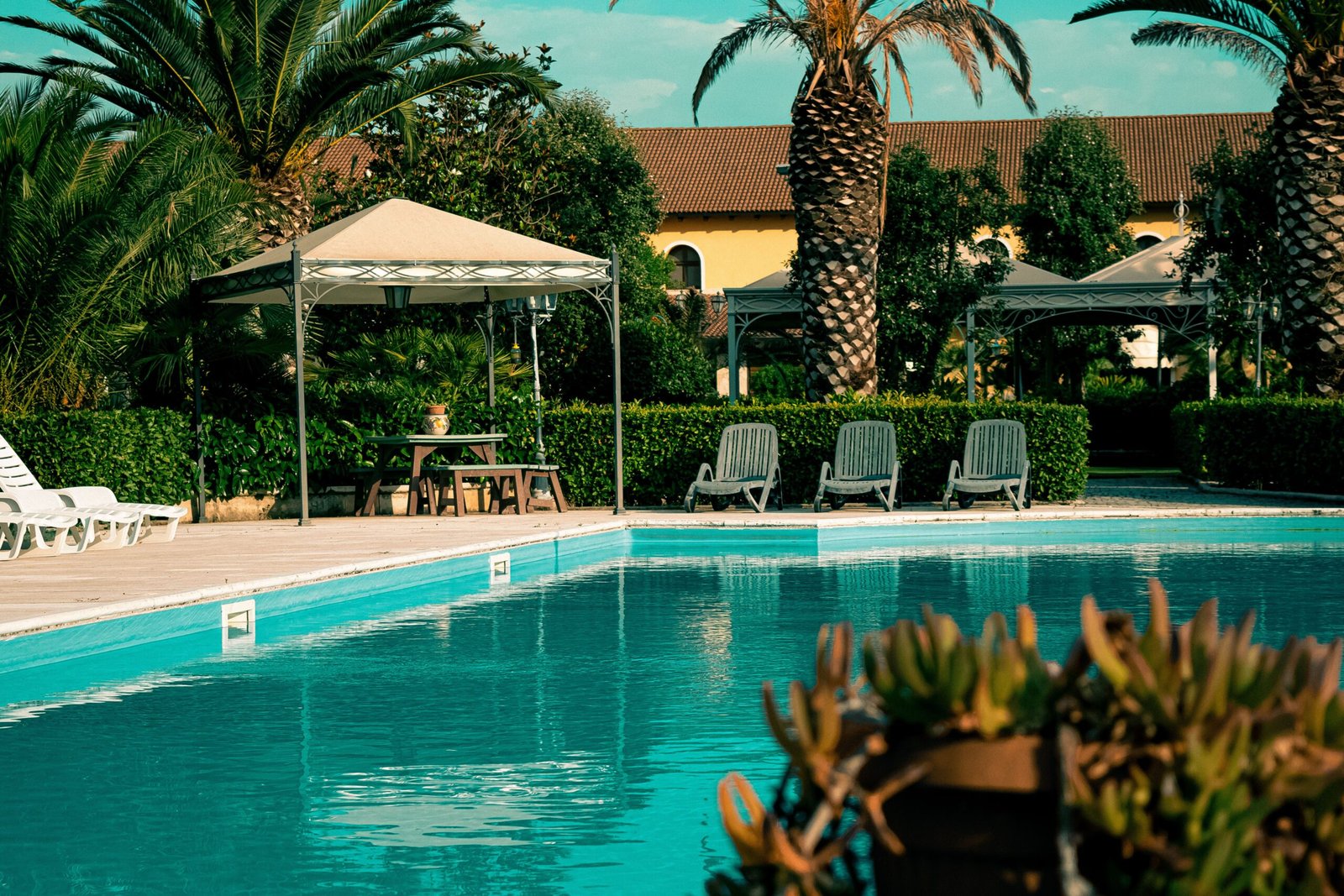
Hardscape, Shade, and Lighting Around a Pool
Hardscape gives a pool area its bones, just as it does in the rest of the yard. Paths, coping, decks, and low walls decide where people walk, sit, and set down towels.
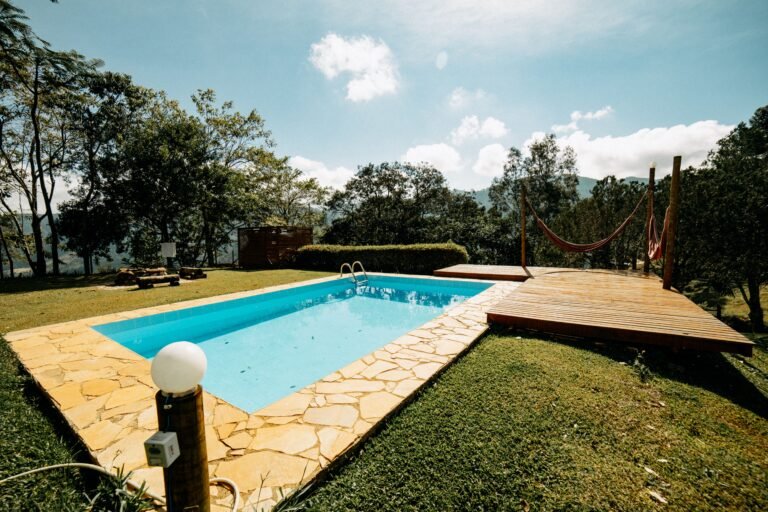
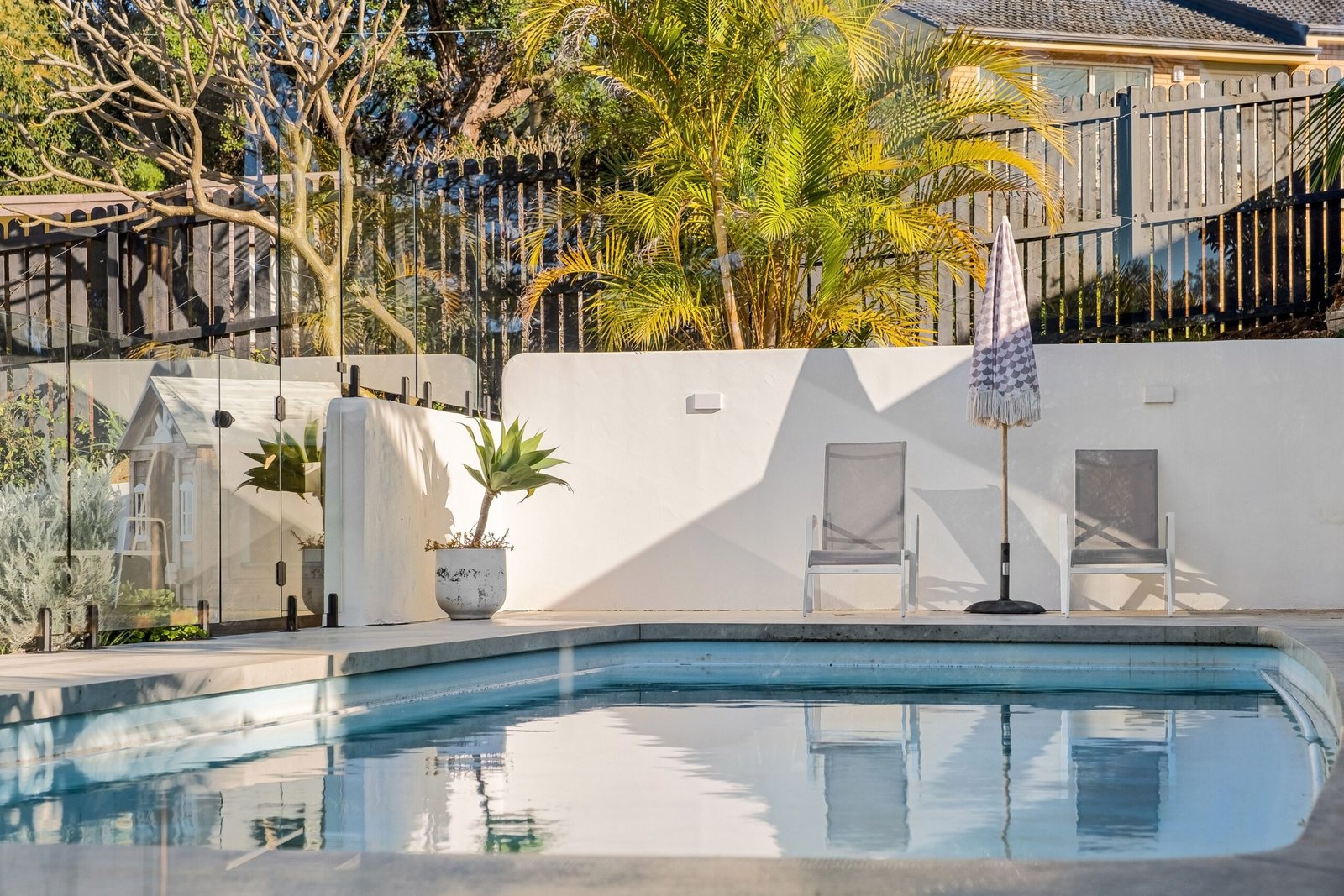
- Decking. Choose non-slip, heat-resistant materials for Ring 1 and Ring 2. Pale stone and light pavers stay cooler than dark surfaces in strong sun. Textured finishes grip wet feet better than polished stone. Avoid loose gravel right beside the water, and slope deck surfaces so water drains away from the pool structure and the house, not onto walking paths.
- Shade. Shade makes a pool area usable at midday, but it must not darken the water or block supervision. A pergola over a lounge zone, a shade sail over a dining area, or a well-placed tree in Ring 3 can all work. Keep shade structures clear of power lines and the pool safety fence, and have a professional confirm footings and wind ratings for your area.
- Seating and storage. Built-in benches, low walls, and weatherproof storage for towels, toys, and pool equipment keep the deck clear and the area tidy. Place seating so it faces the water, not away from it, and keep storage out of gate swings and walking routes.
- Lighting. Path lights, deck lights, and underwater lights extend evening use and make edges visible. Use low, warm light that does not glare across the water, and keep all electrical work to a licensed electrician. Light the steps, the gate, and the path to the house, not just the pool itself.
- Fire features near a pool. A fire pit or fire table near a pool needs a non-slip pad, a clear distance from the water and from walking routes, and a safe distance from the safety fence and its gate. Check local rules, keep seating out of paths, and never place a fire feature where it blocks supervision of the water.
A Plant Decision Filter: Five Questions Before You Buy
Use this filter for every poolside plant, and skip any plant that fails a safety question, even if you love how it looks.
- Will it litter the water? If it drops large leaves, flowers, or fruit, move it to Ring 3 or skip it.
- Will it hurt bare feet or small hands? If it is thorny, spiky, or toxic, keep it out of Rings 1 and 2.
- Will its roots reach the pool, pipes, or deck? If its root habit is aggressive, or you are unsure, keep it well away and ask a professional.
- Will it block a gate, path, or view of the water at mature size? If yes, choose a smaller cultivar or a different spot.
- Can it handle splash, sun, and heat in your zone? If it needs constant shelter from splash, it is not a poolside plant.
A plant that passes all five is a poolside plant. A plant that passes four but fails a safety question is not. That simple rule saves more poolside regret than any plant list.
Seasonal Care That Keeps the Area Looking Good
Poolside landscaping needs a seasonal rhythm, not constant fuss.
In spring, prune hedges before growth surges, refresh mulch away from the pool edge, check that no plant has grown across a path or gate, and remove winter debris from drains and skimmers. In summer, water deeply but not wastefully, trim anything that shades the water too much, and keep containers watered so plants do not shed stressed leaves into the pool. In autumn, cut back plants that will litter the water, clear gutters and drains before rain, and check that falling leaves are not blocking the pump or filter. In winter, protect tender plants, keep the fence and gate clear, and avoid planting that will need urgent work in cold weather.
Check the fence and gates as part of every seasonal pass: gates must still close and latch on their own, fence panels must be intact, and no plant, pot, or stored item may give a child a step over the barrier.
Frequently Asked Questions
What plants are safe around a pool?
Low-litter, non-thorny, splash-tolerant plants with non-invasive roots suit poolside areas, subject to your zone and pool type. Choose compact plants for Ring 1, frame planting for Ring 2, and taller screening plants for Ring 3, and check mature size before you buy.
What should I avoid planting near a pool?
Avoid trees with aggressive roots, heavy-litter trees that drop leaves or fruit into the water, thorny or toxic plants where people walk barefoot, and any planting that blocks a gate, a path, or a view of the water.
How do I get privacy around a pool without a tall wall?
Use layered planting in the outer ring, a trellis or pergola set back from the fence, or decorative screens that leave a clear view of the water from seating. Test privacy from both sides before you commit.
Should pool decking be light or dark?
Pale, textured, heat-resistant decking usually feels cooler and grips wet feet better than dark, polished surfaces. It also shows water and debris less harshly, which helps you spot a hazard.
Can I put a fire pit beside a pool?
Only with clear separation from the water, walking routes, pool equipment, and the safety fence’s gate swing, and only where local rules allow it. Keep the surface non-slip, keep seating out of paths, and get professional advice on gas, drainage, and clearances.
A Pool Area That Feels Like a Retreat, Not a Chore
Good pool landscaping is quiet work. The fence still latches, the gate still swings, the water stays cleaner, and the garden looks cared for without constant fuss. Start with safety, draw your three rings, choose plants that pass the five-question filter, and let privacy, shade, and light follow the plan, not lead it. That is how a pool area becomes a retreat you can actually use, not just the photo of it.
Disclaimer This article offers general home and garden information, not professional pool, electrical, construction, or legal advice. Pool rules, plants, soils, and safety requirements vary by location, so check local permits and hire a licensed professional for construction, electrical, gas, drainage, and structural work.