Sitting Room Decor Ideas: A Calm Room Made for Conversation
A sitting room works best when it is built around one job: comfortable conversation in a calm, welcoming room. It does not need a fireplace, a large footprint, or expensive furniture. It needs seats that face each other, a surface for a cup, light you can read by, and enough space to move without bumping into a table. This guide shows how to build that room, step by step, and how to refresh it without a renovation.
What a Sitting Room Is — and What It Is Not
Traditionally, a sitting room is a smaller, cozier room meant for talking, reading, and receiving guests. It often has no television. A living room, in the traditional sense, is larger and more casual — an everyday family space for television, games, and gatherings. A family room is usually the most informal of all, often near the kitchen.
In modern American homes, those lines blur. Many homes have one main seating room, and owners call it whichever name fits their habits. Some homes have a formal living room plus a family room. A few have a sitting area inside a primary suite for reading and morning coffee.
The name matters less than the job. If your room’s main job is quiet talk and reading, decorate it as a sitting room: intimate seating, soft light, and fewer screens. If its main job is family television and play, decorate it as a living room: sturdier fabrics, flexible seating, and a television plan that does not fight the conversation plan. The distinction between a sitting room and a living room is mostly about size, formality, and whether a screen runs the room.
A sitting room does not need to be formal. It needs to be inviting. A room with beautiful chairs that nobody sits in has failed, however elegant it photographs.
Start With Purpose, Not Shopping
Before you buy anything, finish this sentence: “This room is mainly for ___.” The answer changes every later choice.
- Mainly for conversation and guests: face seating toward each other, keep a surface within reach of every seat, and keep the television out or hidden.
- Mainly for reading and quiet time: one excellent chair with good light, a side table, a shelf or basket for books, and a footrest.
- Mainly for family evenings: a comfortable sofa or sectional, durable fabric, storage for games and throws, and a television placed so it does not force every seat to face it.
- Mainly for a bit of everything: a sofa plus two movable chairs, so the room can shift from talk to television without moving heavy furniture.
Write the purpose on a note and keep it visible while you shop. It stops the most common decorating mistake: buying a beautiful piece that does not fit the room’s job.
The Conversation-Circle Test
Here is the original check for this article. Sit, in your imagination, in every seat in the room and ask:
- Can I talk to someone in another seat without raising my voice or twisting around?
- Can I set down a cup without standing up or reaching across someone?
- Can I enter and leave my seat without climbing over furniture or blocking a walkway?
- Is there light for reading here in the evening without turning on a harsh ceiling light?
A room that passes all four feels good even with plain furniture. A room that fails two or more feels awkward even with expensive pieces.
Most failures come from one cause: furniture pushed against the walls with a rug floating in the middle. Pull the seating inward until conversation feels natural. In a typical room, seats facing each other work well when they sit roughly 4 to 8 feet apart — close enough to talk easily, far enough to stretch out. Leave a clear walkway of about 30 inches or more behind chairs where people pass. These are common-practice guides, not building rules, but they explain why wall-hugging layouts feel like waiting rooms.
Test the television question here too. If a screen is in the room, does every seat face it by default? If so, conversation becomes a side activity. Angle one or two chairs toward each other rather than toward the screen, and the room regains its sitting-room character without removing the television.
Three Layouts for Three Rooms
Use these as starting points, then adjust to your room’s doors, windows, and fireplace.
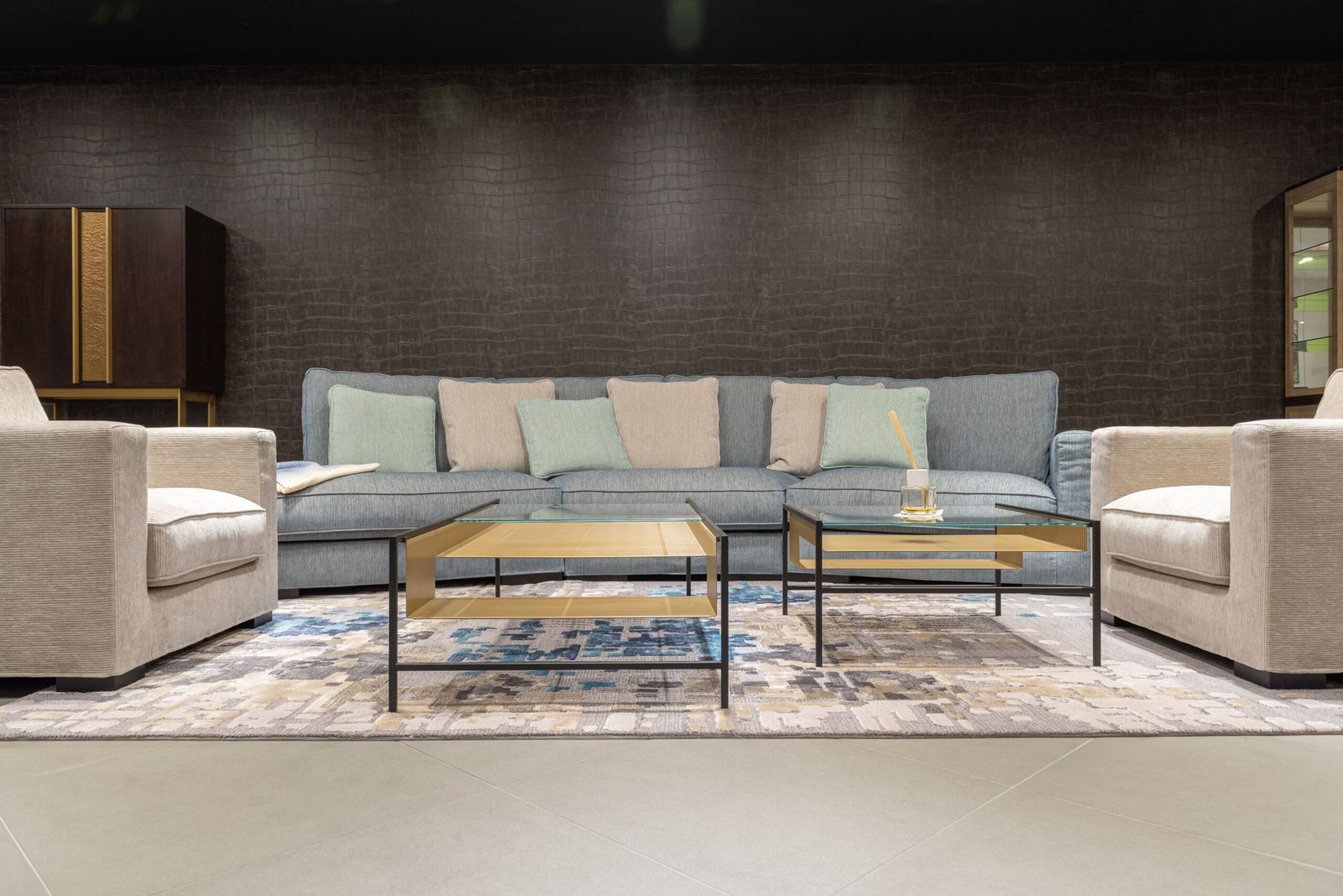
The conversation room. A sofa faces two chairs across a coffee table, with the fireplace or a window as a shared backdrop rather than the focus. Add a small side table beside each chair. This layout suits guests, couples, and anyone who wants talk to lead. Keep the television out of this room if you can.
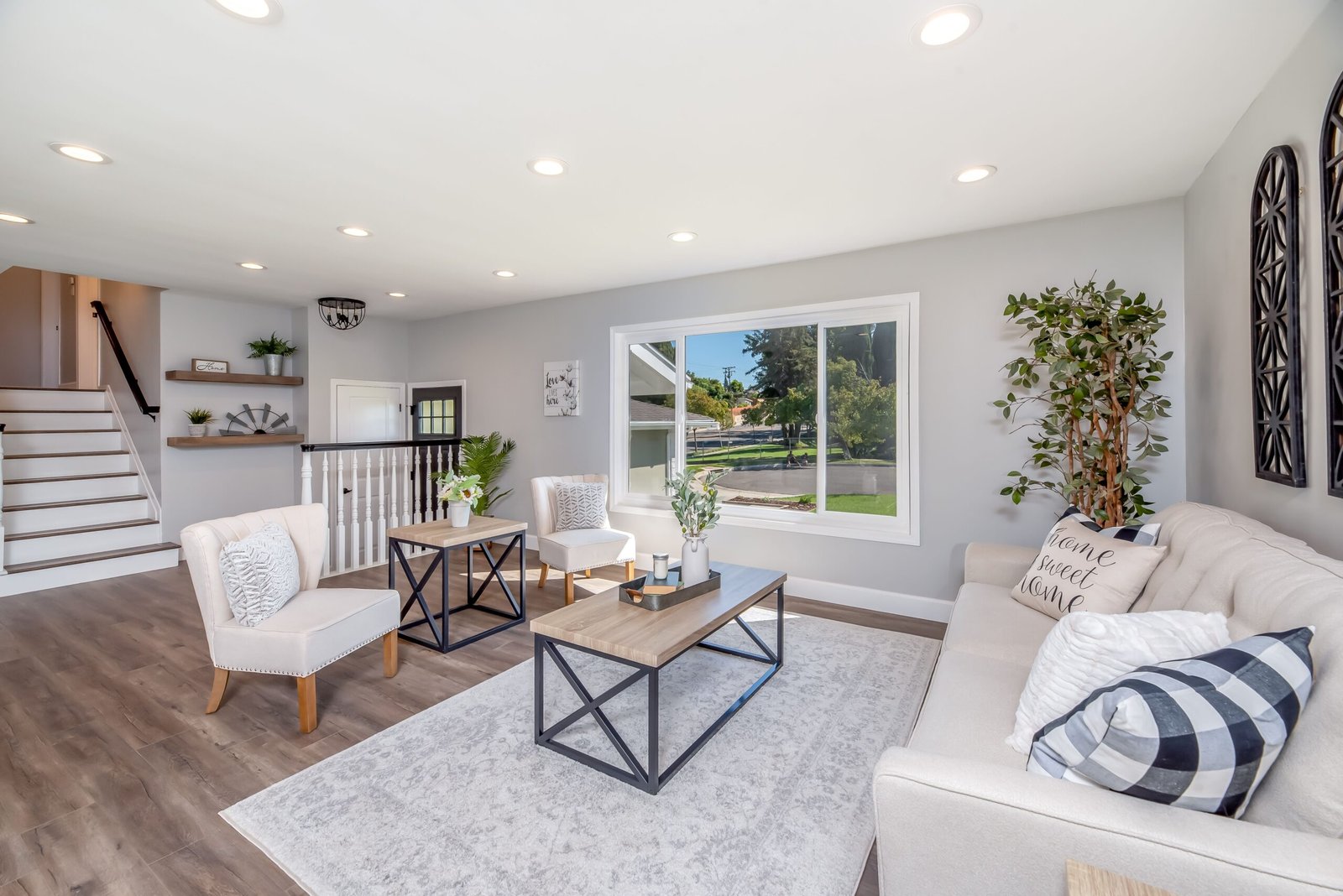
The reading retreat. One deep chair with a floor lamp, a side table, and a footrest sits near the best window. A small sofa or loveseat faces it at an angle, so a second person can join without rearranging the room. Books live within arm’s reach. This layout suits a suite sitting area, a quiet corner, or a small room where one person recharges.
The guest-ready room. A sofa plus two lightweight chairs that can pivot toward guests or toward a screen. An ottoman doubles as a footrest, a coffee table, and extra seating. A console or basket holds throws and games. This layout suits a main living room that must host, watch, and relax in turn. Choose chairs you can actually move — heavy, high-backed chairs defeat the flexibility this layout promises.
In every layout, anchor the group with a rug (next section) and give every seat a light source and a surface. A seat with neither is a seat people avoid.
Rugs: The Size Mistake Almost Everyone Makes
A rug that is too small is the fastest way to make a sitting room look unsettled. The rug should connect the seating, not float under the coffee table alone. A good rule is the front-legs-on rule: the front legs of every seat in the group should rest on the rug, even if the back legs sit off it. This makes the group read as one room, not as separate pieces of furniture on bare floor.
Here is a worked example. Suppose your sofa is 84 inches wide (7 feet), a standard three-seat size, and you add two chairs, each about 30 inches wide, facing it across a coffee table. The seating footprint is roughly 8 feet wide and 9 feet deep. An 8-by-10-foot rug covers that footprint with the front legs of the sofa and chairs on the rug and a comfortable border around the group. A 9-by-12-foot rug also works in a larger room, giving more border and a calmer look. A 5-by-8-foot rug under the same 84-inch sofa usually fails: the sofa dwarfs it, the chairs float off it, and the coffee table looks stranded.
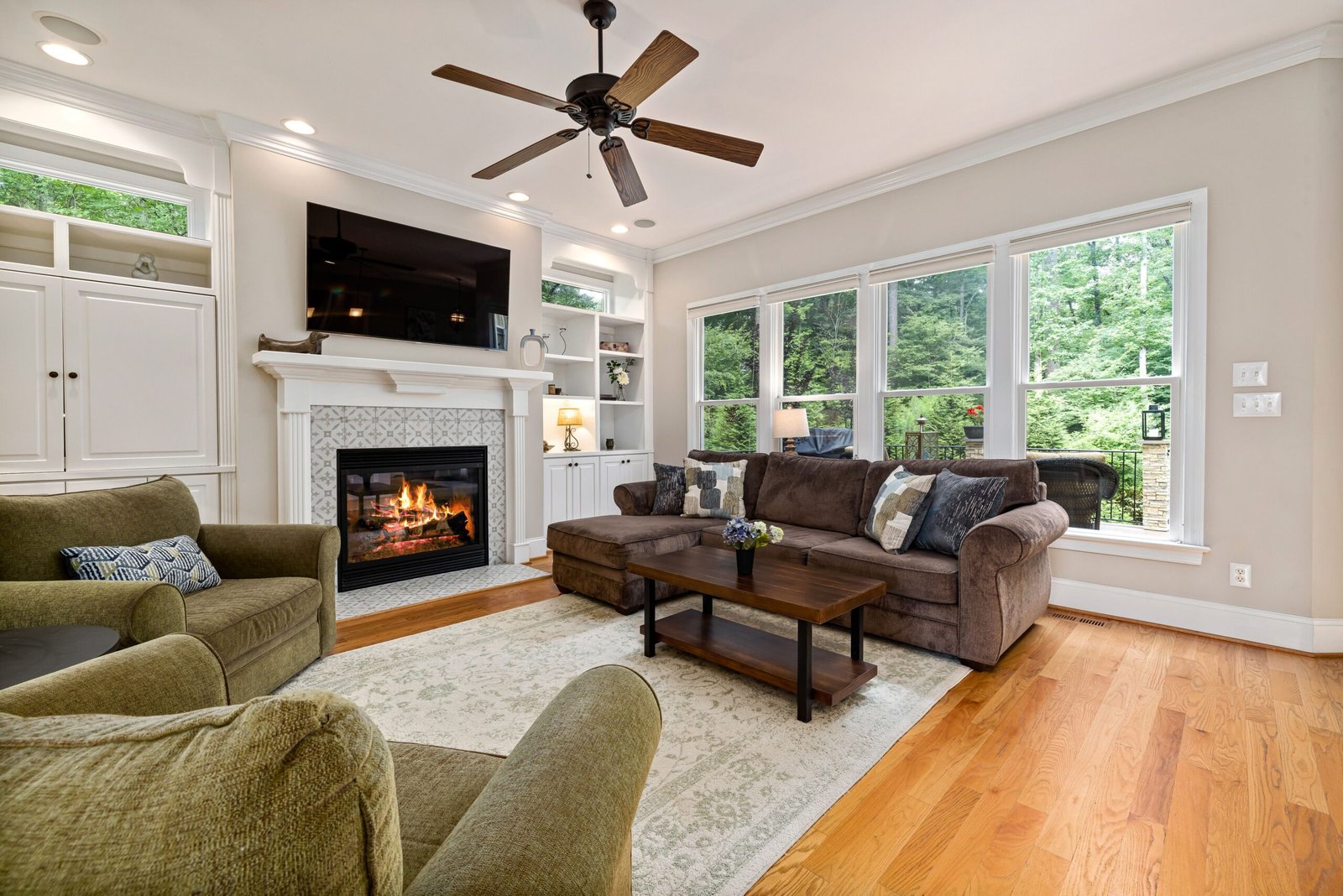
The same guides suggest about 14 to 18 inches between the sofa and the coffee table — close enough to reach a cup without stretching, far enough to walk past or put your feet up. That spacing also helps you choose the rug: the rug must cover the sofa-to-table gap plus the front legs of the chairs. Measure your own seating footprint before you order: the width of the sofa plus the chairs, the depth of the group, and the gap for the table. Then choose a rug that covers that footprint with a little to spare. A detailed living room rug size guide explains the three placements — all legs on, front legs on, and coffee table only — and why the last one disappoints most often.
If you already own a small rug you love, layer it over a larger plain rug, or use it in a reading corner where one chair and a side table sit on it. That way the small rug still gets seen, and the main seating group still gets the larger rug it needs to feel settled.
Lighting in Layers
One ceiling light cannot do a sitting room’s work. Layer three kinds of light instead.
Ambient light is the room’s general glow — a ceiling fixture or a pair of lamps that lets you move safely. Task light is focused light for reading or hobbies — a floor lamp beside a chair, a table lamp beside a sofa. Accent light highlights what you love — a small lamp on a shelf, a picture light, or a candle-style glow on a mantel (used safely, away from fabric).
Warm white bulbs suit sitting rooms for most people, because they flatter skin tones and wood and make a room feel welcoming in the evening. Cool white bulbs can make a sitting room feel like an office. Add dimmers where practical, so the same room can move from bright cleaning light to low evening light. Plug-in lamps are an easy win: move them, test them for a week, and only then decide on anything fixed. For fixed wiring, new circuits, or ceiling-fixture changes, hire a licensed electrician. This guide covers lamps and placement only, not wiring work.
Place light where people sit, not just where the ceiling allows. A reading chair without a lamp is a chair people will not use for reading. A sofa without a nearby lamp is a sofa people leave when the light fades. Two smaller lamps often beat one large one, because they spread light more evenly and let each seat have its own glow.
Color, Pattern, and Texture Without Fear
Start with a calm base: walls, sofa, and rug in neutrals you can live with — warm white, soft gray, beige, or a muted green or blue. Then repeat one accent color in three places: a pillow, a throw, and a piece of art, for example. Repetition is what makes a room feel intentional rather than random.
Add pattern sparingly. One patterned pillow, one patterned rug, or one patterned curtain is usually enough in a small room. In a larger room, you can repeat a pattern family — stripes with a small geometric print, for instance — as long as the colors stay related. Texture does quiet work that pattern cannot: linen, wool, velvet, leather, wood, and woven baskets each add warmth without adding visual noise. A room with three textures feels richer than a room with three loud patterns.
Choose fabrics for the room’s real life. A household with children or pets needs washable, durable fabric more than it needs delicate velvet. A quiet adult sitting room can enjoy velvet or linen. Performance fabrics — made to resist stains and wear — are a practical middle ground, and many now look and feel like ordinary upholstery. The seating and fabric ideas in this sitting room ideas guide cover deep sofas, sectionals, slim modern sofas, accent chairs, and fabric choices in the same practical spirit.
Art and personal objects finish the color story. Hang art at eye level for a seated person, not at standing height, in a sitting room. Group small pieces together rather than scattering one tiny frame per wall. Leave some wall empty. Empty space is not unfinished — it is what lets the pieces you love stand out.
Small Sitting Rooms
Small rooms reward discipline. Choose one good sofa or loveseat instead of a sofa plus a loveseat plus two chairs. Add chairs that are slim, armless, or easy to move. Use a round coffee table or nesting tables that can tuck away. Choose light wall colors and one large mirror opposite a window to bounce light, rather than many small mirrors that chop the wall.
Go vertical: tall shelves draw the eye up and hold books and objects without eating floor space. Hide clutter in closed storage — baskets, ottomans with storage inside, and cabinets with doors. Open shelves look best when they hold fewer, larger objects, grouped in odd numbers, with breathing room between groups. A small room with everything visible feels busy; the same room with half its objects behind closed doors feels calm.
Keep the rug rule even in a small room. A rug that fits only the coffee table makes the room feel smaller, not larger. A rug that reaches the front legs of the seating makes the group feel like a room.
Storage and the Personal Finish
Every sitting room needs three kinds of storage: hidden storage for clutter (remotes, chargers, games), display storage for books and objects you love, and a surface for everyday items (a cup, a book, glasses). If any one is missing, clutter migrates to the coffee table. Hidden storage for clutter — a closed cabinet, a basket with a lid, an ottoman with storage — keeps the room calm without hiding the things you actually use.
Style shelves with restraint. Three objects of different heights beat seven similar ones. A stack of books, a small vase, and a framed photo tell a story; a shelf crowded with souvenirs tells a to-do list. Leave empty space on each shelf — the eye needs rest as much as it needs interest.
Seasonal swaps keep the room fresh without a renovation: change pillow covers and throws with the seasons, rotate art from another room, and bring in fresh flowers or branches. These small moves cost little, but they change how the room feels every time you walk in.
Refresh in Order, Least Spending First
If your sitting room feels tired, work in this order and stop when it feels right:
- Move furniture into a conversation layout and test it for a week. Cost: nothing.
- Fix lighting: add or move lamps, change bulbs to warm white, add a dimmer where practical. Cost: low to moderate.
- Change textiles: pillow covers, a throw, and curtains if they are heavy or dark. Cost: moderate.
- Add or move art, mirrors, and plants. Cost: low to moderate.
- Paint or replace large furniture only if steps 1–4 did not solve the problem. Cost: highest.
Most rooms improve at step 2 or 3. Jumping to step 5 first is how people spend the most and learn the least.
Frequently Asked Questions
What is a sitting room?
A sitting room is a calm seating room meant mainly for conversation, reading, and receiving guests. It is usually smaller and quieter than a main living room.
Is a sitting room the same as a living room?
Often, yes, in everyday American use. Traditionally, a sitting room is smaller, calmer, and more formal than a living room, which is the everyday family space. Today, many homes use the terms for the same room.
How do you arrange furniture in a sitting room?
Face seating toward each other around a coffee table or rug, keep a surface and a light within reach of every seat, and leave a clear walkway. Pull seating in from the walls until conversation feels natural.
What size rug should a sitting room have?
Choose the rug by your seating footprint. For a standard sofa with two chairs, an 8-by-10-foot rug works well if the front legs of all the seating sit on it. Measure your group first, because a larger sofa may need a 9-by-12-foot rug.
Should a sitting room have a television?
It depends on the room’s job. A dedicated sitting room often works better without one, because conversation stays the focus. If you add one, angle the chairs toward each other, not only toward the screen.
A Short Way to Begin
Pick the room’s one main job, arrange seating to pass the conversation-circle test, and size the rug to the group. Then layer the light and change textiles before you buy anything large. A sitting room earns its place in a home not by looking perfect, but by being the room people choose to sit in. For more home design ideas, browse the Home Design section, and learn about the site on the About Luxury Homes Idea page. The Luxury Homes Idea homepage gathers the full collection.
Disclaimer This guide is general information only, not design or electrical advice. Homes, rooms, and household needs vary. For fixed wiring or fixture changes, hire a licensed electrician in your area.