
Flower Beds in Front of House: How to Plan One That Looks Good All Year
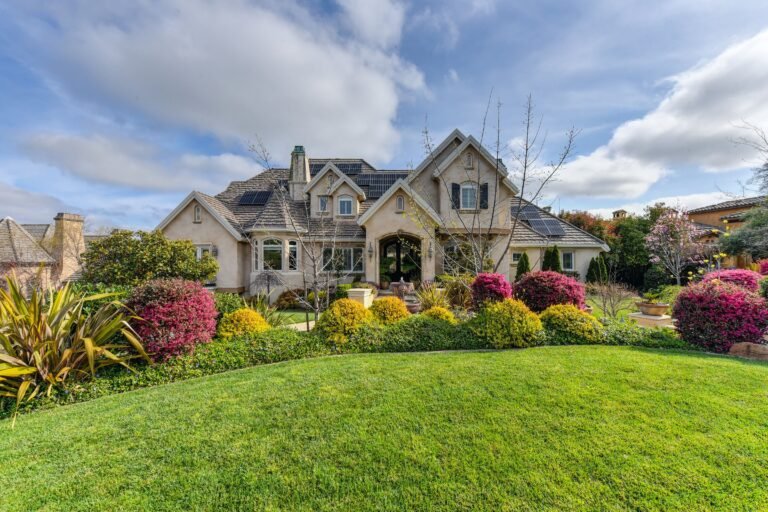
A flower bed in front of a house is a planted strip or shaped area between the house, the walkway, and the street that frames the front of the home and guides the eye toward the front door. The simplest version that works well is a bed wide enough for three layers of plants — tall at the back, medium in the middle, and low at the front — placed where the plants will get the light they need. That one choice, matching plants to sun, matters more than any single flower you pick.
Before you buy a single plant, there is one condition to respect. A bed must never trap water against the house. Soil and mulch should slope away from the foundation and sit below the siding, and any sign of water pooling near the wall is a drainage problem to fix before planting, not after. Keep reading for a simple sun check, five bed shapes, and a worked example you can adapt to your own front yard.
What a Front Flower Bed Really Is
A front flower bed is not just a row of flowers. It is the planted frame around your home’s public face. It softens hard lines, hides a plain foundation wall, and makes the walk to the door feel finished.
It has three jobs: framing the house, leading visitors toward the entrance, and adding life through the seasons.
A bed can be formal (symmetrical, matching plants each side of the door) or relaxed (curved, mixed heights). Neither is better — choose the one that fits your house and your available care time.
Start With Sun, Not Plants
Most front-bed failures start at the garden center, not in the garden. People fall in love with a flowering plant, bring it home, and then discover their front yard gets only two hours of sun a day. That plant was never going to thrive there.
Do this 10-minute sun check before you shop. On a normal day, note the light on your bed area in the morning, at midday, and in the afternoon. Write it down in plain words: full sun (six or more hours of direct sun), part sun (three to six hours), or shade (less than three hours, or only filtered light through trees).
Also note which way your house faces: south-facing fronts usually get the strongest sun, north-facing fronts are often shady, east-facing beds get gentle morning sun, and west-facing beds get hot afternoon sun. Trees, fences, and neighbors change all of this, so your own notes beat any general rule.
Plant tags exist for a reason. When you shop, match the tag’s light requirement to your notes. If your bed is shady, a sun-loving plant will stay weak no matter how much you water it. If your bed is hot and sunny, a shade plant will scorch. Getting this right saves money and disappointment.
Five Bed Shapes That Suit Different Front Yards
You do not need a large yard. You need a shape that fits the space you have.
The foundation bed
This is the classic bed along the front wall of the house. It hides the foundation, frames windows, and gives the house a finished base. Keep it deep enough for layers — a narrow strip of 12 inches will only hold one row of small plants and will look thin. If you can manage 3 to 4 feet of depth, you have room for a real layered bed.
The walkway border
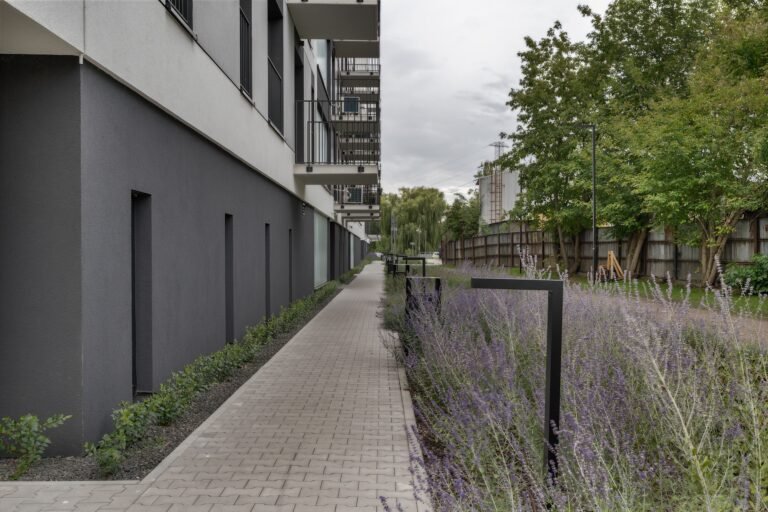
A narrow bed on one or both sides of the path to the door makes the entrance feel welcoming. Choose plants that stay neat and do not flop over the path. Low growers and tidy mid-height flowers work well here. Leave the walking surface clear — nobody enjoys brushing wet leaves on the way to the door.
The entry bed
A slightly wider bed right beside the front door or porch steps acts as a welcome mat made of plants. This is a good place for one strong plant, like a small shrub or a large pot, plus seasonal color around it. Because visitors see it up close, keep it tidy.
The corner bed
A bed that wraps around a corner of the house softens a sharp angle and gives you room for a taller plant, like a small ornamental tree or large shrub. Corners are often overlooked, and a corner bed can make the whole front yard look planned rather than patched together.
The island or tree bed
If you have a front yard tree, a bed around its base can turn a bare patch into a feature. Be careful here: do not pile soil or mulch against the trunk, and choose plants that tolerate the shade and root competition under a tree. A ring of mulch and shade-tolerant ground cover is often smarter than a crowded flower display.
A small bed done well looks better than a large bed that is half weeded and half bare. Start with one bed, learn how it grows, and expand next season if you enjoy the work.
The Layered Bed Formula
Layering is the design idea behind nearly every attractive front bed. It simply means arranging plants by their mature height, tallest at the back and shortest at the front, so every plant can be seen.
The back layer sits closest to the house wall. Use shrubs or tall perennials here. They give the bed its backbone and look good even when they are not flowering. The middle layer holds medium perennials and seasonal flowers — this is where most of the color lives. The front layer is low edging plants or ground cover that finish the edge and stop the bed from looking ragged.
Two details make layering work: plan by mature size, not pot size — a shrub that grows 4 feet tall will hide everything in front of it if planted in the middle row — and plant in groups of three or five of the same plant rather than one of everything.
Layering also helps care: an evergreen back layer keeps winter structure, and a middle layer with staggered bloom times keeps color moving through the bed.

A Worked Example: One 12-Foot Foundation Bed
This is a labeled example, not a prescription. It shows how the ideas above fit together on a common front wall. Adapt the plants to your sun, soil, and local climate, and check plant tags for mature size.
Imagine a 12-foot-long, 3.5-foot-deep foundation bed beside a front door, in part sun. The back row, against the wall, holds three rounded shrubs spaced to reach their mature width without crowding. The middle row holds five groups of three perennials — fifteen plants — chosen so that something blooms in late spring, summer, and early fall. The front edge holds a low, spreading ground cover planted in a loose row, with small gaps left so it can fill in over a season or two.
That adds up to about 23 plants plus ground cover for this one bed. Counting this way is useful because it turns a vague plan (“some flowers along the house”) into a shopping list you can price and carry. It also shows why spacing matters: if you plant 40 plants in this bed, they will crowd each other within a year, and you will spend your weekends thinning them.
If the same bed were in full shade, the structure would stay the same and only the plant list would change — that is the point of a plan built on layers, not on one favorite flower.
Soil, Drainage, and the Foundation Rule
Good soil is the quiet part of a flower bed. Plants need soil that drains but still holds moisture, with room for roots to spread. Before planting, clear weeds and old roots, loosen the soil, and mix in compost. Compost is decayed organic matter, like rotted leaves or plant material, that improves soil structure. It helps heavy clay soil drain better and helps sandy soil hold water longer.
Then comes the foundation rule. Water must move away from your house, not toward it. Keep the soil surface sloping gently away from the wall, and keep soil and mulch below the siding and away from wood trim. Piling mulch against siding traps moisture and can invite pests and rot. If you see water standing near the foundation after rain, or damp walls inside near the bed, stop and get the drainage checked by a qualified landscaper or contractor before you plant more.
Mulch deserves a careful note because it is often overdone. Mulch is a layer of material, such as bark or wood chips, spread over the soil surface. Colorado State University Extension notes that mulch reduces evaporation, suppresses weeds, and moderates soil temperature. It also advises keeping the mulch bed’s soil level low enough that the top of the mulch sits at grade level, so mulch does not spill onto the lawn or walk. A 2- to 3-inch layer is the usual guidance from extension sources, including the University of Florida’s IFAS Extension bed-preparation advice, which also recommends keeping the soil 3 to 4 inches below the adjoining surface before mulching so the finished bed sits slightly lower.
Keep mulch a few inches away from plant stems and trunks, too. Mulch piled against a stem holds moisture there and can damage the plant. A neat donut shape — mulch around the plant, not touching it — is the safer habit.
If your yard has serious drainage trouble, standing water, a soggy foundation area, or a slope that sends water toward the house, hire a licensed professional to assess it. Planting cannot fix drainage, and the wrong fix can make it worse.

Plants for Sun, Plants for Shade
Start with two words every beginner should know. A perennial is a plant that returns year after year from its roots. An annual is a plant that completes its life in one growing season and must be replanted. A bed that mixes both gives you long-term structure from perennials and instant seasonal color from annuals.
For sunny beds, reliable beginner groups include coneflowers, daylilies, salvia, marigolds, and petunias. Coneflowers and daylilies are perennials that return each year. Marigolds and petunias are annuals that give fast, bright color for one season. Salvia comes in both annual and perennial types, so read the tag.
For shady beds, look at impatiens and begonias for annual color, and hostas, ferns, and astilbe for perennial structure. Hostas are grown mainly for their leaves, which range from green to blue-green to variegated, and they are a forgiving choice for a first shade bed. Impatiens are a classic shade annual, but they need steady water, so do not plant them where you cannot water regularly.
For part-sun beds, you have the widest choice. Many perennials, including daylilies and coneflowers, tolerate part sun, and so do geraniums, which are popular annuals for containers and beds. When in doubt, choose plants labeled for your exact light level rather than hoping a plant will adapt. Plants rarely adapt; they just struggle quietly.
Also check your local climate zone on the plant tag or with your local extension service — a plant that thrives in one region may not survive winter in another.
Color in Every Season
A front bed that only looks good in June is a missed opportunity. Four-season interest comes from planning in layers of time, not just in layers of height.
Spring starts with bulbs. Tulips, daffodils, and other spring bulbs are planted in fall and bloom before most perennials wake up. Tuck them between perennials so their fading leaves are hidden as the perennials grow.
Summer is the main show. This is when most perennials and annuals bloom. Staggering bloom times — some plants flowering in early summer, others in late summer — keeps the bed changing instead of peaking once.
Fall brings a second wave. Asters, late-blooming perennials, and shrubs with fall leaf color extend the season. Ornamental grasses also shine in fall, adding height and movement.
Winter relies on structure. Evergreen shrubs, interesting bark, and the dried shapes of ornamental grasses keep the bed from looking empty. This is why the back layer matters so much: it is the bed’s winter skeleton.
Aim for three seasons in your first bed and add the fourth when you expand.
Edging and Mulch That Keep a Bed Tidy
Edging is the line between bed and lawn. Without it, grass creeps in, mulch creeps out, and the bed edge looks fuzzy within weeks. With it, even a simple bed looks intentional.
Stone, brick, metal, and plastic edging all work. Stone and brick look natural and last a long time, but they cost more and take longer to install. Metal edging gives a crisp, thin line and suits modern houses. Plastic edging is the least expensive and easiest to install, but it can heave out of the ground over time. A simple spade-cut edge — a clean trench cut with a spade — costs nothing and looks neat if you re-cut it once or twice a season.
Choose edging that matches your house — rustic stone for a cottage, crisp metal for a modern facade — and keep it low enough to step across easily.
Mulch color is a matter of taste, but one practical note helps: dark mulch makes flower colors stand out, while natural bark mulch blends in quietly. Either is fine. What matters is depth — 2 to 3 inches, not a thick blanket — and keeping it off stems, siding, and walkways. For step-by-step bed preparation, the University of Florida’s IFAS Extension guide on prepping a landscape bed walks through clearing, leveling, and mulching a new bed.
A Care Rhythm You Can Actually Keep
A flower bed does not need daily attention. It needs a rhythm.
Weekly in the growing season, walk the bed for ten minutes. Pull small weeds before they seed, deadhead spent flowers (remove faded blooms to encourage more flowering), and check whether the soil is dry an inch below the surface before watering. Deep, less frequent watering encourages deeper roots than a daily sprinkle.
Monthly, check the mulch depth, trim plants that flop over the walk, and look for pests or disease. Catching a problem early, when it affects a few leaves, is far easier than treating it after it spreads.
Seasonally, cut back perennials as your local guidance suggests, refresh mulch if it has thinned, and divide overcrowded perennials every few years. Dividing means digging up a clump, splitting it, and replanting the pieces — it is how one healthy plant becomes several, and how an overcrowded bed gets breathing room again.
Be honest about your time: a simpler bed you enjoy beats an ambitious bed you resent. If you have fifteen minutes a week, choose fewer plants, more shrubs, and more mulch.
Frequently Asked Questions
How wide should a flower bed in front of a house be?
Aim for at least 3 feet of depth if you want layers, and 3 to 4 feet is a practical target for a foundation bed. A bed narrower than 2 feet can hold only one row of plants and will look thin. If space is tight, a walkway border or entry bed may suit you better than a full foundation bed.
How do I keep a flower bed from causing water problems near the house?
Grade the soil so it slopes away from the foundation, keep soil and mulch below the siding, and never pile mulch against the wall. If water stands near the house after rain, get the drainage assessed by a qualified professional before planting more.
What flowers grow well in front of a house in shade?
Impatiens and begonias give annual color in shade, while hostas, ferns, and astilbe give perennial structure. Check plant tags for your exact light level and local climate zone, and confirm choices with your local extension service if you are unsure.
Should I plant annuals or perennials in a front bed?
Plant both. Perennials return each year and give the bed structure. Annuals give fast seasonal color and let you change the look each year. A common beginner mix is mostly perennials with a few annuals tucked in for color.
How do I keep a front flower bed looking tidy?
Use a clear edge, a 2- to 3-inch mulch layer kept off stems and walks, and a short weekly walk to pull weeds and deadhead. Planting in groups and spacing by mature size also prevents the crowded, messy look that comes from overplanting.
A good front flower bed starts with one honest observation: how much sun does this spot really get? Answer that, choose a shape that fits your yard, and build in layers. Then start small. One well-planned bed by the front door will teach you more about your yard than a whole garden planted in a hurry, and it will welcome you home every time you walk up the path. For the spaces around the bed, see our outdoor living space ideas and side yard ideas.
Disclaimer — This article is general information for planning a flower bed, not advice for your specific property. Homes, soil, climates, and drainage conditions vary. For drainage problems, structural concerns, or work near a foundation, consult a qualified professional before starting.