

Outdoor Living Space Ideas: Zones, Shade, and Seating That Work
Outdoor living space ideas are plans for turning a patio, deck, or yard into a place you actually live in, not just look at. A real outdoor living space has zones for cooking, dining, and relaxing, arranged so people can move, sit, and talk without rearranging furniture every time. It works on an ordinary Tuesday evening, not only at a party.
Comfort comes from shade, seating, and light working together. A beautiful sofa in full afternoon sun will sit empty. A grill far from the kitchen door will get used twice a year. A patio with one harsh light will feel exposed after dark. Plan those three things first, and the decorations become easy.
What an Outdoor Living Space Really Is
Think of it as rooms without walls. The cooking zone holds the grill or kitchen. The dining zone holds a table where people can eat without elbows bumping. The lounge zone holds softer seating for conversation and rest. A path connects them, and the door to the house stays clear.
You do not need all three zones, and you do not need them large. A small patio with a dining table that doubles as a lounge spot is still an outdoor living space, if it is arranged for how you live. The test is simple: can two or three people use it at once, without blocking each other, and would they choose to stay?
An outdoor living space also changes with the day. Morning coffee wants east light and a quiet corner. Family dinner wants shade and a table near the kitchen. A late evening wants soft light and warmth. A good plan serves at least two of those moments well, rather than serving one moment perfectly and the rest badly.
The Three-Evening Test
Before you shop, run this test. It is the original planning tool for this article, and it prevents the most common waste: buying for a fantasy evening instead of your real ones.
Picture three evenings from your actual life. First, a quiet evening alone or with one other person. Second, a family dinner on a normal weeknight. Third, friends coming over on a weekend. For each evening, write down what you need: a seat, a table, shade, light, warmth, a place to cook, a place for a drink.
Now count which needs repeat. If shade and a comfortable seat appear in all three, they come first. If a large dining table appears only in the third, it comes later, and it should not swallow the patio in the meantime. If cooking outdoors appears only once a month, a grill station beats a full kitchen.
This test also reveals what you do not need. A space built for eight dinner guests, used by two people most nights, will feel empty and oversized. A space built for two, with folding chairs for guests, will feel full and welcoming on both kinds of evening.
Draw the Zones on Paper First
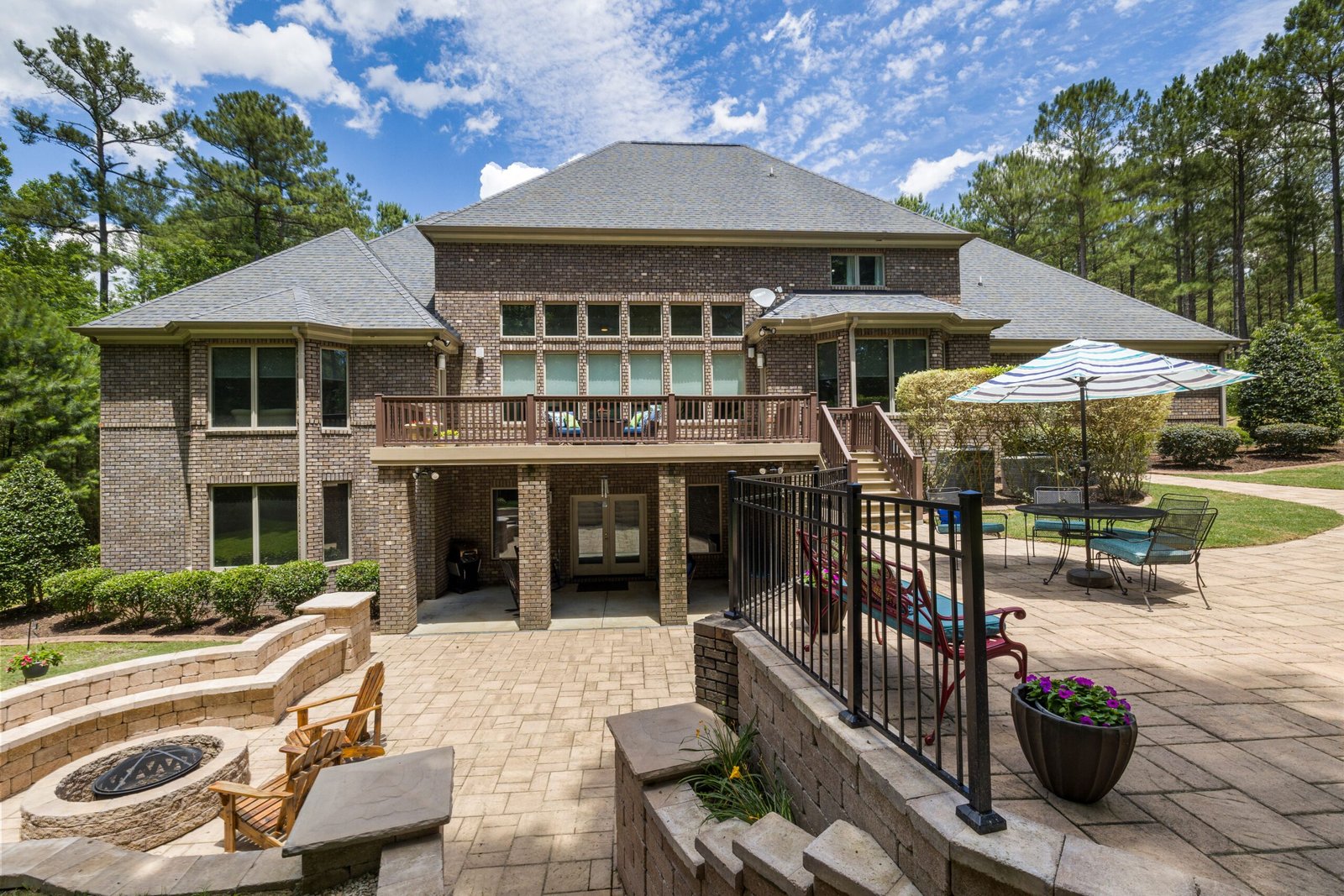
Take a sheet of paper and sketch your patio or yard patch roughly to scale. Mark the house door, the steps, the fence or property edge, and any tree, drain, or slope you cannot move. Then draw three loose shapes: cook, dine, lounge. Leave a clear walking path between them and from the door to the yard.
Keep the door landing clear. People carrying food, children running out, and pets all use that spot. A chair or a planter in the landing turns every trip into an obstacle course. Next, place the dining zone near the kitchen door if you can, because carrying food a short distance makes outdoor dinners far more likely.
On a large patio, break the space into smaller rooms rather than filling it with one huge set. A long console, a change in flooring, or seating facing different directions can separate a kitchen area from a lounge area without building walls. On a small patio, do the opposite: let one zone do two jobs, such as a dining table that also serves as a game table in the evening.
Walk the paper plan in your mind at night, with a tray in your hands. If you bump into a post, a chair, or a step in your imagination, move it on paper now. Paper is free. Furniture is not.
Shade by the Hour, Not by the Photo
Shade looks simple in a photo, where the sun is always perfect. In real life, the sun moves, and the shade you need at 6 p.m. is different from the shade you need at noon.
A pergola or gazebo gives structure and filtered shade, and it defines the room even when the sun is not harsh. A large umbrella gives flexible shade that you can move as the sun moves, which suits a dining table well. A solid cover gives full rain shelter and deep shade, but it can darken the rooms behind it. Trees give beautiful, cooling shade, but they drop leaves and take years to grow.
Check your patio at the hour you will actually use it. Stand there at dinner time on a sunny day and notice where the sun hits your eyes and your plate. West-facing patios suffer most in the late afternoon, when the sun is low and hot and shade structures cast long, thin shadows. For those patios, a side screen, a shade sail angled low, or planting on the west edge often helps more than a roof alone.
Also think about heat under a solid roof. Open sides and moving air matter as much as shade itself. A fan rated for outdoor use, a breeze path kept clear of tall planters, and light-colored surfaces that do not store heat all make a shaded patio feel cooler.
Seating That Faces People, Not Walls
Seating fails when it faces a wall, a fence, or a television that nobody watches outdoors. People go outside to talk, to watch the yard, or to rest. Arrange seats so people face each other, or face a view, with a table within reach.
For conversation, arrange seats in a cluster: a sofa or loveseat with chairs angled toward it, and a coffee table in the middle. Leave enough room to walk around the cluster without squeezing past knees. For dining, choose a table that fits the group you actually feed most nights, with room for chairs to pull out and for someone to serve from behind.
Built-in benches save space and never blow away, and they suit a fire pit circle or a dining nook well. Movable chairs suit a space that changes use through the day, because you can pull them into sun or shade. Many patios work best with a mix: one built-in or heavy piece that anchors the space, plus lighter chairs you can move.
For a small patio, choose a loveseat instead of a full sofa, face it outward toward the yard or sunset if you can, and add chairs in a half circle with a small table in the middle. That arrangement feels open across the loveseat, and guests can pull up an extra chair without breaking the conversation. For ideas on arranging furniture by patio size, see Pottery Barn’s patio furniture arrangements.
Choose furniture materials for your climate. Teak, aluminum, and resin wicker are commonly recommended for weather resistance, as noted in Hawaii Landscape Services’ outdoor living guide. Check how cushions handle rain in your area, and plan a dry storage spot. Furniture that survives the weather but has nowhere to go in a storm will still wear out early.
Kitchen Scale: Full Kitchen, Compact Station, or Grill
Before any kitchen detail, one safety point. Gas lines, new electrical circuits, and built-in appliances are work for licensed professionals. Outdoor outlets need ground-fault protection, gas needs an accessible shutoff and proper clearances from combustible materials, and a grill under a roof needs ventilation that follows the manufacturer’s instructions. Plan the professionals into the project from the start, not after the structure is built. Guidance on these requirements appears in EngineerFix’s outdoor kitchen safety guide.
With that boundary set, choose a scale that matches your three-evening test. A full outdoor kitchen, with a built-in grill, countertops, sink, fridge, and storage, suits frequent entertainers with a large patio and a budget for utilities. It keeps the cook with the guests, but it needs plumbing, gas or electrical work, and a durable, weatherproof build.
A compact station suits most families better. A good grill, a sturdy prep counter, a small fridge or cooler, and storage for tools give you most of the function at a fraction of the complexity. Place it near the indoor kitchen for easy trips, and keep the work surface shaded so food prep is pleasant in summer.
A grill alone suits occasional cooks. A quality freestanding grill, a side table, and a nearby dining spot are enough, and you can add a counter later if outdoor cooking becomes a habit. Starting small here is wise, because a kitchen you rarely use is the most expensive decoration in the yard.
Fire and Warmth Without Taking Over the Patio
A fire feature extends the season and gives people a natural gathering point. A fire pit with a seating circle suits casual evenings. An outdoor fireplace suits a larger patio and gives a strong focal point, but it needs more space, structure, and clearance. A patio heater suits a small space where a fire feature would dominate.
Keep clearance, fuel, and local rules in mind from the start. Follow the manufacturer’s clearances from walls, roofs, and furniture, check local rules on open burning and gas features, and never place a fire bowl on a timber deck without a proper heat-proof base where one is required. Keep seating at a comfortable distance, not so close that people roast and not so far that conversation fails.
Light in Layers After Dark

One bright light makes a patio feel like a parking lot. Layered light makes it feel like a room. Use three layers: path light so people walk safely, ambient light so faces are visible and the space feels welcoming, and task light where people cook or read.
Path lights and step lights guide feet without glare. String lights or lanterns give warm ambient light over dining and lounge zones. Uplighting on a tree or wall adds depth and makes the yard feel larger at night. Wall lights near the door help with keys, trays, and steps. For the range of options, from LED uplighting to bistro string lighting, see Luxe Landscape Group’s patio renovation ideas.
Surfaces, Rugs, and Plants as Walls
The floor under your feet sets the feel of the whole space. Pavers, stamped concrete, and natural stone each give a durable, weather-resistant patio, and the choice should complement your home rather than fight it. A rug softens a hard patio and defines a lounge zone, but it needs to dry after rain and be stored or cleaned seasonally.
Plants do the work of walls without building any. A row of shrubs, a trellis with climbing plants, or tall planters can screen a view, soften a fence, and break wind. Layer heights: taller plants at the back, medium shrubs in the middle, and low plants or groundcover at the edge. That layering looks full without blocking light or air.
Keep planting near seating practical. Avoid plants that drop sticky sap or heavy fruit over a dining table, and avoid thorny plants beside a narrow path. Fragrant plants near a lounge seat, such as lavender or jasmine where your climate suits them, reward you every evening without any extra work.
Storage and Weather: The Unglamorous Part
Every outdoor living space needs a plan for rain, wind, and winter. Cushions need a dry box or a shed spot. Covers need a place to go when they are off. A grill needs a cover and a spot out of the main path. Without storage, the patio slowly fills with clutter, and the inviting room becomes a storage yard.
Wind deserves a specific plan. Light chairs, umbrellas, and rugs blow around, and a windy patio feels cold even on a warm day. A windbreak, heavier furniture in the windiest corner, and an umbrella base rated for your umbrella size all help. Check the prevailing wind direction, not just the sun, when you place the lounge zone.
Rain edges matter too. Under a solid cover, the outer edge still gets wet in wind-driven rain. Under an umbrella, the edge gets wet in any rain. Place cushions and electronics with that edge in mind, and choose a rug that can handle a soaking without staying soggy for days.
Small Patios: One Good Room Beats Three Cramped Ones
If your patio is small, resist the urge to fit every zone. Choose one good room: a dining table with comfortable chairs, or a lounge cluster with a small table. Add folding chairs for guests, vertical planting on a wall or trellis for greenery without floor space, and a single shade solution that covers the main seat.
Vertical elements help small spaces feel larger. A trellis, a wall planter, or a narrow shelf for pots adds greenery at eye level without eating floor space. A mirror or a light wall color can brighten a shady corner, but keep it simple. One strong idea, done well, beats five ideas crowded together.
What to Buy First
Buy in this order, and stop when the space feels good. First, shade for the hour you use the patio most. Second, seating for your most common group, arranged for conversation. Third, a table at the right height for that seating. Fourth, layered light so the space works after dark. Fifth, a cooking setup at the scale your three-evening test supports. Sixth, plants and decoration to soften the edges.
That order prevents the classic mistake of buying decoration before comfort. A rug cannot fix a sun-blasted seat. A lantern cannot fix a patio nobody sits on after dark because there is no shade at dinner time.
Frequently Asked Questions
How do I lay out a small outdoor living space?
Pick one main use, such as dining or lounging, and arrange for that first. Use a loveseat or a small table, keep the door path clear, add folding chairs for guests, and use vertical planting for greenery. One good room beats three cramped zones.
What zones does an outdoor living space need?
Most spaces benefit from cooking, dining, and lounging zones, plus a clear path. You do not need all three. Start with the zones your three-evening test shows you actually use, and let one zone do two jobs on a small patio.
How do I make a patio comfortable after dark?
Layer the light: path and step lights for safety, warm ambient light for faces and atmosphere, and task light where you cook or read. Avoid a single harsh light, and test positions at night from the seats.
Do I need a full outdoor kitchen, or is a grill station enough?
For most families, a grill station is enough. A full kitchen suits frequent entertainers with a large patio and a utility budget. Start with the scale your real cooking habits support, and add counters or a fridge later if use grows.
How do I keep an outdoor space usable in heat and rain?
Shade for the hour you use it, airflow through open sides, and a solid cover or movable umbrella for rain. Place cushions away from the wet edge, choose materials that dry quickly, and keep a windbreak on the windy side.
What furniture lasts outdoors?
Teak, aluminum, and resin wicker are commonly recommended for weather resistance, but climate still matters. Check cushion care, plan dry storage, and choose frames that suit your sun, rain, and salt exposure.
A Space for Ordinary Days
An outdoor living space earns its keep when you use it on ordinary days: coffee in the morning, dinner after work, a quiet hour with a book. Run the three-evening test, sketch the zones on paper, and buy shade, seating, and light before decoration. For more outdoor planning in the same practical spirit, see our low maintenance landscaping ideas for a yard that stays tidy, and our what is hardscaping guide to the patios, paths, and walls that give an outdoor room its shape. The most inviting outdoor room is rarely the largest or the most expensive. It is the one arranged around the evenings you actually live.
Disclaimer This guide is general information, and homes, climates, budgets, and local rules vary. Gas, electrical, and built-in kitchen work, as well as fire features, should follow manufacturer instructions and local rules and be handled by qualified professionals where required.




9 Comments