4 Season Sunroom: A Simple Guide to Year-Round Comfort
A 4 season sunroom is a glass-filled room addition that is insulated, heated, and cooled, so you can use it in every month of the year. It works like a normal room in your house, only with far more windows and daylight. If you want a bright space for morning coffee in January and dinner with friends in July, this is the room that does both.
The catch is the price and the planning. A four-season room costs much more than a three-season room, needs a building permit in most places, and must be built to the same energy rules as the rest of your house. This guide explains what it is, what it costs, how it stays comfortable, and how to decide if it fits your home and budget.
What Is a 4 Season Sunroom?
A 4 season sunroom, also called a four-season room or all-season room, is a home addition made mostly of windows. The walls, roof, and floor are insulated, the windows are double-pane or triple-pane glass with special coatings, and the room has its own heating and cooling or connects to your home’s system.
That is what makes it different from a porch or a patio cover. A what a patio is is an outdoor paved area, open to the sky. A sunroom is indoors. You sit inside, protected from rain, wind, bugs, and snow, while the light and the view come in through the glass.
People use a 4 season sunroom as a living room, dining room, reading nook, playroom, plant room, or home office. Because it is heated and cooled, it works on a cold morning in February just as well as on a warm evening in June. In many homes it becomes the most-used room, simply because it is the brightest one.
Unlike a solarium, which usually has a glass roof, a 4 season sunroom has a solid, insulated roof and glass walls, built to the same comfort standard as a regular room.
4 Season vs. 3 Season Sunroom: The Real Differences
The choice between a three-season room and a four-season room is the first decision you will make, and it changes cost, comfort, permits, and how many months you use the room.
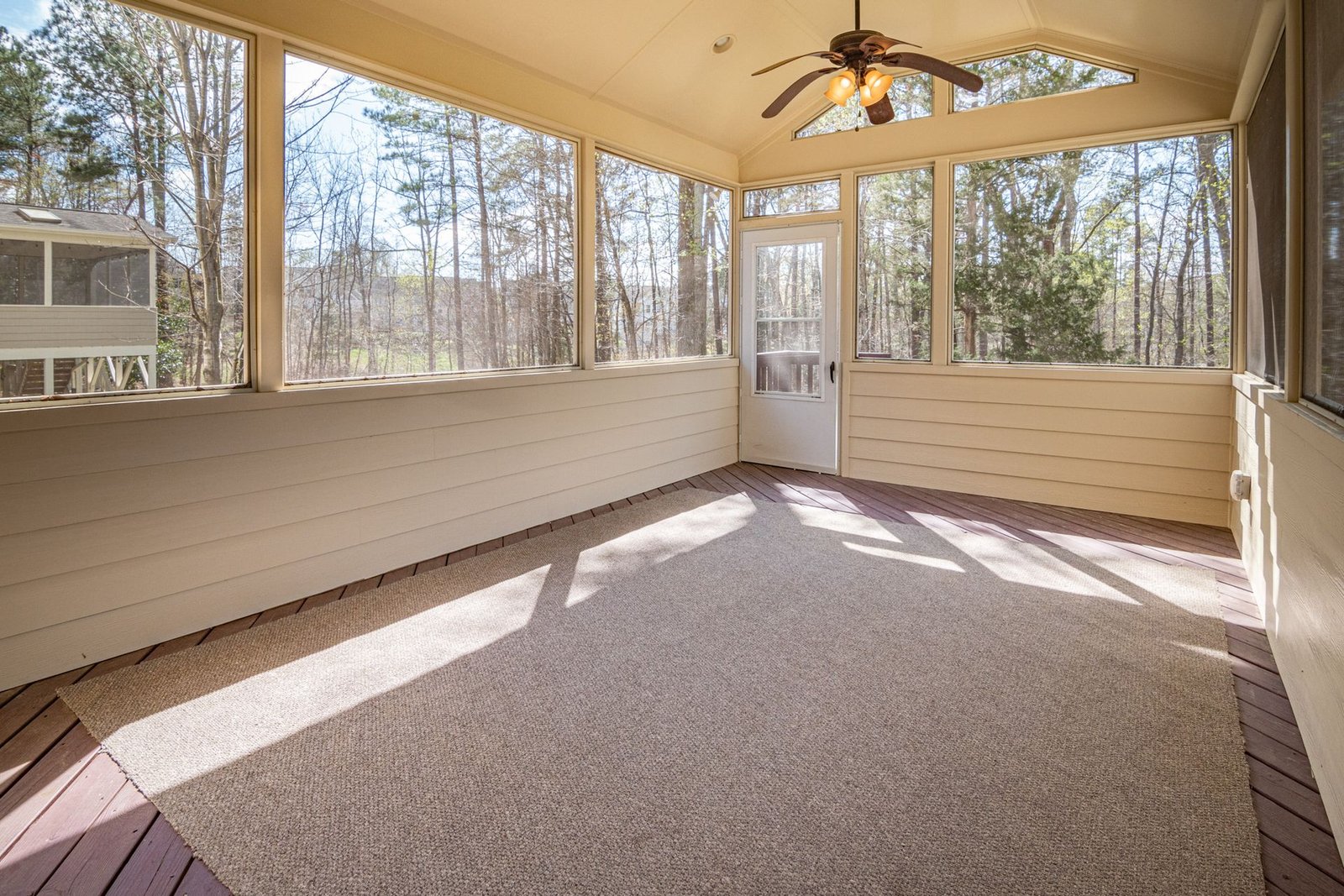
A three-season sunroom is built for spring, summer, and fall. It has light framing, single-pane or basic double-pane glass, and little or no insulation. It has no heating or cooling system of its own. It is comfortable on mild days and too cold or too hot when the weather turns.
A four-season sunroom is built to hold a steady temperature all year. Every surface is insulated, the glass is high-performance, and the room has heating and cooling.
| Feature | 3 Season Sunroom | 4 Season Sunroom |
|---|---|---|
| Usable months | Spring through fall (about 7–9 months, depends on climate) | All 12 months |
| Insulation | Little or none | Full insulation in walls, roof, and floor |
| Glass | Single-pane or basic double-pane | Double- or triple-pane Low-E glass, often argon-filled |
| Heating and cooling | None, or a portable heater at best | Permanent system: mini-split or tied into home HVAC |
| Foundation | Light foundation or deck base | Frost-protected foundation, built like an addition |
| Building code | Simpler rules in most places | Must meet energy code like any conditioned room |
| Typical cost (published guides) | $10,000–$40,000 | $25,000–$80,000 |
| Counts as living space | Usually no | Often yes, if permitted — the appraiser decides |
The cost gap is the part most people underestimate. A four-season room is not a three-season room with a heater added; it is a different build from the foundation up. That is why the price roughly doubles.
In a mild climate, such as coastal California or parts of Florida, a three-season room may serve you well for most of the year. Where winters drop below freezing, a three-season room can sit empty for four or five months. Ask yourself one question: will you be happy with a room you cannot use in January? If the answer is no, you need the four-season version.
How Much Does a 4 Season Sunroom Cost?
Published cost guides for 2026 put a four-season sunroom at roughly $25,000 to $80,000 for a typical project, with large custom rooms running higher. Angi’s 2026 guide lists four-season rooms at $25,000 to $120,000 for large custom builds, and the national average for a sunroom of any type is about $47,000. Bob Vila’s sunroom cost guide puts the typical four-season range at $25,000 to $80,000.
Per square foot, expect about $200 to $400 for a four-season room, according to HomeGuide’s porch-enclosure figures. A three-season room runs about $80 to $230 per square foot. The type of room matters more than the size.
What drives the price? Six things matter most: size, prefab kit vs. custom build ($20,000–$50,000 for kits, $40,000–$80,000 or more for custom), glass (double-pane Low-E with argon costs more but keeps the room comfortable), foundation (a frost-protected foundation is required in cold climates), heating and cooling (a ductless mini-split runs about $2,000 to $14,500, according to Bob Vila’s cost breakdown), and labor and permits (labor is often 40 to 60 percent of the total; permits usually run $250 to $1,800).
Worked Example: A 12-by-16-Foot Room
This is an example budget, not a quote. Prices vary by region, materials, and contractor. It shows how the numbers add up for a mid-range 192-square-foot four-season room.
| Item | Example Cost |
|---|---|
| Prefab four-season kit, 12 × 16 ft | $28,000 |
| Foundation and site work | $4,000 |
| Installation labor | $12,000 |
| Ductless mini-split heating and cooling | $5,000 |
| Electrical work and lighting | $2,500 |
| Permits | $800 |
| Flooring and interior finish | $4,000 |
| Example total | $56,300 |
At about $293 per square foot, this example sits inside the published $200-to-$400 range. A custom build with larger windows or a stone floor could push the same room past $70,000, while a smaller room or a simpler kit could bring it under $45,000. Get at least three local quotes, and ask each contractor to list the same items so you can compare them fairly.
What Makes a 4 Season Sunroom Work in Winter and Summer?
A room made mostly of glass should be freezing in winter and boiling in summer. A well-built four-season room is neither, because a set of parts works together to hold the temperature steady.

Insulated Glass
Glass is where most heat moves in and out. A four-season room uses insulated glass units: two or three panes of glass with a sealed gap between them, usually filled with argon gas. A Low-E coating (low-emissivity) reflects heat back into the room in winter and reflects solar heat away in summer, while letting visible light through.
Look for the U-factor on the window label. It measures how fast heat passes through the window, and lower is better. According to InterNACHI, a good double-pane window has a U-factor of 0.30 or lower. ENERGY STAR Version 7.0, in effect since late 2023, requires 0.25 or lower for windows in the North-Central climate zone. Ask your contractor for the U-factor and the Solar Heat Gain Coefficient (SHGC) of the glass they plan to use. Operable windows and a ceiling fan help move air and cut condensation on cold mornings.
Insulation and Thermal Breaks
The walls, roof, and floor are all insulated in a four-season room, often with dense foam-core panels. The frame matters too. Aluminum conducts heat easily, so a four-season frame includes a thermal break: a strip of non-conductive material, usually polyamide, inside the frame that stops heat from traveling through the metal. Three-season frames usually have no thermal break, and without one the frame becomes a cold spot where condensation forms.
Orientation and Shade
Which way the room faces changes how it feels. A south-facing room gets the most sun in winter but can overheat in summer. An east-facing room gets gentle morning sun. A west-facing room gets harsh afternoon sun and is the hardest to keep cool. A north-facing room stays cooler but gets less light in winter. Shade is part of the design, not an afterthought: roof overhangs, exterior shades, and interior blinds cut summer heat, and trees that leaf out in summer and drop leaves in winter give natural shade exactly when you need it.
Heating and Cooling: Your Options
A four-season sunroom needs a permanent heating and cooling source. There are three common options, and each has trade-offs.
Ductless mini-split. A wall-mounted unit with an outdoor compressor. It heats and cools, runs quietly, needs no ductwork, and costs about $2,000 to $14,500 installed. It is the most common choice for sunrooms.
Extend your home’s HVAC. Your contractor runs new ducts from your existing system into the sunroom. This works well if your system has spare capacity. If it does not, the system can struggle, and you may need a larger unit. A licensed HVAC contractor should run a load calculation for the room’s glass area and exposure first.
Radiant floor heat. Warm water or electric mats under the floor heat the room from below. It feels comfortable on bare feet and works well with tile or stone floors, but it does not cool, so it usually pairs with a mini-split.
One safety note: never use a fuel-burning heater, such as a kerosene or unvented gas heater, in a sunroom without proper venting and carbon monoxide protection. Portable electric heaters are a stopgap, not a plan, for a room you want to use all year.
A fireplace can add warmth and charm, and many owners like one as a backup heat source. If you want that look, read these outdoor fireplace ideas for design direction, and talk to a licensed professional about what is safe and legal inside a glass room.
Permits, Codes, and What Counts as Living Space
A four-season sunroom is a home addition, and in most US towns it needs a building permit. The permit process protects you: it confirms the foundation, framing, electrical work, and energy performance meet local code. Skipping it can cause trouble when you sell, because an unpermitted room may not count in the home’s square footage.
The 2021 International Residential Code (IRC) places sunrooms in five categories, based on how enclosed and conditioned they are. Only Category V, a room open to the house and heated or cooled, counts as habitable living space, and your plans should name the category. The 2021 International Energy Conservation Code (IECC) sets insulation and window rules for sunrooms that enclose conditioned space.
Ask your local building department these three questions before you order anything:
- What permits does a four-season sunroom need here?
- What energy-code rules apply to the glass and insulation?
- Will the finished room count as living area for tax and appraisal purposes?
That last question matters for resale. A permitted, conditioned four-season room has the best chance of being counted as gross living area when you sell, but the call belongs to your local appraiser and assessor, not the contractor. Published guides put the return on a sunroom at roughly 49 to 50 percent of what you spend, according to HomeAdvisor figures cited by Bob Vila. A sunroom is a lifestyle purchase first and an investment second, so build it because you will use it. The build itself usually takes 12 to 18 weeks, and permits can add weeks before work starts.
How to Use a 4 Season Sunroom
Once the room is built, the fun part starts. Here are the uses that work best in a bright, glass-walled room.
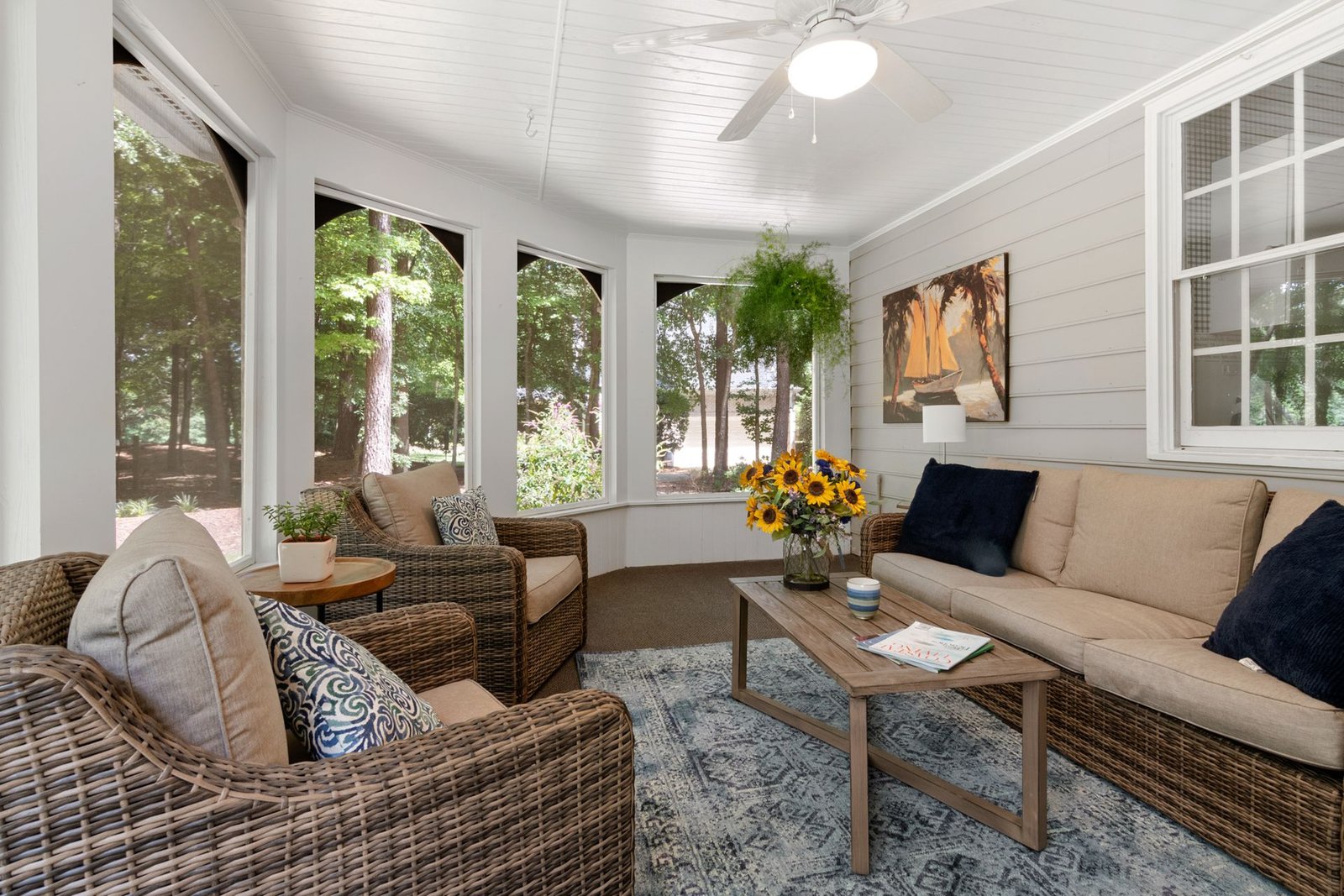
A reading and coffee spot. Two comfortable chairs, a small table, and a lamp are enough. Morning light makes this the easiest use of all.
A dining room. A table near the glass turns ordinary dinners into something special. Choose chairs and a table that handle sunlight well, and add a rug to soften the floor.
A home office. The daylight is a real advantage for work, and the separation from the rest of the house helps you focus. If you plan to work here, read our guide to how to create a functional home office before you buy furniture. You will need to plan for glare on your screen and for a stable internet connection.
A plant room. Sunrooms are natural greenhouses. Plants that struggle indoors often do well here, but watch the temperature on the hottest afternoons and keep pots off cold glass in winter.
A playroom or hobby room. Kids, crafts, and games all benefit from the light and the view, so choose washable fabrics and sturdy furniture.
For decorating direction, browse these sunroom ideas from The Spruce — 46 real rooms, from modern to boho, that show how seating, plants, and lighting come together. Keep the decor simple; the view is the decoration. A wraparound porch and a pea gravel patio extend the same feeling outside the glass, and our outdoor living space ideas show how to connect the room to the yard. If the sunroom opens onto a porch, these porch ideas and front porch decor ideas help the two spaces feel like one.
Pros and Cons: Is a 4 Season Sunroom Worth It?
Pros
- You can use the room every day of the year, in any weather.
- It adds bright, flexible living space without a full addition.
- It works as a living room, dining room, office, or plant room.
- A permitted room may count as living area and add value when you sell.
- It brings in natural light, which makes the whole house feel larger.
Cons
- It costs more than any other sunroom type, roughly $25,000 to $80,000.
- Your heating and cooling bills will rise.
- Glass needs regular cleaning, and the room needs more maintenance than a normal room.
- It can overheat in summer if the orientation and shade are wrong.
- Permits and a longer build timeline add time and paperwork.
The room is worth it when you will use it daily and have planned for the cost, permits, and shade. It is not worth it when you only want a seasonal sitting area, or when the budget would stretch your finances.
Frequently Asked Questions
How much does a 4 season sunroom cost?
Published 2026 cost guides put a typical four-season sunroom at $25,000 to $80,000, or about $200 to $400 per square foot. Prefab kits cost less; large custom builds cost more. Get at least three local quotes.
What is the difference between a 3 season and a 4 season sunroom?
A three-season sunroom is built for spring, summer, and fall, with little or no insulation, basic glass, and no heating or cooling. A four-season sunroom is fully insulated, has high-performance glass, and has a permanent heating and cooling system, so you can use it all year.
Does a 4 season sunroom add value to your home?
It can, but not dollar for dollar. A permitted, conditioned room has the best chance of counting as living area, and published guides put the return at roughly 49 to 50 percent of the cost. Build it because you will use it every day, not as a pure investment.
Do I need a permit for a 4 season sunroom?
In most US towns, yes. A four-season sunroom is a conditioned addition, so it needs a building permit and must meet local energy code. Check with your local building department before you order materials or sign a contract.
How do you heat a 4 season sunroom in winter?
The most common option is a ductless mini-split, which heats and cools and costs about $2,000 to $14,500 installed. You can also extend your home’s HVAC system if it has spare capacity, or use radiant floor heat with a separate cooling unit. A licensed HVAC contractor should run a load calculation first.
A Bright Room You Can Use All Year
A 4 season sunroom is the most useful version of a sunroom, and also the most expensive. It is insulated, heated, and cooled, so it works in January and in July. It needs a permit, good glass, real shade, and a heating system sized for all that glass. If you plan for those four things and will use the room every day, it can become the favorite room in your house. Start with three local quotes, ask each contractor about the glass U-factor and the permit, and compare the numbers side by side.
Disclaimer: This article shares general information about four-season sunrooms to help you plan. Home designs, local building codes, costs, and climate needs vary, so your project may differ from the examples here. For permits, structural work, electrical work, or heating and cooling, talk to your local building department and a licensed professional before you start.