
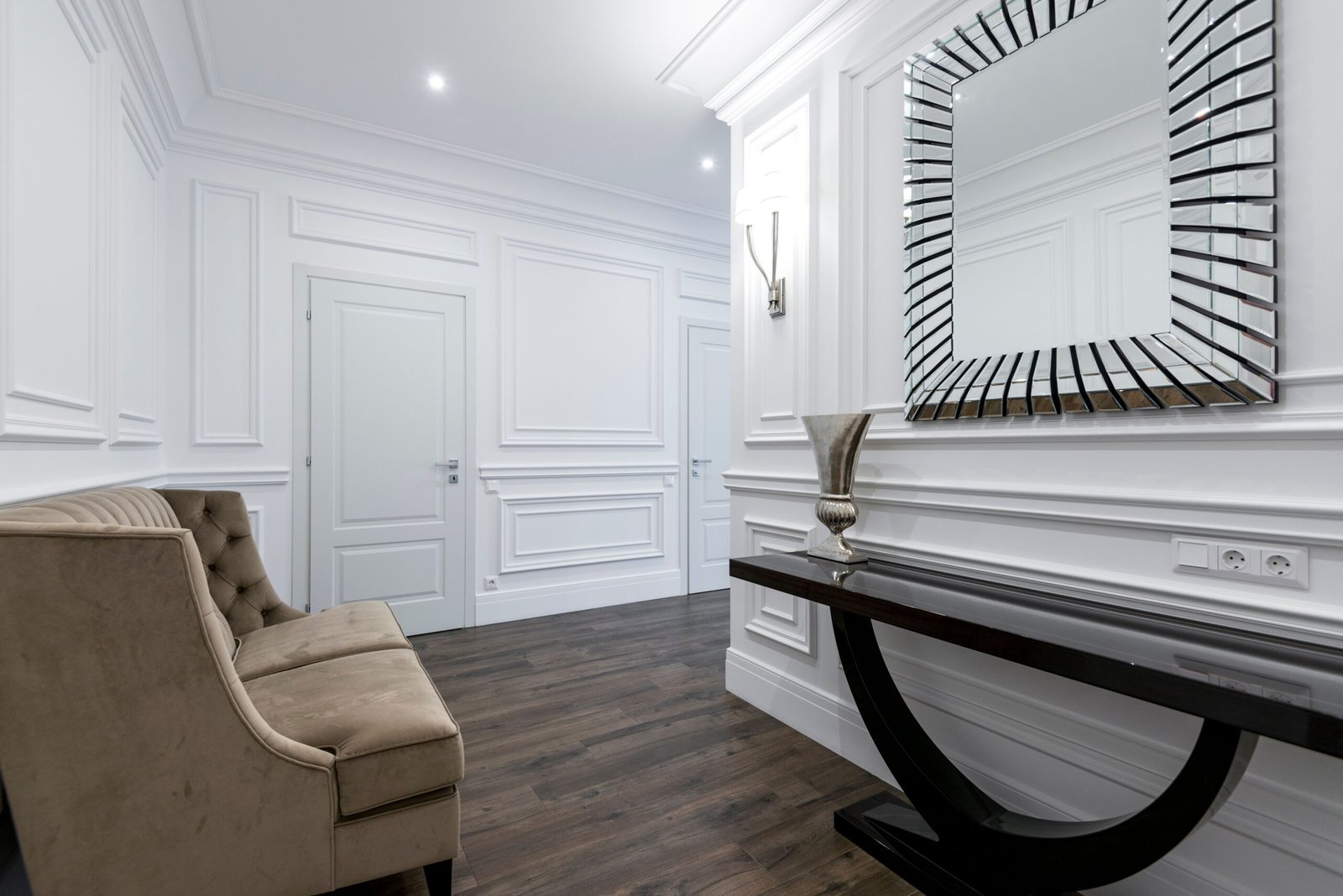
Entryway Decor: Simple Ideas for a Welcoming First Impression
Entryway decor is the furniture, lighting, storage, and finishing touches you place near your front door so the space looks welcoming and works for daily life. It usually includes a console table or bench, a mirror, hooks or storage for coats and shoes, a rug, and warm light.
That is the whole job: give every item that enters with you a place to land, and give every person who enters a clear, pleasant first view of your home. A narrow hall with a slim console, a mirror, and a tray for keys can work just as well as a wide foyer. One thing to know up front: without a place for shoes, coats, and keys, even a pretty entry turns messy within a week, so function comes first.
What Is Entryway Decor?
An entryway is the space just inside your front door. In some homes it is a separate foyer, while in others it is simply a wall or a corner of the living room. Entryway decor is everything you use to shape that space: the furniture against the wall, the mirror or art above it, the rug underfoot, the light overhead, and the small items on the surface.
It is different from decorating a living room because the entryway is a passage, not a room where people sit for hours. People move through it carrying bags, shoes, coats, and mail, so every choice has to pass a simple test: does it help the space work, or does it get in the way? A clear surface, a warm light, and one or two personal touches say more than a crowded display. Our guide to interior decorating ideas covers the same thinking for the rooms beyond the door, and the entryway is where that thinking starts.
The Five Pieces Every Entryway Needs
A drop surface. This is a console table, a small shelf, or the top of a shoe cabinet where keys, mail, sunglasses, and bags land. Without one, those items spread across the house. A tray or small bowl keeps them in one spot.
A mirror. A mirror gives you a last look before you leave, and it bounces light around the space.
Seating with storage. A bench gives you a place to sit while you put on shoes, and baskets or a lift-up seat underneath hide shoes out of sight.
Warm light. An entryway often has little natural light, especially at night. A table lamp on the console, a wall sconce, or a pendant overhead makes the space feel welcoming instead of dim and cold.
A durable rug. A rug or runner defines the space, catches dirt and water from shoes, and softens hard floors. Choose a low-pile rug that is easy to clean.
Get these five in place first, and only then add art, plants, or seasonal touches.
Measure First: Sizes That Fit Most Entries
Start with the walkway: keep about 36 inches clear, which is the general guidance used by designers. Measure your hall width, then subtract the depth of any furniture against the wall. If less than about 36 inches remains, choose slimmer furniture.
Next, measure the wall. A console for a narrow hall is usually 10 to 14 inches deep and about 30 to 34 inches high, which holds keys, mail, and a small vase without eating into the walkway. A bench seat usually sits about 17 to 19 inches high.
Then plan the mirror: size it to about two-thirds to three-quarters of the console’s width, centered above the table, with its center about 57 to 60 inches from the floor. Finally, check the door swing, since a console that fits the wall can still block a door that swings inward.
How to Style a Console Table
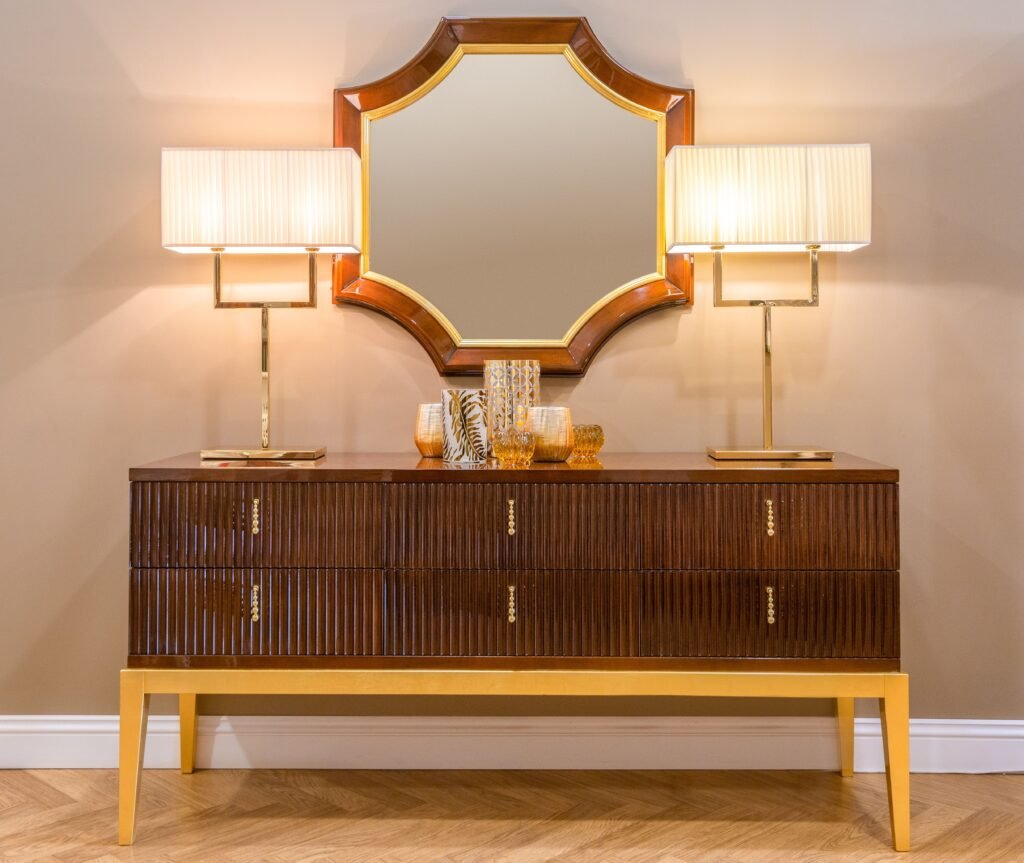
Use the rule of three: something tall, something functional, and something personal.
Something tall gives the arrangement height: a table lamp, a slim vase with branches, or a tall candlestick on one end of the console draws the eye upward and balances the mirror above.
Something functional earns the surface: a tray or bowl for keys, a small dish for mail, or a lidded box for sunglasses keeps daily items in one place. Give it a fixed home on the console. Our guide to luxury home accessories shows how small functional pieces like trays and bowls can look intentional instead of random.
Something personal tells people who lives here: a framed photo, a small stack of books, a candle, or a piece of art you love. One personal item is enough. Group objects in odd numbers, vary their heights, and leave part of the surface clear. Step back to the front door: if your eye lands on the mirror first and then on one or two objects, the arrangement works.
Mirrors, Benches, and Storage
Mirrors. Hang a mirror where it reflects light from a nearby window or lamp, not a blank wall or a pile of coats. A round mirror softens straight lines, while a rectangular or arched mirror suits a taller wall. A large mirror makes a small entry feel brighter, but it should still fit the wall.
Benches. A bench gives you a seat and hidden storage: baskets underneath hold shoes, leashes, and hats out of sight, and a lift-up seat does the same job in a cleaner line. If a bench sits opposite the console, keep the walkway between them clear. In a very narrow hall, skip the bench and use wall hooks plus a slim shoe cabinet instead.
Storage. Wall hooks hold coats and bags where people naturally reach for them, so give each person one hook, plus a spare for guests. Baskets under a bench or console hold shoes, scarves, and gloves. A closed shoe cabinet hides the most visual clutter of all, which matters in a small entry where shoes are the first thing anyone sees. Do not overfill it: packed storage becomes a pile.
Think about the furniture in the next room too: a heavy wood bench beside a light, modern living room can feel out of place. Our guide to what is luxury furniture explains how to judge a piece by its materials and build, which matters for entryway furniture that gets daily wear.
Lighting, Rugs, and Color
Lighting. Layer the light instead of relying on one overhead fixture: a pendant gives general brightness, a table lamp on the console gives a warm glow at eye level, and a wall sconce covers the rest. Warm bulbs suit an entryway better than cool white ones. If your entry is dark during the day, leave the lamp on a timer so you come home to a lit space.
Rugs. A rug defines the entryway, especially in an open-plan home with no wall marking where the entry ends. A runner pulls the eye forward down a hall, while a small rug marks a square entry. Choose a low-pile rug that is easy to clean, in a pattern or color that hides dirt. It should sit just inside the door, with a few inches of bare floor at each end, and a rug pad underneath keeps it from sliding.
Color. The entryway is a good place to try a color you love, because a bold wall here is easy to repaint later. A soft neutral palette of cream, warm white, and natural wood feels calm and timeless, while a deeper color on one wall, such as navy or sage green, adds character. Repeat one color from the entryway in the next room so the two spaces feel connected. Our guide to cozy living room ideas shows how warm color and texture carry from one room into the next, and the entryway is the first step in that chain.
Entryway Decor by Style
Match your entryway to the style of the home it opens into. Use the table below as a starting point.
| Style | Key pieces | Palette | Best for |
|---|---|---|---|
| Modern | Floating console, round mirror, globe light | White, black, oak | Clean lines, small spaces |
| Traditional | Turned wood console, framed art, brass lamp | Navy, brass, cream | Classic homes, formal foyers |
| Farmhouse | Peg rail, wood bench, woven baskets | White, wood, black iron | Family homes, mudroom entries |
| Japandi | Low bench, paper lamp, single vase | Sand, ash, charcoal | Calm, minimal homes |
| Boho | Rattan mirror, kilim runner, plants | Rust, ochre, cream | Colorful, collected homes |
| Rustic | Rough wood bench, iron hooks, stone bowl | Brown, stone, cream | Cabins, homes with natural materials |
If you are unsure of your style, look at the room the entryway opens into and repeat one color and one material from it in the entry. That is enough to make the spaces feel like one home. Our guide to interior design styles explained walks through the main styles in more detail. For more visual ideas, the designer entryway ideas collection from HGTV shows how designers handle runners, mirrors, benches, and gallery walls in real foyers.
Small Entryway Ideas That Actually Work

A small entry needs slim furniture, vertical storage, and a clear floor. The ideas below work in apartments, narrow halls, and homes where the front door opens straight into the living room.
Use a slim console or a floating shelf. A console 10 to 12 inches deep gives you a drop surface without blocking the walkway. If even that is too deep, a floating shelf at console height holds keys and a small vase and leaves the floor completely clear.
Go vertical. Wall hooks, a peg rail, and floating shelves use wall space that would otherwise stay empty. Hang hooks where everyone can reach them, and keep the number low: five hooks used daily beat ten holding coats nobody wears. A tall, slim mirror makes a narrow hall feel wider too.
Keep the floor clear. Shoes are the fastest way to make a small entry feel crowded, so give them one home: a slim shoe cabinet, a tray by the door, or baskets under a bench. One pair per person by the door is a fair rule, with the rest in a closet. A light-colored washable runner can make a narrow hall feel longer.
Borrow light: a mirror opposite a window, a light-colored wall, and a lamp on the console all make a small entry feel larger. Keep surfaces tidy, because in a small space every object shows. Our guide to small living room ideas for apartments uses the same thinking for the room next door. The Spruce guide to small entryway ideas also shows compact storage, key hooks, benches, and rugs in real small entries, which can help you picture what fits your own wall.
A Worked Example: A Narrow Apartment Entry, Step by Step
This is a labeled example, not a report of a real home. Imagine a renter in a one-bedroom apartment: the front door opens into a short hall, 40 inches wide, with a blank wall about 48 inches long before the living room begins. There is no closet near the door, one overhead light, and no window. The renter wants a place for keys, shoes, and a coat without blocking the walkway.
Step 1: measure and mark the walkway. Keeping about 36 inches clear leaves only 4 inches for furniture, so a standard console will not work. The renter chooses a floating shelf 8 inches deep instead, mounted at 32 inches high as a drop surface, and accepts a walkway of about 32 inches.
Step 2: add a mirror and a tray. A round mirror 24 inches wide goes above the shelf, centered at about 58 inches from the floor. A small tray holds keys and mail, a tiny vase sits at one end, and the rest of the surface stays clear.
Step 3: solve shoes and coats vertically. Four wall hooks go on the opposite wall at a reachable height. One pair of shoes lives on a low tray just inside the door, the rest go in the bedroom closet, and a slim basket beside the door holds an umbrella and a reusable bag.
Step 4: add light and a rug. The overhead light gets a warm bulb, and a small battery lamp sits on the shelf for evenings. A washable runner 2 feet wide and 5 feet long runs down the hall, leaving a few inches of bare floor at each end.
The lesson is the order: measure first, then choose the slimmest surface that fits, then add wall storage, and only then add decoration.
Mistakes to Avoid in Entryway Decor
Buying furniture before measuring. A console that blocks the door swing or a bench that leaves no room to pass comes from skipping the tape measure. Measure the wall, the walkway, and the door swing before you order anything.
Crowding the console. A console covered in objects has no room for keys, mail, or a bag. Leave at least a third of the surface clear, and remove one object every time you add a new one.
Choosing a rug you cannot clean. An entryway rug meets wet shoes, mud, and dirt every day. Choose a low-pile, washable rug, and check the cleaning instructions before you buy.
Ignoring the view from the door. Stand at the front door and look at the entryway as a guest would. If the first thing you see is a pile of shoes or a dark corner, fix that first. Closed storage and a lamp do more for a first impression than another decorative object.
Forgetting the next room. An entryway that clashes with the living room feels like a separate space, not a welcome. Repeat one color or material from the living room in the entry. Our guide to living room layout shows how the entry and the living room share traffic and sightlines, and planning them together avoids a clash. Our guide to how to design a luxury living room also helps here, because the entryway is the first room a guest sees on the way to the living room, and the two should feel like parts of one home.
Frequently Asked Questions
How do I decorate an entryway?
Start with function. Measure the wall and walkway, then add a drop surface for keys and mail, a mirror, seating or storage for shoes and coats, warm light, and a durable rug. Once those five pieces are in place, add one or two personal touches and leave part of every surface clear.
What should I put in an entryway?
Put in what you use every day: hooks for coats, a bench or storage for shoes, a mirror, a tray for keys, and good lighting. Then add one piece of art or a plant. If you have no room for a bench, a slim console or a floating shelf plus wall hooks can cover the same needs.
How do I make a small entryway feel bigger?
Use a large mirror, good light, and slim furniture with storage. Keep the floor clear, the surfaces tidy, and the walls light. A runner rug helps too, and a floating shelf instead of a console leaves the floor open.
What if my home has no entryway?
Create one with furniture and a rug. Place a slim console or a bench against the wall nearest the door, hang a mirror or art above it, and lay a rug to mark the area. A bench behind a sofa can also mark the boundary in an open-concept home.
How do I keep an entryway tidy?
Give every item a fixed home and keep the number of items low: one hook per person, one tray for keys, one basket for shoes, and one place for mail. Clear the surfaces once a day, and remove one decorative object whenever you add a new one.
Entryway decor works when it makes coming home easier and leaving home smoother. Measure first, put the five foundations in place, and let the style follow the life you actually live at the door. A slim console, a mirror, a bench, warm light, and a rug you can clean will carry the space, and the personal touches on top will make it yours.
Disclaimer: Homes, budgets, and local conditions vary widely, so use this guide as general information only and confirm details for your own space before making decisions. For electrical work, structural changes, or any major installation, hire a qualified licensed professional who can inspect your home in person.




2 Comments