
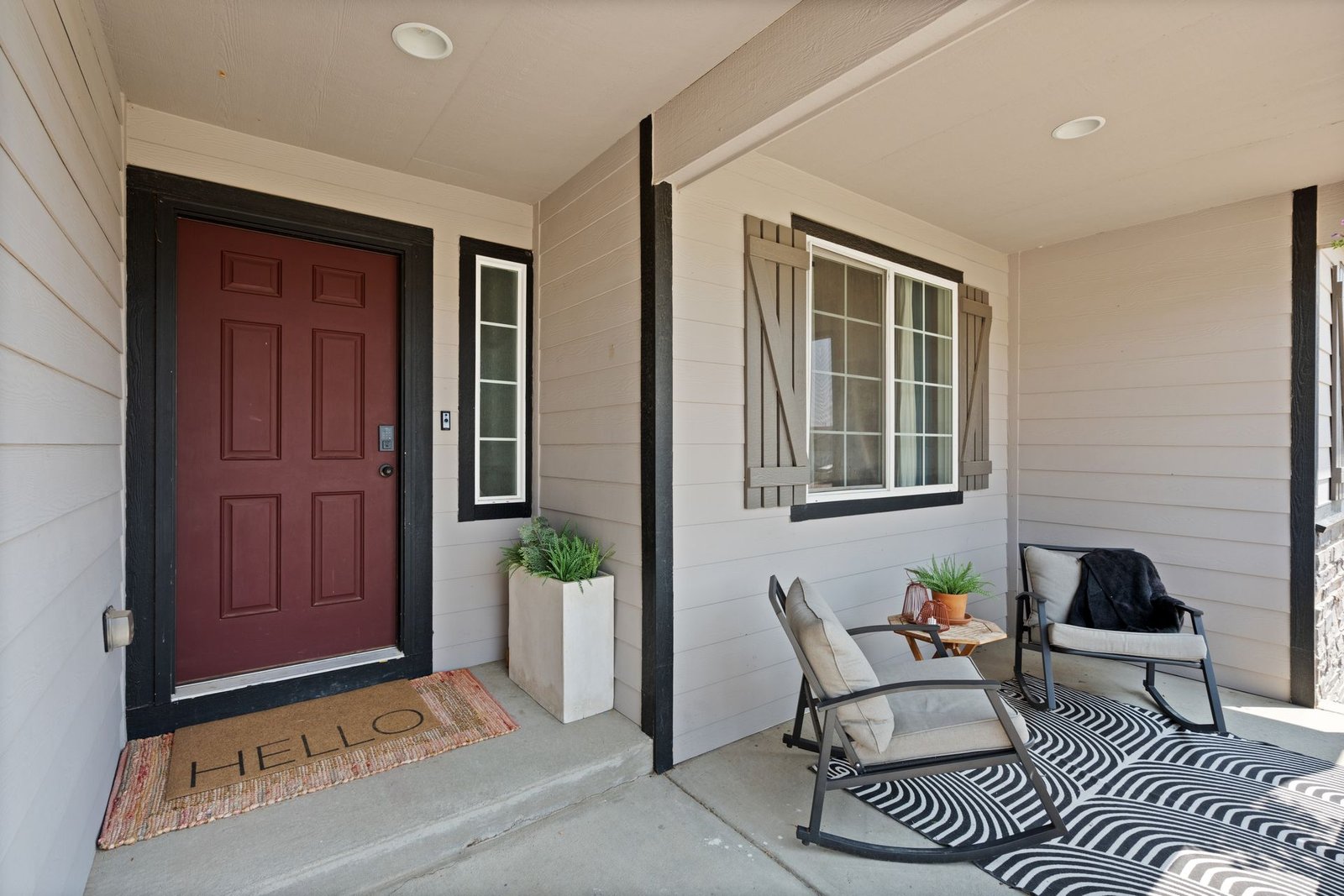
Porch Ideas: Simple Ways to Make Your Front Porch Welcoming
Your porch is the first part of your home that guests see, and the last part they remember when they leave. Good porch ideas do not need a big budget or a full rebuild. A clear walkway, one comfortable seat, a little light, and a few plants can turn a plain entry into a place that feels warm and lived in. This guide covers simple porch ideas for front, small, and covered porches.
A porch works best with a clear job: welcome people in, offer a place to sit, and connect the house to the yard. Start small and keep only what you actually use.
What Makes a Porch Feel Welcoming
A welcoming porch has three things: a clear path to the door, something comfortable to sit on, and a sign that someone cares for the space. The path matters most — guests should see the door from the walkway and reach it without stepping around clutter.
Comfort comes next. One chair with a cushion, a small bench, or a swing can be enough. Face the seat toward the yard or the street, not the wall, and add a small table nearby for a cup of coffee or a book. The third piece is care: a swept floor, a clean doormat, and one healthy plant tell visitors the home is looked after.
Start With the Basics: Clear, Clean, and Safe
Before you buy anything, walk your porch the way a guest would, from the sidewalk to the door. Notice what blocks you, what looks worn, and what feels dark or unsafe. This short walk tells you more than any shopping list can.
First, clear the floor. Move anything you do not use every week: empty pots, broken chairs, old boxes, and seasonal decor from months ago. Keep at least three feet of clear walking width from the steps to the door, and make sure the door opens fully.
Next, clean the surfaces. Sweep the floor, wipe the railing, and clean the front door and its glass. Wash the light fixture cover, because dust can cut the light in half. If the floor is painted wood or concrete, look for peeling paint — a fresh coat of porch paint is cheap and protects the surface.
Then check safety: steps even and firm, railing solid, light working after dark. If a step wobbles or a board is soft or rotted, do not cover it with a rug — have a licensed professional look at it first. The same goes for loose wiring or a flickering fixture. Finally, measure before you shop: porch width and depth, door swing, and railing-to-wall space. For ideas on tying the entry to the rooms just inside, see our guide to entryway decor.
Front Porch Ideas by Style
Style is about matching the porch to the house it belongs to. Pick one style direction and repeat it in two or three places: the chairs, the planters, and the light fixture.
Farmhouse Porch Ideas
A farmhouse porch is relaxed and practical: wood tones, simple lines, and pieces that look used rather than staged — a wooden bench or rocking chairs, a woven rug, and planters with herbs. Colors stay quiet — white, cream, soft gray, sage green, and natural wood — with one stronger color on the front door. For more on this style across the whole house, see our guide to modern farmhouse exterior ideas.
Modern Porch Ideas
A modern porch uses clean lines, few colors, and little clutter. Choose one or two colors, such as black, white, and warm wood, and repeat them. Furniture should have straight edges and slim frames: a single bench, a pair of simple chairs, and one large planter often look better than a full set. One sconce style, repeated on both sides of the door, keeps the look planned and calm.
Coastal Porch Ideas
A coastal porch feels light and open, in white, sand, pale blue, and soft gray. Wicker or rattan chairs, a light outdoor rug, and a few potted plants suit this style. Keep the furniture light enough to move: in a storm, bring cushions and small pieces inside, so choose outdoor fabrics that dry fast and resist fading.
Craftsman Porch Ideas
A craftsman porch has thick columns, wood details, and a solid, grounded feel. The porch itself often does much of the work: tapered columns, a low-pitched roof, and a wide front step. Keep the furniture simple and sturdy — a wooden swing, a pair of solid chairs, and lantern-style lights — and the plants simple too: matching planters by the door. Our guide to craftsman house style explains the details that define this look.
Traditional Porch Ideas
A traditional porch is balanced and symmetrical: matching planters on both sides of the door, a pair of chairs, and a classic lantern light. A wreath on the door, a simple doormat, and a rug in a muted pattern finish the look. The key is balance — if one side has a tall planter, the other side should have one too.
Seating That Fits Your Porch
Seating is the heart of most porch ideas, and it is also where most porches go wrong: people buy furniture before measuring the space. A seat that is too deep blocks the walkway, and a set that is too wide leaves no room to open the door. Measure first, then choose.
A rocking chair is the classic porch seat. It needs about three feet of depth to rock safely, so it suits porches at least six feet deep. A porch swing needs even more room: check the ceiling height and the swing’s arc so it cannot hit the railing or the wall. A bench is the most flexible choice for a narrow porch — it sits flat against the wall and holds two people.
If your porch is deep enough for a small conversation area, two chairs and a small table are enough. Face them toward each other or toward the yard, not toward the door, and leave a clear path to the door. A small outdoor rug under the chairs marks the sitting area. For a back porch, the rules are the same but the use is different: meals and longer evenings happen there, so seating can be softer and larger. Our guide to back porch ideas covers dining and lounging layouts at the back of the house.
Plants and Greenery That Work Outdoors
Plants are the fastest way to make a porch feel alive. They add color, soften hard edges, and make a plain entry look cared for. But porch plants get wind, sun, rain, and shade in different amounts through the day, so choose plants for your actual light.
Watch the light first. A north-facing porch may get almost no direct sun, while a south-facing porch may get hot afternoon sun that burns soft leaves. Match the plant to the light: ferns, hostas, and impatiens handle shade; lavender, rosemary, and succulents handle sun; boxwood and ornamental grasses handle a mix.
Use fewer, larger planters instead of many small ones. Two matching planters by the door look planned and are easier to water than six small pots. A tall, narrow planter adds height without taking floor space. Hanging baskets use no floor space at all, but they dry out fast. Keep plants off the walking path and away from the door swing. If you travel often, choose hardy plants or self-watering planters.
Lighting That Makes Evenings Better
Porch lighting does two jobs: it keeps the entry safe after dark, and it makes the porch feel warm and inviting. Most porches need two kinds of light, not one — a single bright ceiling light feels harsh and flat, while two softer lights at different heights look better and work better.
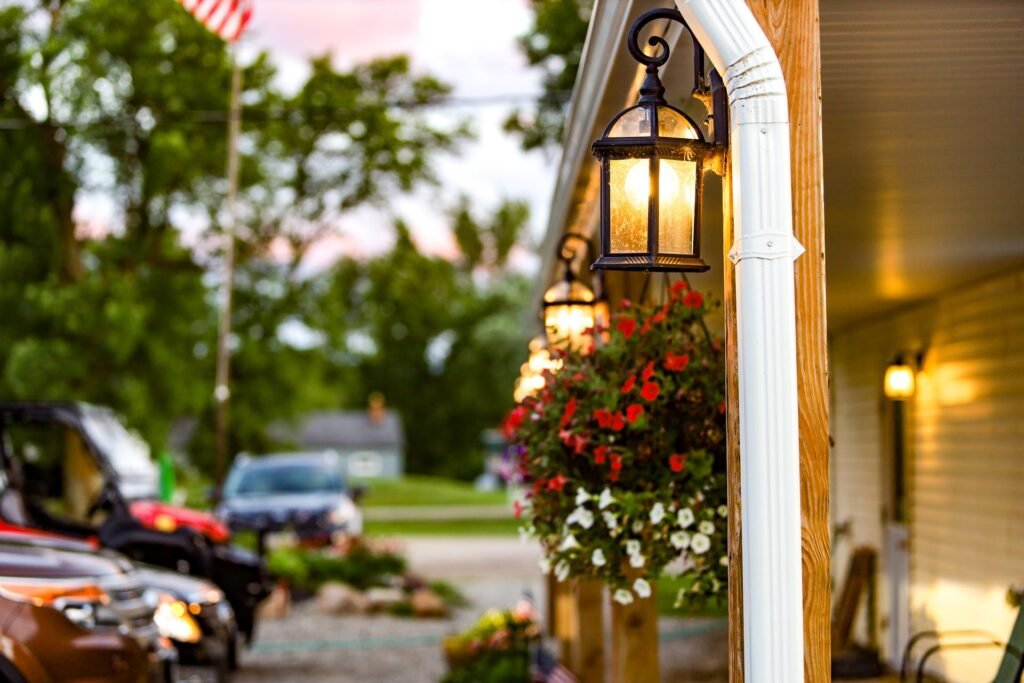
Start with the light by the door: a wall lantern or sconce beside it helps guests find the lock and the doorbell. Matching fixtures on both sides look balanced. Warm white light, around 2700K on the bulb label, feels welcoming, so check the label before you buy.
Then add a second, lower light: string lights along the ceiling edge, a lantern on a side table, or a solar lantern on the steps. This lower light softens shadows and makes the seating area feel like a room. Solar lights need direct sun to charge; if your porch is shaded, a plug-in or battery lantern is more reliable. Keep the path lit too, and aim fixtures down, toward the floor and the path. Good lighting also extends the porch season: with warm light and a blanket, a covered porch stays usable well into the fall. For more on outdoor light after sunset, see our guide to outdoor living space ideas.
Color, Rugs, and Small Details
Color is the cheapest way to change a porch. A new door color, a rug, and two or three matching accessories can shift the whole mood of the entry. Pick colors from the house itself, not from a random trend.
Look at what is already there: siding, brick, trim, roof, and walkway. Pick one main color from those, and one accent that stands out — a red or navy door on a white house with black trim, or cream and sage on brick. If you are unsure, paint the door first and live with it for a week.
An outdoor rug defines the sitting area, adds color and texture, and makes a hard floor feel softer underfoot. Choose a rug made for outdoor use, sized to fit under the front legs of the chairs.
Small details finish the porch, but they should stay small: a doormat, a wreath, house numbers, and a welcome sign are enough. Layer a coir doormat over a larger outdoor rug, and keep the mat flat so the door clears it. House numbers should read from the street: at least four inches tall, in a color that stands out from the wall. For more help with colors for your siding, brick, and trim, see our guide to house exterior colors.
Porch Ideas for Small Spaces
A small porch needs more thought, not less. Every piece has to earn its floor space, because there is no room for extras. The good news is that a small porch can feel complete with just three or four pieces, and it costs less to finish than a large one.
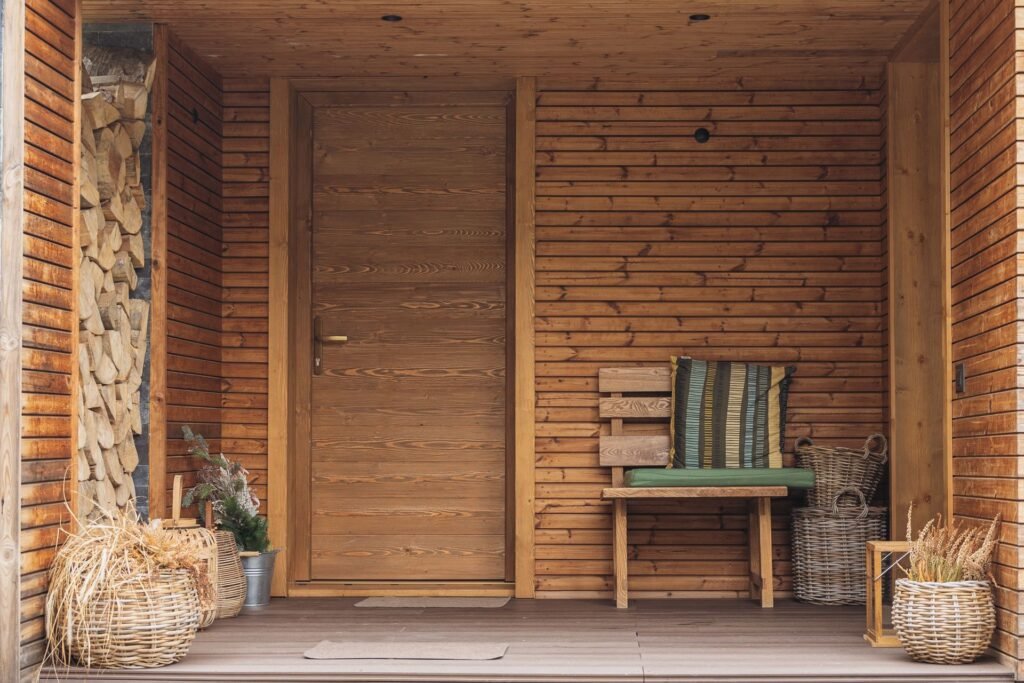
Start with the door. On a porch too small for furniture, the door is the whole design: a fresh color, clean hardware, and a simple wreath or a pair of small sconces can carry the entry on their own. A bold door color, such as deep green, navy, or warm red, gives a tiny porch a clear focal point.
Next, use the walls and the ceiling instead of the floor. A wall-mounted lantern, a hanging basket, and a tall, narrow planter add interest without taking walking space. A bench that sits flat against the wall works where a chair would stick out too far. Keep the floor open: one doormat, one planter pair at most, and nothing in the middle of the walkway.
Renters have good options too: a folding chair, a movable planter, a solar lantern, and a layered doormat can all move with you when the lease ends. Avoid drilling into the wall or ceiling without permission. For more budget-friendly ideas for small entries, The Spruce has a useful roundup of small porch ideas on a budget with photos of each idea.
Seasonal Porch Ideas Without Starting Over
A porch that changes with the seasons stays fresh, but you do not need to redecorate four times a year. Keep a simple base that works all year — furniture, rug, light fixtures, planters — and swap the pillows, the wreath, and one small accent.
In spring, swap in bright pillows and fresh flowers. In summer, add a fan or a light curtain for shade. In fall, replace the summer flowers with mums and add a few pumpkins by the steps, off the walking path. In winter, switch to evergreen branches, pinecones, and a warm lantern.
A Worked Example: One Small Porch, Three Budgets
This is a labeled example, built from the ideas in this article, not a report of a real porch project.
Imagine a small front porch: 6 feet deep, 10 feet wide, covered, facing east, with a white door and gray siding. Here is how the same porch could come together at three budget levels.
At a low budget, about $60 to $120, the plan is simple: a fresh coat of paint on the door in deep green, a new coir doormat, and two small potted mums by the door. The owners sweep the floor and move a folding chair they already own to one side.
At a medium budget, about $250 to $450, the plan adds comfort: a flat outdoor rug, a narrow wooden bench along the wall, two matching planters with boxwood, and solar lanterns on the steps. The bench gives guests a place to sit, while the rug and planters make the porch look planned.
At a higher budget, about $700 to $1,200, the plan adds lasting pieces: two new wall sconces, a pair of rocking chairs with outdoor cushions, a larger rug, and a ceiling fan for summer evenings. The owners also repaint the porch floor and ceiling. The point is the order: paint and cleaning first, comfort second, lasting fixtures third. Prices vary by store and region, and the numbers above are examples, not quotes.
What to Avoid: Common Porch Mistakes
Most porch problems come from a few common mistakes. The first is crowding the porch: too many chairs, pots, signs, and seasonal pieces make the entry feel like a storage area. If you cannot walk from the steps to the door without turning sideways, remove something.
The second mistake is buying furniture that does not fit: a deep sofa on a shallow porch blocks the door, so measure first, then buy. The third is choosing indoor pieces for an outdoor space. Indoor cushions soak up rain and grow mold, and indoor rugs fade in sun. Use pieces made for outdoor use.
The fourth mistake is ignoring the view from the street. Stand across the street: can you see the door, and does the porch look balanced left to right? The fifth mistake is hiding a repair with decor. A rug over a rotted board does not fix the problem. Fix the structure first, then decorate.
Frequently Asked Questions
How do I decorate a porch on a small budget?
Start with cleaning and paint: sweep the floor, wash the light fixture, and paint the front door. Then add one doormat and one or two planters; a rug and a bench can come later.
What furniture works well on a small front porch?
A narrow bench or a single chair usually works well. A bench sits flat against the wall and gives you seating plus a place to set things down. A single rocking chair works if the porch is at least six feet deep. Avoid full furniture sets — they crowd the walkway and block the door.
How can I make my porch look welcoming without a lot of decor?
Keep it clean, keep the path clear, and add one living thing: a swept floor, a clean mat, and one healthy plant by the door. Add warm light after dark.
Should the porch match the style of the house?
Yes, as much as you can. A porch that matches the home’s shape, color, and materials looks settled and intentional. Pick one style direction and repeat it in two or three places.
How do I keep porch plants alive?
Match the plant to the light your porch actually gets. Check the soil before watering: if the top inch is dry, water; if it is still damp, wait. Use pots with drainage holes. In hot weather, small pots may need water every day.
For more photo inspiration across styles, HGTV has a large gallery of front porch ideas that shows each idea in a real home.
For more ideas on how your porch can lead into the rest of your outdoor space, see our guide to outdoor fireplace ideas for warm evenings, and our guide to pea gravel patio ideas for a simple patio surface that pairs well with a relaxed porch.
Disclaimer: This article shares general home ideas for information only. Every home, budget, climate, and porch is different, so use your own judgment and check local rules before starting a project. For structural repairs, electrical work, or anything that affects safety, talk to a qualified local professional first.



2 Comments