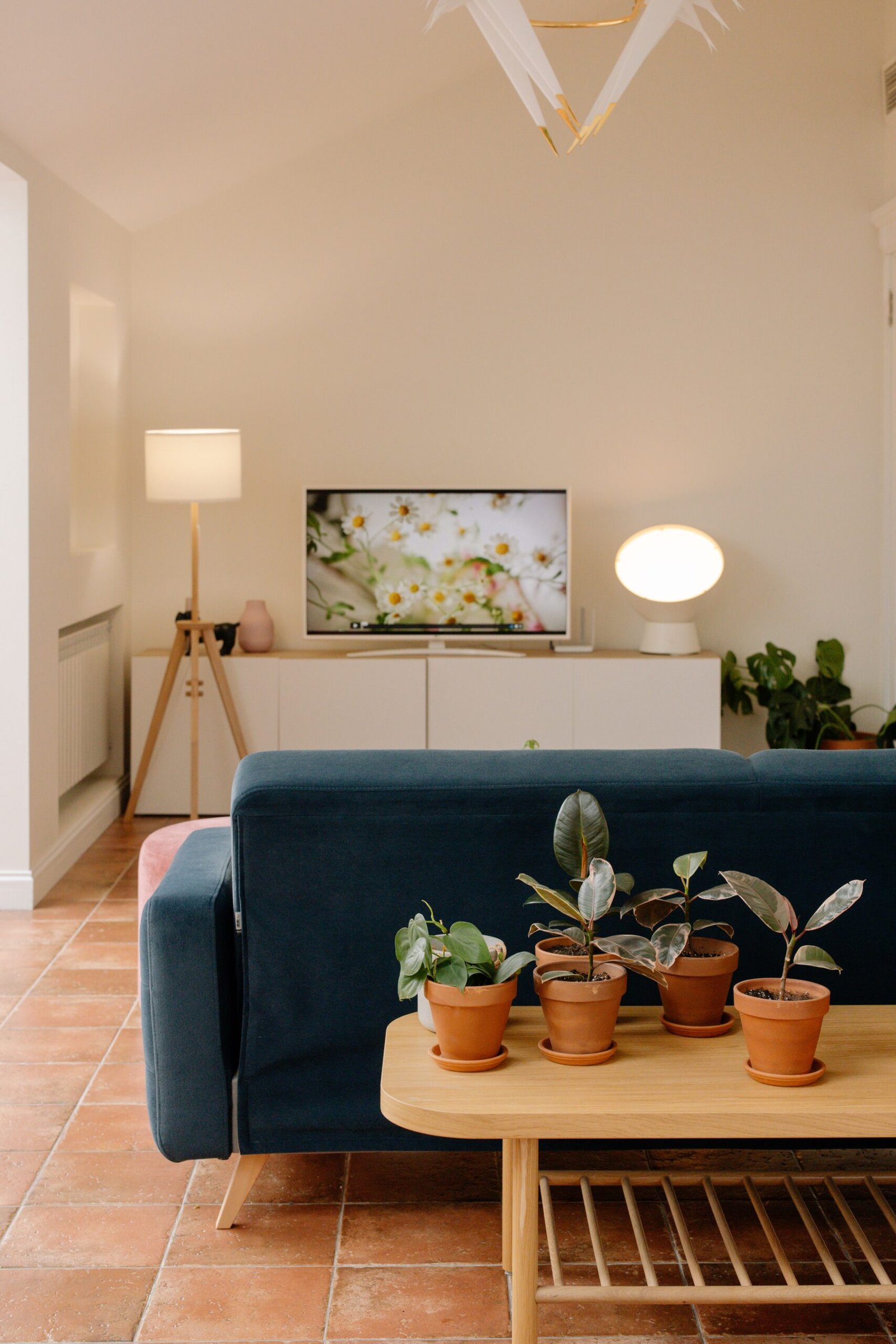
Mediterranean Interior Design: Warm, Sunlit Rooms for Everyday Homes
Mediterranean interior design is a warm, relaxed style inspired by the coastal homes of Southern Europe — particularly Greece, Italy, and Spain. Its defining palette is plaster white, warm terracotta, deep sea blue, and natural materials like wood, stone, and linen. It uses generous light and simple, comfortable furniture to make everyday rooms feel calm and inviting.
You do not need a villa, an arch, or a renovation to use this style. In most American homes, Mediterranean design works in small, affordable steps: warm the walls, add an earth tone, add a sea-blue accent, and set out something natural and something living. Like warm cream paint in a dark room or a rug that anchors a sofa, one Mediterranean element can shift the whole room.
Where the Style Comes From
The Mediterranean Sea touches many countries, and each one left a mark on the style. Greek island homes gave it whitewashed walls and deep blue accents, while Italian farmhouses gave it warm plaster, wooden beams, and terracotta floors.
That shared history explains why the style feels both simple and rich. Homes in hot, sunny climates used what was nearby — clay, stone, lime plaster, and timber — and kept rooms cool with thick walls and small windows. Over time, those practical choices became a visual language: light walls, warm floors, patterned tile, and rough, honest textures.
Three Shores, Three Flavors
“Mediterranean” is one name for several related looks. Choosing a flavor first makes every later decision easier, since each one has a distinct palette and attitude. Use this table to pick a direction before shopping.
| Flavor | The feeling | Walls and base | Accent colors | Signature details |
|---|---|---|---|---|
| Greek island | Bright, crisp, airy | Whitewashed white walls, pale floors | Deep sea blue, touches of turquoise | Simple wood furniture, blue shutters or doors, white ceramics, woven baskets |
| Italian countryside | Warm, rustic, generous | Warm plaster in cream or sand, wooden beams where present | Terracotta, ochre, olive green | Terracotta pots, linen, aged wood, simple pottery, olive branches |
| Spanish and Moorish-influenced | Rich, patterned, earthy | Warm white or sand plaster, patterned tile in small doses | Terracotta, rust, deep blue, gold touches | Mosaic or patterned tiles, wrought iron, carved wood, colorful ceramics |
A Greek-leaning room stays mostly white and blue, with very little pattern. An Italian-leaning room leans warmer, with terracotta and wood. A Spanish-leaning room leans richer, with patterned tile and wrought iron. The original flavor guide in Simple Decorating Tips, written by K.L. Tellis, which flavors fit the style shows how Italian, Greek, and Spanish influences combine into one warm coastal look, which confirms this same split.

The Palette: Plaster White, Earth, and Sea
Mediterranean color starts with a light, warm base and adds earth and sea in measured amounts. Think of it in three layers.

- The base (most of the room): Warm white, cream, soft beige, or pale sand on walls, bedding, and large upholstery. Avoid cool, blue-white paint, which fights the warm materials.
- The earth (furniture, floors, and large accents): Terracotta, ochre, rust, clay, and olive green. These colors come from the landscape and carry the room’s warmth.
- The sea (small accents): Deep ocean blue, soft sky blue, and sea green. Blue is the contrast color, so keep it to cushions, ceramics, art, or one painted piece, or the room tips from Mediterranean to beachy.
A practical proportion helps: roughly two-thirds light base, one-quarter earth tones, and the rest sea accents. If the room feels too busy, remove one earth or sea color first. If it feels flat, add one textured piece before adding color — a woven basket or a linen throw often fixes a flat room better than another cushion.
Materials and Texture You Can Touch
Mediterranean design is a tactile style. Its materials look good partly because they feel honest: rough plaster, worn wood, handmade tiles, and natural fibers. You do not need real stone floors or real plaster walls. You need a few materials that look like they belong to the landscape.
- Stone and clay. Stone floors, stone-look tiles, terracotta pots, and ceramic tiles bring the earth indoors. One terracotta pot on a sideboard reads more Mediterranean than a whole wall of stone-look wallpaper.
- Wood. Exposed beams are the classic feature, but most homes do not have them, and that is fine. Weathered or distressed wood in furniture — a dining table, a bench, a console — gives the same feeling at a smaller scale. Its dark, handcrafted lines contrast beautifully with the softer plaster and linen around it.
- Wrought iron. Iron appears in light fixtures, curtain rods, bed frames, mirror frames, and balcony railings. Use it sparingly: one iron piece in a room gives the dark contrast the style needs without making the room feel heavy. A single dark iron bracket carries more weight than a whole set of matching iron pieces.
- Textiles. Linen and cotton lead: curtains that move with the air, linen cushions, cotton throws, and woven rugs. Mixed with wool in cooler months, these fabrics keep the room soft without covering its textures.
- Plaster texture. Textured plaster or stucco walls are a hallmark of the style, and limewash paint gives a similar soft, chalky depth on ordinary walls. If you rent, a textured woven wall hanging or a plaster-look vase can add the same warmth without paint.
Sampleboard’s Mediterranean style guide describes the same heart of the style: rustic charm, natural materials, textured fabrics, and warm, earthy colors drawn from coastal living.
Light, Air, and the Outdoors
Light is not decoration in Mediterranean design. It is the main ingredient. The style assumes generous sunlight, open windows, and a connection to the outside — even if that outside is a small balcony or a single potted plant.
Keep window treatments light and simple. Sheer or light linen curtains filter sunlight without blocking it. Avoid heavy drapes, dark blinds, or window treatments that cover the glass. If privacy matters, use a sheer layer for the day and a simple linen panel for the night.
Let the outdoors in where you can. A potted olive tree, a lemon tree in a pot, or simple green plants near windows echo the courtyards and terraces of Mediterranean homes. Olive branches in a vase give the same feeling in a room where a tree will not fit.
Furniture That Fits the Feeling
Mediterranean furniture is comfortable before it is formal. Look for these qualities:
- Low, deep seating. Large, comfortable sofas and chairs in neutral linen or cotton, with loose cushions rather than tight, tailored lines.
- Simple wooden pieces. Dining tables, benches, and consoles in weathered or distressed wood. Curves and worn edges matter more than carving or ornament.
- Curved and arched shapes. Arched doorways and windows are architectural signatures, but furniture can echo them: an arched mirror, a curved chair back, or a round dining table softens a rectangular room.
- Handcrafted touches. A hand-painted ceramic, a woven basket, a carved wooden box, or a handmade rug adds the human detail that mass-produced pieces lack. One or two craft pieces per room are enough.
Avoid furniture that is too sleek, too shiny, or too dark and heavy in large amounts. A single dark wood or iron piece grounds the room, but a whole set in glossy black or chrome pulls it toward modern minimalism and away from the Mediterranean feeling.
The No-Renovation Starter Kit
This starter kit is the practical spine of the guide. It needs no construction, no new floors, and no large purchase, and you can do it in a weekend.
- Warm the walls with light. If repainting is an option, choose a warm white for one room. If not, add warm-white light bulbs and remove any cool, blue-toned lighting.
- Add one earth color. Pick terracotta or ochre as your lead earth tone, and bring it in through cushions, a throw, or a ceramic piece.
- Add one sea accent. A deep blue vase, a set of blue-patterned cushions, or art with a sea-blue element.
- Bring in natural texture. A woven basket, a linen tablecloth, a jute or cotton rug, or a wooden tray on a coffee table.
- Add iron in one place. A black iron curtain rod, a lantern, or a mirror frame gives the dark line the style needs. One iron piece is enough to start.
- Add something living. A potted olive, lemon, or herb plant near a window completes the look and connects the room to the outdoors.
- Edit ruthlessly. Remove anything sleek, glossy, or gray that fights the warm palette. A room with five Mediterranean pieces and five modern gray pieces reads as neither.
Live with the kit for a few weeks before adding more. The style rewards restraint: a room with five well-chosen pieces feels more Mediterranean than a room with twenty loosely related ones.
Room-by-Room Notes
Living room. The easiest room to convert. Warm white walls, a neutral linen sofa, terracotta cushions, one blue ceramic piece, and a potted olive tree by the window. Keep the coffee table simple wood.
Kitchen. Patterned tile is the classic Mediterranean kitchen move, but a tile-look backsplash, terracotta planters on a shelf, and linen curtains can give 80 percent of the feeling at a fraction of the cost.
Bedroom. White or cream bedding is the base. Add a terracotta or olive throw, linen cushions, a wooden bench or stool, and a woven basket. Keep the room pale and calm; the bedroom is where the style’s restful side shows.
Bathroom. White walls, a wooden stool or tray, a woven basket for towels, and one patterned tile or ceramic soap dish will carry the style without a renovation.
How to Avoid the Theme-Restaurant Look
The line between a Mediterranean home and a Mediterranean restaurant is restraint, and it is easy to cross. A few rules keep you on the home side.
First, limit pattern to small doses. One patterned tile section, one patterned cushion, or one patterned rug is enough. Pattern everywhere reads as a theme, not a home.
Second, keep wall color pale and warm, not saturated. A whole room in deep terracotta might look dramatic in a photo, but it is hard to live in. Use saturated color in small, movable pieces you can change when you tire of them.
Third, let materials do the talking instead of motifs. Real textures — wood, linen, clay, stone — say Mediterranean more convincingly than a mural, a sign, or a themed figurine. If a piece would look strange without a label explaining it, leave it out.
Finally, remember that the style is about ease. A room that feels relaxed and lived in, with a few worn edges and a plant by the window, is closer to the Mediterranean ideal than a perfect display room nobody dares to sit in.
Frequently Asked Questions
What is Mediterranean interior design?
It is a warm, relaxed style inspired by the coastal homes of Greece, Italy, and Spain. It combines warm plaster whites, terracotta and ochre, sea blues, and natural materials like wood, stone, iron, and linen, with generous light and comfortable, low furniture.
How is Mediterranean style different from coastal style?
Coastal style leans cool and breezy, with light blues, whites, and beach motifs. Mediterranean style leans warm and earthy, with terracotta, ochre, plaster, and handcrafted materials. A coastal room might feel like a beach house; a Mediterranean room feels like a sunlit farmhouse by the sea.
Can Mediterranean interior design work in a modern home?
Yes. The style adapts well to modern homes because its core is color, material, and light rather than architecture. Warm white walls, one earth tone, one blue accent, and natural textures are enough to bring the feeling into a contemporary room without arches or beams.
Does Mediterranean style only suit warm climates?
No. The palette and materials work anywhere, but colder or cloudier homes need more help from lighting. Use warm-white bulbs, keep windows clear, and choose lighter, warmer textiles in winter so the room does not feel cold despite its warm colors.
Do I need arches or exposed beams for a Mediterranean look?
No. Arches and beams are beautiful signatures, but they are not required. An arched mirror, curved furniture, or a wooden bench can suggest the same shapes at a smaller scale and a lower cost.
Which rooms suit Mediterranean design?
Living rooms, kitchens, and dining spaces suit it best, because their warmth, textures, and gathering character match the style’s social, relaxed roots. Bedrooms and bathrooms suit a paler, calmer version of the same palette.
Begin With Light and One Warm Color
Start where the style starts: with light. Brighten the room’s daylight, warm its walls toward cream, and add one terracotta or ochre piece you love. Then add one blue accent and one living plant. That is the whole recipe.
For more colour-led rooms in the same spirit, see the calm sage green interior design trends and the main interior design styles explained.
Disclaimer This article offers general design information, not advice for your specific home. Results depend on your room’s light, size, and existing furniture. For structural changes such as arched openings, beamed ceilings, construction, or changes to plumbing and electrical systems, talk to a qualified local tradesperson before you start.